Coach Fitz's Management Theory
On the best teacher the writer ever had.
Showing 25 articles matching fccoins26 Coinsnight.com FC 26 coins 30% OFF code: FC2026. The best place for game coins.28oS.
On the best teacher the writer ever had.
The original story of Christopher McCandless’ fateful trip into the Alaskan wilderness.
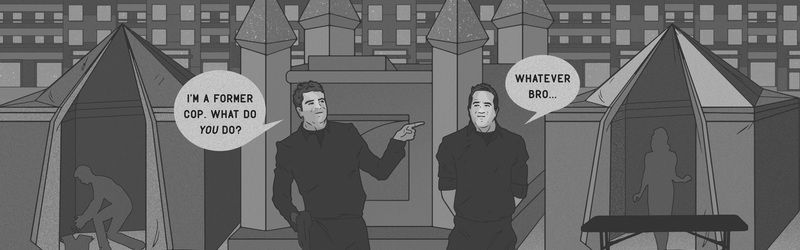
The fake cops of Santa Monica.
On the grief that comes with losing livestock.
The world’s best ice climber is turning 50.
David Kushner, a contributing editor at Rolling Stone, has written for The New Yorker, Vanity Fair, Wired and The Atavist.
"The minute you see an incredible character, you know. The only thing I can compare it to is bowling, not that I'm much of a bowler. On the few times I've thrown a strike, you know it before it hits the pins."
Thanks to TinyLetter and ProFlowers for sponsoring this week's episode.
Leah Finnegan, a former New York Times and Gawker editor, is the managing news editor at Genius.
“After the Condé Nast article, Nick Denton decided Gawker needed to be 20% nicer, and I took a buyout because I was not 20% nicer.”
Thanks to MailChimp, Audible, Squarespace, and Trunk Club for sponsoring this week's episode.
A 1980 profile of Nolan Ryan by Tony Kornheiser from Inside Sports, annotated 30 years later by Michael MacCambridge and Kornheiser. The first story in Grantland’s Director’s Cut series, which “looks back at classic works of sports journalism and gives the writers, athletes, and other figures involved in making the articles an opportunity to reflect on their work and recall some deleted scenes.”
Noel Morris’s place in history? Noel Morris was my older brother, who had dropped out of MIT and spent most of his waking hours holed up in an apartment working at a computer terminal. This was in the ‘60s, long before there was anything close to a home computer. The name Tom Van Vleck was not unfamiliar. He was a friend of my brother’s who worked with him at MIT in those days. I called him.
Anne Helen Petersen writes for BuzzFeed. Her book Scandals of Classic Hollywood is out this week.
"I was obsessed with Entertainment Weekly from the very first issue and I obsessively catalogued it. I made a database on my Apple IIe where I put in the title of the magazine and the number and whether it was a little 'e' or a big 'E' on the cover and the different topics and then I gave it a grade. You know how in Entertainment Weekly they give everything a grade, so I’d be like 'Oscar’s Issue: A minus.' But I learned how to obsessively track Hollywood industry even though I grew up in a very small town in northern Idaho."
Thanks to TinyLetter, Bonobos, and EA SPORTS FIFA 15 for sponsoring this week's episode.
“Places like the New York Times, Le Monde and the Washington Post are not given to elevating editors—of any gender—who would accept anything other than the highest of standards. As in tough, demanding, challenging. But there’s no doubt that many find this off-putting and threatening from a certain kind of woman. Like me.”
The president of the Philippines’ kill list is reputed to have over million names of supposed drug pushers and addicts, including many mayors and politicians. There is no reliable way to get off the list other than dying in a hail of bullets from assassins on motorbikes.
Joe Weisenthal is the executive editor of news for Bloomberg Digital and the co-host of What’d You Miss? and Odd Lots.
"If I don’t say yes to this, then I can never say yes to anything again. Because when else am I going to get a chance in life to co-host a tv show? Even if it’s terrible, and I’m terrible at it, and it’s cancelled after three months, and everyone thinks it’s awful, for the rest of my life, I’ll be able to say I co-hosted a cable TV show. And so I was like, you know what—I have to say yes to this."
Thanks to MailChimp, Big Questions, and Credible.com for sponsoring this week's episode.
Brooke Jarvis is a contributing writer for The New York Times Magazine.
“Obsession is inherently interesting. We want to know why somebody would care so much about something that it could direct their whole life. ... When people care about something a lot, what can be more interesting than that to understand what drives those powerful emotions? ... Part of why I do this work is that I am able to get temporarily obsessed with a lot of different things and then move on to the next thing that I'm temporarily obsessed with. ... There's always a new question that I want to follow.”
Thanks to Mailchimp for sponsoring this week's episode.
An ode to the fastball and the pitchers who throw it best.
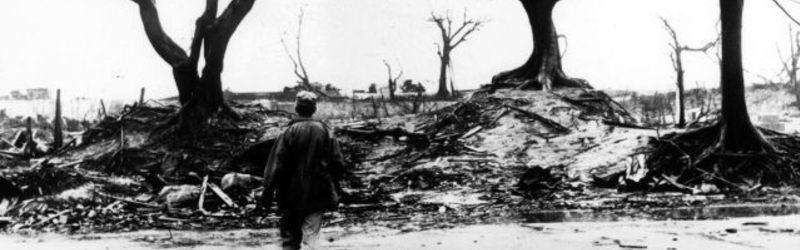
The lives of six people who survived the atomic bomb.
On wearing a concealed handgun and how it changed the author’s worldview.
A day in the life of a Brooklyn laundromat.
Notes from the Friars Club roast of Don King.

The world’s foremost Sherlock Holmes expert found dead in a locked room, leaving no note.

Unprecedented access to six months in the life of the President of the United States.
The ridiculousness of trying to rank the best restaurants in the world.
Don Van Natta Jr., a three-time Pulitzer Prize winner, writes for ESPN and is the author of several books, including Wonder Girl.
"The nature of the kind of work I do as an investigative reporter, every story you do is going to get attacked and the tires are going to get kicked. It’s going to get scrutinized down to every phrase and down to every letter. You have to have multiple sources for key facts on this type of story. We set out to get that and we got it."
Thanks to TinyLetter and Bonobos for sponsoring this week's episode.
Mona Chalabi is a writer and illustrator whose work has appeared in The New York Times, The New Yorker, and The Guardian, where she is the data editor. Her New York Times Magazine piece “9 Ways to Imagine Jeff Bezos’ Wealth” won this year’s Pulitzer Prize for Illustrated Reporting.
“I kind of think of protest as just saying what you believe. And sometimes, it’s considered protest because it’s outside of the institutions of power. So you’re saying, Hey, Palestinians deserve human rights, and that’s considered a form of protest, right? I want the work to change things and I think I’m quite unapologetic about that, and most journalists are like No no no no no, we’re just reporting the world, we’re just reporting things as we see it. There’s no desire for change. I think that is so messed up. This idea that your work has no impact in the world is incorrect. You can’t wash yourself of the consequences of the work, you have to be considering the consequences while you’re doing it.”
Codenamed “Synapse”, the Match algorithm uses a variety of factors to suggest possible mates. While taking into account a user’s stated preferences, such as desired age range, hair colour and body type, it also learns from their actions on the site. So, if a woman says she doesn’t want to date anyone older than 26, but often looks at profiles of thirty-somethings, Match will know she is in fact open to meeting older men. Synapse also uses “triangulation”. That is, the algorithm looks at the behaviour of similar users and factors in that information, too.