Showing 25 articles matching iraq podcast.

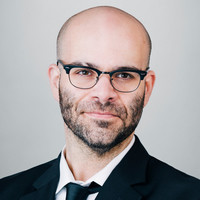
Mike Issac covers Silicon Valley for The New York Times. He is the author of Super Pumped: The Battle for Uber.

“People try to use journalists all the time. Your job as a journalist is to figure out who’s using you, why they’re using you, and whether you can do something legitimately without playing into one side or another.”

Thanks to MailChimp, Pitt Writers, and Wolverine Podcast for sponsoring this week's episode.
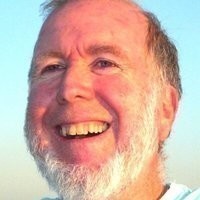
Kevin Kelly is one of the founding editors of Wired, where his current title is Senior Maverick. His new book is Excellent Advice for Living: Wisdom I'd Known Earlier.

“I never wrote a book because I wanted to do a good deed. I just wanted to tell a good story.”

James Verini is a contributing writer at The New York Times Magazine and National Geographic. His new book is They Will Have to Die Now: Mosul and the Fall of the Caliphate.

“War is mostly down time. War is mostly waiting around for something to happen.”

Thanks to Mailchimp, Pitt Writers, and "Couples Therapy" for sponsoring this week's episode.
Ta-Nehisi Coates is the author of Between the World and Me and a national correspondent for The Atlantic. His latest cover story is “My President Was Black."

“[People] have come to see me as somebody with answers, but I don’t actually have answers. I’ve never had answers. The questions are the enthralling thing for me. Not necessarily at the end of the thing getting somewhere that’s complete—it’s the asking and repeated asking. I don’t know how that happened, but I felt like after a while it got to the point where I was seen as having unique answers, and I just didn’t. I really, really didn’t.”

Thanks to MailChimp, Casper, and Audible for sponsoring this week's episode.
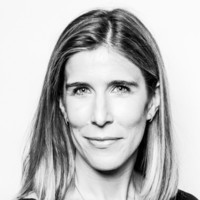
Evan Ratliff, a co-host of the Longform Podcast, discusses "The Oilman's Daughter," his new story in The Atavist.

"This woman was given the opportunity to take on a new identity. And it was a mistake. She never should've done it. If there was a way for her to go back and say, 'No, I don't want to know this. I want to be who I am,' then I think she should've taken that. … I'm fascinated with people who want to radically shift their identity. It almost never works out well."

Sarah Ellison is a special correspondent at Vanity Fair and the author of War at the Wall Street Journal.

“There’s no lack of stories. ... There’s always an element where you’re going to be parachuting into something that someone has likely written about, to some degree. You can’t shy away from going into something that’s a crowded field.”

Thanks to MailChimp, Quip, and BarkBox for sponsoring this week's episode.
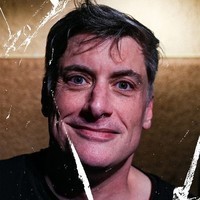
Mitchell Prothero covers intelligence and crime for Vice News. His new podcast with Project Brazen is Gateway: Cocaine, Murder, and Dirty Money in Europe.

“I’m really interested in transnational networks—crime, intelligence. I’m fascinated by the gray. Like, when is something legal and when is something illegal? One thing with this Gateway project [was that] nobody could ever tell me that moment where money goes from absolutely being illegal to being legal.”

Ian Coss is a journalist, audio producer, and composer. He is the host of Forever is a Long Time and The Big Dig.

“One thing that I really carried with me in making the show is a belief that bureaucracy is interesting. And that once you get through the jargon and wonky sounding stuff … beyond that it’s all just human drama.”

Tommy Tomlinson, a former newspaper columnist, is the host of Southbound podcast. His new book is The Elephant in the Room: One Fat Man's Quest to Get Smaller in a Growing America.

“The thing that galvanized me was the death of my sister. I signed the contract November 2014, she died Christmas Eve of that year. She had been overweight just like me. She was older than me and died from complications, an infection that was directly connected to her weight. And that more than anything made me think if I don’t deal with this now, I’m not going to be around in 10 years to write this book. So, the book helped certainly. The idea that I was going to put this stuff on paper and expose myself in this way to the world and I didn’t want to be a failure at the end of it. More than that, I didn’t want to be a failure because I didn’t want to be a failure. I don’t want to die.”

Thanks to MailChimp and Pitt Writers for sponsoring this week's episode.
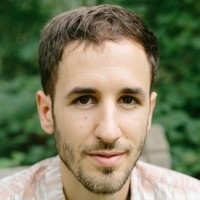
David Grann is a staff writer for the New Yorker. His new book is The White Darkness.

“I do think in life, and in reporting, that reckoning with failure is a part of the process. And reckoning with your own limitations. I think that’s probably the arc and change I have made as I get older. Just as O’Shea doesn’t get the squid, failure is such an integral part of life and what you make of it. Too often we’re always focused on the success side, and I don’t always think the successes teach us as much as the journey and having things elude us. ... I'm being completely honest, I look at every story I've ever written as a failure. Because I always have some model, some perfect ideal, that I want to try to reach.”

Thanks to MailChimp and Pitt Writers for sponsoring this week's episode.
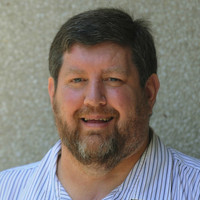
Matthieu Aikins is a contributing writer at The New York Times Magazine who has reported on Afghanistan since 2008. His new book is The Naked Don’t Fear the Water: An Underground Journey with Afghan Refugees.

“I think at some point you just say, screw it. I'm gonna act like a human being and help my friend. That's the most important thing. You actually realize, yeah, now that we're in it together, the only thing that matters is both of us staying alive and staying safe and getting where we need to go. And whatever I have to do to do that, I'm going to do.”

Evan Ratliff, a co-host of the Longform Podcast, is the author of The Mastermind: Drugs. Empire. Murder. Betrayal.

“We’re all less moral than we think we are, including myself. I’m interested in the justifications people provide for themselves to get deep into something that starts as one thing and ends up as a murderous criminal cartel. Paul Le Roux, sure—but also doctors and pharmacists. It’s interesting to think about where the pressures in our lives create moral ambiguity that we didn't think was there, and why we do things that we’ve said we'll never do. We look at someone else and think that they’re really bad or evil, but then we’ve never experienced those pressures. That cauldron of factors is something I’m very interested in because I think it applies to everyone.”

Thanks to MailChimp and Pitt Writers for sponsoring this week's episode.
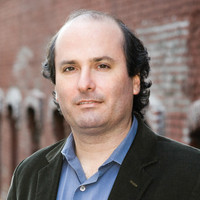
Sam Fragoso is a writer, filmmaker, and the host of the podcast Talk Easy with Sam Fragoso.

“We have an hour together. We may not have another. We're here for a brief moment and then, you know, we die. And I want this thing to be as good as it can be. If if it's anything less than that, I'm just not interested. … And that, to me, is why you keep doing it: because that feeling when you really feel like you've put someone's life on the record in a way that is beautiful and painful and idiosyncratic and triumphant… when it goes well, it's like I lost 20 pounds. I am never a nicer or happier person than immediately after a taping. I'm kind of goofy and silly and delirious and grateful to be doing this. Like, so fucking grateful.”

Ta-Nehisi Coates is an author and journalist. He served as guest editor for the September issue of Vanity Fair, titled "The Great Fire."

“There’s this pressure to say something. Say something. The world’s burning, say something. But I try to stay where I’ve been or where I’ve tried to be in my career. ... Good things take time. You gotta let things cook. You can’t insta-bake something like this.”

Thanks to Mailchimp for sponsoring this week's episode.
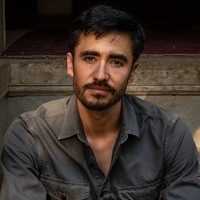
May Jeong is a magazine writer and investigative reporter.

“I don’t have kids, I don’t have an expensive drug habit. Everything that I do right now at this moment in my life is to serve the story. That means that sometimes I’m not the best partner. I’m not the best friend. I’m a really terrible daughter probably. If my parents had a satisfaction survey, I don’t think I’d rank really high. I have friends who are buying houses and stuff. I’m very far away from that. What else have I sacrificed? I don’t know. Sometimes I let my body atrophy because I’m on the road all the time. I think I can do it for five more years. I’m 30, so things will have to change.”

Thanks to MailChimp, Read This Summer, Casper, and You Can't Make This Up for sponsoring this week's episode. Also: Longform Podcast t-shirts are still available!
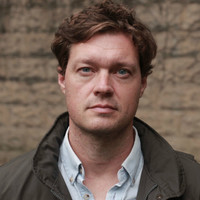
Maria Konnikova is a journalist, professional poker player, and author of the new book The Biggest Bluff: How I Learned to Pay Attention, Master Myself, and Win.

“I do think that writing and psychology are so closely interlinked. The connections between the human mind and writing are in some ways the same thing. If you’re a good writer, you have to be a good, intuitive psychologist. You have to understand people, observe them, and really figure out what makes them tick.”

Thanks to Mailchimp for sponsoring this week's episode.
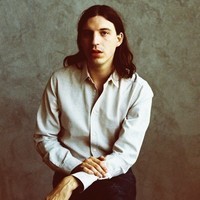
Evan Ratliff, a co-host of the Longform Podcast, discusses "The Mastermind,” his new 7-part serialized story in The Atavist Magazine.

“On several occasions [sources] didn’t want to go into the details of how they were identified. They were just like, ‘My safety is in your hands. Just be careful.’ And I didn’t really know what to do with that. I was sort of trying to balance what to include and what not to include and trying to make these decisions. Will Paul Le Roux know it’s this person? It’s impossible to know. I tried to err on the side of caution, but there’s no ethics hotline you can call and be like, ‘What do I do in this situation?’”

Thanks to our friends at MailChimp for making today's episode possible.

Sam Sanders is the former host of NPR’s It’s Been a Minute. He hosts Vulture’s Into It, which launched last week.

“I don’t think I ever wanted a career where I was doing the same thing for 30 years. I think that, editorially, I had become someone who was really contemplating what kind of capital-j journalist I wanted to be, want to be, and I was questioning a lot of rules and the structure of what we think journalism is supposed to be, and I think I needed to be away from a legacy institution like NPR, at least for a spell, to work that out.”

Jeanne Marie Laskas writes for GQ and the New York Times Magazine. Her latest book is To Obama: With Love, Joy, Anger, and Hope.

“I hate saying this out loud, but it’s true: I’m really shy. Fundamentally, I'm 100% scared most of the time. I’m scared and wondering how I can not be noticed because I don’t know what to say and I’m shy. If you say I’m a good listener, that's why … I become more invisible so I’m more comfortable.”

Thanks to MailChimp, Techmeme Ride Home Podcast, and Pitt Writers for sponsoring this week's episode.
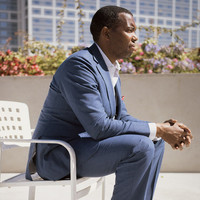
Jon Mooallem is a journalist, author, and host of The Walking Podcast. His latest book is This is Chance!: The Shaking of an All-American City, A Voice That Held It Together.

“There is this impulse that we have, this very clearly documented impulse that people everywhere have, to help. It sounds tacky, but when the bottom drops out, when ordinary life is overturned and there’s this upheaval or this disruption—if it’s a natural disaster or even something like this, that there’s ... in the book I call it a ‘civic immune response.’ People do spontaneously help each other, they work together, they collaborate. This whole idea that society falls apart and everyone descends into madness and violence is just not true. And we know that. We have science that shows it.”

Thanks to Mailchimp and Pitt Writers for sponsoring this week's episode.

Edith Zimmerman is the founding editor of The Hairpin and a contributing writer to The New York Times Magazine.

"I never wrote anything myself or ran anything from other people that was needlessly negative. It wasn't some false grin plastered all over it — we addressed dark things too, and poked fun at things. But I didn't want there to ever be a tone of yeah, let's really just deflate this. Because ultimately you're just stabbing at a ghost among friends. And then at the end you've all just fallen on the floor and the ghost is gone. You're not really doing anything constructive."

Thanks to TinyLetter for sponsoring this week's episode.

</blockquote>

Adam Platt is the restaurant critic for New York.

“My job was described to me recently as ‘the last great job of the 20th century.’ I think there might be something to that.”

Thanks to TinyLetter, Lynda, Casper, and Wealthfront for sponsoring this week's show.

Dayna Tortorici is the editor of n+1.

“You can't fetishize conflict so much. Because conflict does generate a lot of good work, but it also inhibits a lot of good work. I think people do their best work when they feel good. Or at least don't feel like shit. ... So I've tried to create a culture of mutual encouragement. Especially when you're not paying anybody, that's all you can really offer.”

Thanks to TinyLetter and Wealthfront for sponsoring this week's show.

Joe Sexton is a senior editor at ProPublica and a former reporter and editor at the New York Times, where he led the team that produced "Snow Fall."

"My experience in a newspaper newsroom over the years has been: The word you hear least often, the word that's hardest for people to say in that environment, is the word yes. It's safer to say no. You get second-guessed less often if you say no. Your job's not on the line if you say no. But if you're willing to say yes and you're willing to face the consequences of having said yes, then quite amazing things can happen."

Thanks to Random House and TinyLetter for sponsoring this week's episode.
Rose Eveleth is the host of Flash Forward and the author of Flash Forward: An Illustrated Guide to Possible (and Not So Possible) Tomorrows.

“If I didn’t have that pretty bizarrely insatiable drive to do this stuff and understand things, I don’t know if I’d still be doing this. The curiosity index has to be high in order to make the rest of it worth it. Because otherwise, what’s the point?”

Thanks to Mailchimp for sponsoring this week's episode.