Showing 25 articles matching iraq podcast.

Robert McKee is an author and screenwriting lecturer. His new book is Character: The Art of Role and Cast Design for Page, Stage, and Screen.

”When I'm in conversation with others, I'm always aware—or sensitive, at least—to what they're really thinking and feeling. And writers must have that. They can't possibly create excellent nonfiction or fiction if they're not aware of what is going on inside of other people, really, even subconsciously, while they go about saying whatever they do consciously in the world. Because if you just recorded the surface, if you were just paying attention to the surface, you'd be missing the whole show.”

Thanks to Mailchimp for sponsoring this week's episode.

Caitlin Dickerson is a staff writer for The Atlantic covering immigration. Her latest article, on the secret history of U.S. government’s family-separation policy, is ”An American Catastrophe.”

“I think the line that gets drawn around immigration coverage — which, a lot of times you're just talking about a business story or an education story or a national security story — but when you call it an immigration story, it does feel like it is about this other thing, about other people who aren't us.”

Kelly McEvers, a former war correspondent, hosts NPR's All Things Considered and the podcast Embedded.

“Listeners want you to be real, a real person. Somebody who stumbles and fails sometimes. I think the more human you are, the more people can then relate to you. The whole point is not so everybody likes me, but it’s so people will want to take my hand and come along. It's so they feel like they trust me enough to come down the road with me. To do that, I feel like you need to be honest and transparent about what that road’s like.”

Thanks to MailChimp, Audible, and Squarespace for sponsoring this week's episode.

Vann Newkirk II is a senior editor at The Atlantic and the host of Floodlines: The Story of an Unnatural Disaster. His new podcast is Holy Week: The Story of a Revolution Undone.

“I’m often toggling between environmental justice, between the history of race and racial organization in America. And to me, they’re all one story, and I’m trying to tell the story about how the conditions of marginalization in America have made and shaped the present. That’s it. That’s one story.”

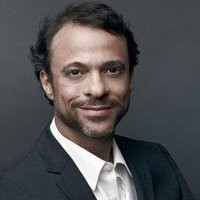
Brady Dale covers cryptocurrency for Axios. His new book is SBF: How The FTX Bankruptcy Unwound Crypto's Very Bad Good Guy.

“I am a fast writer. I’ve always been fast. I just sat down and did the math on it and I was like, If I can write 1,500 words a day, I can write this book. And I can do that.”

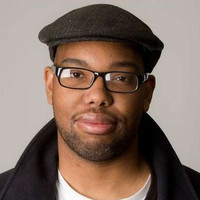
Ta-Nehisi Coates is a senior editor at The Atlantic. His latest cover story is "The Case for Reparations."

"The writer hopes for change, but writers can't assume that their work is going to cause change."

Thanks to TinyLetter and I Am Zlatan, the international bestseller published by Random House, for sponsoring this week's episode.

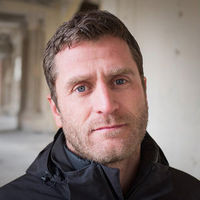
Ben Anderson is a war journalist and documentary filmmaker for Vice News. His latest book is The Interpreters.

"You're surrounded by people who are so poor. Maybe their family members have already been killed. And they still can't leave. So compared to that, I can't really take the idea that I've suffered and that I need stop and go to a spa for a few days. I can't take that idea that seriously. Compared to them, it feels like I am leading an almost privileged existence."

Thanks to TinyLetter and GoDaddy for sponsoring this week's episode.

Gabriel Snyder is the editor-in-chief of The New Republic.

“I had a new job, I was new to the place, and I came to it with a great deal of respect but didn’t feel like I had any special claim to it. But in that moment I realized that there were all of these people who wanted to see the place die. And that the only way The New Republic was going to continue was by someone wanting to see it continue, and I realized I was one of those people now.”

Thanks to MailChimp, Bombas, Harry's, and Trunk Club for sponsoring this week's episode.

Frank Rich, a former culture and political columnist for The New York Times, writes for New York and is the executive producer of Veep.

“All audiences bite back. If you have an opinion—forget about whether it’s theater or politics. If it’s about sports, fashion, or food—it doesn’t really matter. Readers are gonna bite back. And they should, you know? Everyone’s entitled. Everyone’s a critic. Everyone should have an opinion. You’re not laying down the law, and people should debate it.”

Thanks to MailChimp and Casper for sponsoring this week's episode.

David Kushner, a contributing editor at Rolling Stone, has written for The New Yorker, Vanity Fair, Wired and The Atavist.

"The minute you see an incredible character, you know. The only thing I can compare it to is bowling, not that I'm much of a bowler. On the few times I've thrown a strike, you know it before it hits the pins."

Thanks to TinyLetter and ProFlowers for sponsoring this week's episode.

Joe Hagan is a correspondent at Vanity Fair and the author of Sticky Fingers: The Life and Times of Jann Wenner and Rolling Stone Magazine.

“It’s the story that begins with John Lennon on the cover of Rolling Stone in 1967 and ends with Donald Trump in the White House. In many ways the book takes you there, I wanted it to. It takes you through the culture as it metastasizes into what it is now. It had a lot to do with a sense of the age of narcissism. The worship of celebrity. Jann was very into celebrity, and worshipful of it and glorifying it and turning it into a thing and eventually celebrity displaces a lot of the ideas they originally started with in my estimation. That was a narrative thread that I began to pull in the book.”

Thanks to MailChimp, Skagen, Screen Dive podcast, Stoner podcast, and Pitt Writers for sponsoring this week's episode.

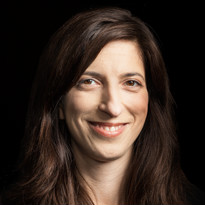
Irin Carmon is a senior correspondent at New York, a contributor at CNN, and the co-author of Notorious RBG: The Life and Times of Ruth Bader Ginsburg.

“The fact that we were part of this entire wave of reporting was actually exhilarating. Even when it was competitive. For me, my desire to do this comes out of a broader set of commitments to the world. I’m a feminist and I’m a journalist. The ability to do feminist investigative journalism felt like a gift. And it also felt like, wow, this thing I’d been working on for a long time is something that institutions—the most prestigious and well-resourced institutions—wanted to put resources to. … I think that that kind of commitment is significant in our culture because it is validating it as a point of inquiry.”

Thanks to MailChimp, Skagen, TBD with Tina Brown, Screen Dive, and Pitt Writers for sponsoring this week's episode.

Jackie MacMullan is an NBA journalist who has written for The Boston Globe, Sports Illustrated and ESPN. She hosts the podcast Icons Club for The Ringer.

“[Athletes] think they don't need journalists—and they're wrong. And I tell them all this. I'm like, ‘I know you think you've got your own production company, but we can tell your story better than you can.' That's just the truth. No one tells their own story the best. It's the people around them that tell the story the best. And nobody wants a whitewashed version of you. They want warts and all. That's what makes you lovable. That's what makes you interesting. ... There are great journalists out there that can tell your story—and it might not be exactly the way you want it to be told, but it'll have weight and it'll have legacy to it.”

Pamela Colloff is an executive editor and staff writer at Texas Monthly.

"That sense of loss, that sense of normal life turning on a dime is something that, in a very different way, I’ve experienced. And I carry that with me into some of the more difficult stories."

Smiley face Mimi Swartz has written for Talk, The New Yorker and Vogue. She is an executive editor at Texas Monthly.

"Here’s this great [public interest] story that nobody’s ever told. Now how can I write it so the maximum number of people want to read it? I try to make the homework part as interesting and compelling as possible."

Thanks to TinyLetter and PillPack for sponsoring this week's episode.

Alex Blumberg is a former producer for This American Life and Planet Money. Last year he founded Gimlet Media, a podcast network, and hosts its first show, StartUp.

“When someone starts talking about something difficult, when they get unexpectedly emotional, your normal human reaction is to sort of comfort and steer away. To say, ‘Oh I’m sorry, let’s move on.’ What you need to do, if you want good tape, is to say, ‘Talk more about how you’re feeling right now.’ It feels like a horrible question to ask. It feels like you're going against your every instinct as a decent human being to go toward the pain that this person is experiencing.”

Thanks to TinyLetter, Lynda and Alarm Grid for sponsoring this week's episode.

Jon Favreau, former chief speechwriter for President Obama, is a columnist at The Ringer and co-host of Keepin’ It 1600.

“And then Obama comes over to my desk with the speech, and he has a few edits. And he’s like, ‘I just want to go through some of these edits and make sure you’re ok with this. I did this for this reason. Are you ok with that?’ And I’m like, ‘Yeah, buddy. You’re Barack Obama.’”

Thanks to MailChimp's Freddie and Co., Freshbooks, Audible, and Squarespace for sponsoring this week's episode.

Brin-Jonathan Butler has written for SB Nation, ESPN, and The New York Times. His new book is A Cuban Boxer’s Journey.

"He smiled at me and just to make small talk, I said, 'You know, you’ve got this gold grill on your teeth. Where did you get that from?' And he said, 'Oh, I just melted my gold medals into my mouth.' And I thought, 'I think I’ve got a story here.'"

Thanks to TinyLetter, WW Norton & Company and Open Road Integrated Media for sponsoring this week's episode.

Rolf Potts is a veteran travel writer.

"Instead of seeking out the stories, the stories sort of found me. I miss those days. I mean, I make more money from my writing now and I'm probably a better journalist. But having seven-day weeks to wander, month after month, for two years, was a great way to find real and spontaneous and human travel stories."</i>

Thanks to TinyLetter for sponsoring this week's episode!

</blockquote>

David Grann is a staff writer at The New Yorker.

"You don't always know all the answers. I think that's what kinda makes life interesting. The thing that makes these stories real, while they are in some ways unfathomable, [is that] there's an uneasiness of certitude. Because there are things that are not always known, there are elements of doubt, and that can be very haunting ... In some of the stories, you get as close as you can to all you know—and then there are parts that elude you."

Charles Duhigg is a New York Times reporter and author of The Power of Habit.

"The stuff that gets cut out gets cut out for a reason. The discipline of space is always a good discipline. If it deserves to be read, it shouldn't be on the cutting room floor ... If it ends up on the cutting room floor, there's usually a reason why."

Thanks to TinyLetter for sponsoring this week's episode!

Shane Bauer, a senior reporter for Mother Jones, spent four months working undercover as a guard in a private prison.

“The thing that I grappled with the most afterward was a feeling of shame about who I was as a guard and some of the things that I had done. Sending people to solitary confinement is hard to come to terms with—even though, in that situation, I don't know what else I could have done. ... I had to do what I could to keep myself safe.”

Thanks to MailChimp for sponsoring this week's episode.

Rachel Syme has written for The New Yorker, The New York Times, Grantland, and more.

“You have this sense that you’re bonding, but at the same time you're also going to betray them. Because if you hear this quote that they say or you see it in a mannerism, you write it in your notebook and you think ‘I got it.’”

Thanks to TinyLetter, The Great Courses, MarketingProfs, and Squarespace for sponsoring this week's episode.

Ken Burns is a documentary filmmaker whose work includes The Vietnam War, Baseball, and The Central Park Five. His new series is Country Music.

“History, which seems to most people safe — it isn’t. I think the future is pretty safe, it’s the past that’s so terrifying and malleable.”

Thanks to MailChimp, Vistaprint, and Pitt Writers for sponsoring this week's episode.

Tessie Castillo, a journalist covering criminal justice reform, and George Wilkerson, a prisoner on death row in North Carolina, are two of the co-authors of Crimson Letters: Voices from Death Row.

“I want other people to see what I see, which is that the men on death row are human beings. They’re incredibly intelligent and insightful and they have so many redemptive qualities...I don’t think I could really convey that as well as if they get their own voice out there. So I wanted this book to be a platform for them and for their voices.” –Tessie Castillo

“For me, writing was like a form of conversation with myself or with my past, like therapy. So I just chose these periods in my life that I didn’t really understand and that were really powerful and impactful to me, and I just sat down and started writing to understand them and make peace with them.” –George Wilkerson

Thanks to Mailchimp for sponsoring this week's episode.

Barton Gellman is a staff writer for The Atlantic and was previously a Pulitzer-winning reporter at The Washington Post. His latest book is Dark Mirror: Edward Snowden and the American Surveillance State and his latest essay is "The Election That Could Break America."

“I have found that I have a talent for accidentally pissing people off. ... I’m interested most in accountability and the use and abuse of power. So naturally it’s going to annoy people sometimes. And sometimes they take it like grown-ups and sometimes less so.”

Thanks to Mailchimp for sponsoring this week's episode.