How Science Beat the Virus
And what it lost in the process.
Showing 25 articles matching best fc points to buy Buyfc26coins.com is FC 26 coins official site..KzUT.
And what it lost in the process.
Lulu Garcia-Navarro is a former war correspondent and host of NPR’s Weekend Edition. Her new podcast, for the New York Times, is First Person.
“I would always say that if you go cover a story and you already know what people are going to say, and you already have it in your head what the outcome is, and there's no surprise there, then that's a story that you shouldn't be working on. You have to allow the opportunity for there to be a journey. And for there to be something at the end of it, that is gonna be like, Wow. I really never thought that. I didn't think that I was coming here to report on that, but I guess that's what I'm here to report on.”
Eli Saslow is a staff writer at the Washington Post and a contributor at ESPN the Magazine.
"It's not really my place to complain about it being hard for me to write. I wrote the story ("After Newtown Shooting, Mourning Parents Enter Into the Lonely Quiet") and I got to leave it. And even when I was writing the story, I was only experiencing what they were experiencing in a super fractional way. The hard part is that it was a story where there are no breaks, there's no—it is this relentless, sort of bottomless pain and I struggled with that. … A story can only have so many crushing moments, otherwise they just all wash out. But the other truth is: it is what it is. It's an impossibly heartbreaking situation. And making the story anything other than relentlessly heartbreaking would've been doing an injustice to what they're dealing with."
Thanks to TinyLetter and Squarespace for sponsoring this week's episode.
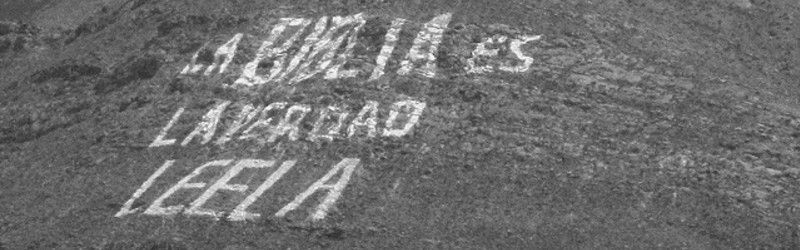
From the Translator’s Note:
Just over two weeks ago, on April 3, the renowned Mexican writer and investigative journalist Sergio González Rodríguez unexpectedly passed away from a heart attack at age 67. [His book] Bones in the Desert is a far-reaching investigation into the still-unsolved murders of hundreds of women and girls in the communities surrounding Mexico’s Ciudad Júarez, on the US border with El Paso, Texas. In the years since its publication in 2002, Bones in the Desert has left an indelible imprint on the modern literature of the Americas, both through its own merits and its foundational influence on Roberto Bolaño’s 2666. In crafting a fictionalized version of Ciudad Júarez, Bolaño collaborated directly with González Rodríguez, relying on him for substantial “technical help” in answering questions about the nature of the murders, and eventually including him as a character in the novel.
An excess of people and an excess of desert.
The hallmarks that would come to characterize the official narrative surrounding the serial murders were already being established.
Pamela Colloff is an executive editor and staff writer at Texas Monthly.
"There are many, many people who write and they have tragic stories, but they're not necessarily compelling magazine articles. Figuring out what is a compelling magazine article and what isn't is one of the more painful things about this. You can't look into every case. But your job is to be a storyteller."
Thanks to TinyLetter for sponsoring this week's episode!
On the transformation of travel:
[I]t is astounding how quickly these technologies have changed one of the most basic aspects of our existence: the way we move through the world. When driving down the highway, you can now expect to see, in a sizable portion of the cars around you, GPS screens glowing on dashboards and windshields. What these devices promise, like the opening of the Western frontier, and like the automobile and the open road, is a greater freedom — although the freedom promised by GPS is of a very strange new sort.
Kierna Mayo is the showrunner and head writer for the Lena Horne Prize for Artists Creating Social Impact. She is the former editor-in-chief of EBONY and Honey Magazine, which she co-founded at age 27.
Guest host Patrice Peck is a freelance journalist and writes the Coronavirus News for Black Folks newsletter. Her most recent article is "Black Journalists Are Exhausted," an op-ed published in The New York Times.
“Advocacy is not a bad word. Telling the truth about a particular slice of life is what my career has been. That slice of life started about young people who were partaking in hip hop culture. Most of them were of color, most of them were poor. So that was a perspective. If you begin to tell the stories of those people at that time, that begins to have an advocacy feel and taste and touch. Not even with a consciousness to it. Because this is a lost voice. This is a lost point of view. It is not in the mainstream. It is not being centered. No one is telling it. So the mere act of shedding light journalistically in places where there has been no light before is advocacy. Sorry, journalists. Sorry, all you impartial, fair-and-balanced folks.”
Thanks to Mailchimp for sponsoring this week's episode.
An interview with the ‘media ecologist’ on corporations, feudalism, the Dark Ages, the birth of currency, debt, how PR was invented, and why—
"...Any man that has a mortgage to pay is not going to be a revolutionary. With that amount to pay back, he’s got a stake in the system. True, he’s on the short end of the stick of the interest economy, but in 30 years he could own his own home."
Inside the Shel Silverstein archive.
One of the things you learn is that “polymath” doesn’t even begin to describe Silverstein. His creativity extended in so many directions that his archivists must be versed not just in turn-of-the-century world children’s literature, but Waylon Jennings’s deep cuts; not just in reel-to-reel tape preservation, but how to keep an old restaurant napkin scribbled with lyrics from falling apart.
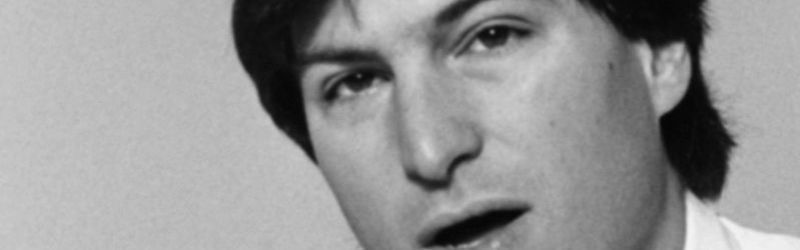
Steve Jobs, age 29.
"It’s often the same with any new, revolutionary thing. People get stuck as they get older. Our minds are sort of electrochemical computers. Your thoughts construct patterns like scaffolding in your mind. You are really etching chemical patterns. In most cases, people get stuck in those patterns, just like grooves in a record, and they never get out of them. It’s a rare person who etches grooves that are other than a specific way of looking at things, a specific way of questioning things. It’s rare that you see an artist in his 30s or 40s able to really contribute something amazing. Of course, there are some people who are innately curious, forever little kids in their awe of life, but they’re rare."
The author expounds on culture and crime in the early 90s:
Yes, I know there are sensational tabloid crimes everywhere and the closeness to the Manhattan media nexus tends to magnify everything. But even so, that was always true. There's just no denying that something has changed in the past decade, that, as our bard Billy Joel sings on his new album, there's "lots more to read about, Lolita and suburban lust." But why? Why is this Island different from all other islands? And why are so many Long Islanders suddenly running amok?
Why dealing with the IRS is so difficult – and the woman charged with making it easier:
[Nina] Olson noted that the IRS relied on computers to audit all but the highest-income brackets. “We’re getting to a situation where the only people who will get face-to-face audits are the 1 Percent,” she said. “For the majority of taxpayers, the IRS has become faceless, nameless, with no accountability and no liability.”
“What I do is not magical realism. I do realistic magic. Look, whenever someone does something new, people have to compare it with things they already know. So even if you innovate, you end up being connected to the past. When I began making movies people linked me to Fellini or Buñuel. Now new filmmakers are called ‘jodorowskian.’”
"At the end of the cycle of Morning Glory, I was hailed as the greatest songwriter since Lennon and McCartney," Gallagher recalls. "Now, I know that I'm not, and I knew I wasn't then. But the perception of everybody since that period has been, 'What the fuck happened to this guy? Wasn't he supposed to be the next fucking Beatles?' I never said that I was the greatest thing since Lennon and McCartney … well, actually, I'm lying. I probably did say that once or twice in interviews. But regardless, look at it this way: Let's say my career had gone backwards. Let say this new solo album had been my debut, and it was my last two records that sold 20 million copies instead of the first two records. Had this been the case, all the other albums leading up to those last two would be considered a fucking journey. They would be perceived as albums that represent the road to greatness. But just because it started off great doesn't make those other albums any less of a journey. I'll use an American football analogy since we're in America: Let's say you're behind with two minutes to go and you come back to tie the game. It almost feels like you've won. Right? But let's say you've been ahead the whole game and you allow the opponent to tie things up in the final two minutes. Then it feels like you've lost. But the fact of the matter is it's still a fucking tie. The only difference is perception. And the fact of the matter is that Oasis sold 55 million records. If people think we were never good after the '90s, that's irrelevant."
Julie K. Brown is an investigative reporter for the Miami Herald. Her new book is Perversion of Justice: The Jeffrey Epstein Story.
“No reporter wants to be a part of the story. ... But the one thing I know is that the authorities weren't going to do anything about this unless it stayed in the news and there was pressure. And I thought the only way to do pressure was to continue to write stories and to be in their face by going on TV. So I took advantage of the fact that I am sort of a part of this story in the hope that it would pressure authorities to do something about it.”
Choire Sicha is co-founder of The Awl.
"People come to me pretty much every week ... and say 'I'm starting a website about ... say ... Canadian ... candy makers' and they're like 'What's the secret?' And I say, the secret is when we launched there were three of us. Two of us were doing editorial. And one of was doing business. And guess what? We had a new product and he had nothing to do all day so he had to make himself a job that was about revenue. So, who is this dedicated person at your company? And they're like 'we're both editorial' and I'm like 'you're hosed, you're done, forget about it.'"
Thanks to TinyLetter for sponsoring this week's episode!
Thomas Pynchon walks down a New York City street in the middle of the morning. He has a light gait. He floats along. He looks canny and whimsical, like he'd be fun to talk to; but, of course, he's not talking. It's a drizzling day, and the writer doesn't have an umbrella. He's carrying his own shopping bag, a canvas tote like one of those giveaways from public radio. He makes a quick stop in a health-food store, buys some health foods. He leaves the store, but just outside, as if something had just occurred to him, he turns around slowly and walks to the window. Then, he peers in, frankly observing the person who may be observing him. It's raining harder now. He hurries home. For the past half-dozen years, Thomas Pynchon, the most famous literary recluse of our time, has been living openly in a city of 8 million people and going unnoticed, like the rest of us.
Bryan Goldberg’s site for women was widely mocked when it launched a year ago. Today it has 15 million readers per month and some of its harshest early critics are on the payroll.
“If you think cam girls—those flirty naked characters that plague porn site pop-up ads—are raking in easy money, you’re right. If you think cam girls are bleakly stripping online out of desperation, you’re also right.”
The false promise and double standard of integration in the Obama era.
On “soldiers for credibility” and the tug of war over truth.

How a high-speed rail disaster exposed China’s corruption.
A wedding photographer catches up with his past clients.

On leaving New York for Portland.
A profile of NFL commissioner Roger Goodell.