Showing 25 articles matching fc points to coins calculator Visit Buyfc26coins.com for latest FC 26 coins news..OtjT.

Jack Shafer covers the media for Politico.

“This is a true story, not a ‘Brian Williams story’: my first report card said ‘Jack is a very good student, but he has a tendency to start fights on the playground and bring them back into the classroom.’ That's been my career style — start a fight and bring it back to the classroom.”

Thanks to TinyLetter and Lynda for sponsoring this week's episode. If you would like to support the show, please leave a review on iTunes.
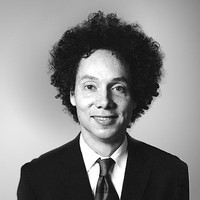
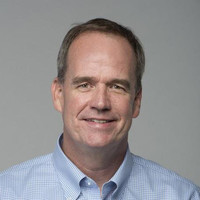
Malcolm Gladwell is a New Yorker staff writer, the author The Tipping Point and Blink, and the host of Revisionist History. His new podcast is Broken Record.

“The loveliest thing is to interview someone who’s never been interviewed before. To sort of watch them in a totally novel experience. Particularly when you’re interviewing them about things they never thought were worthy of an interview. That’s a really lovely experience. It’s like watching a kid on a roller coaster for the first time. But a celebrity is a very different kind of experience. The bar for them is quite high. They’ve been interviewed a million times, so you have to be on your game. You have to take them somewhere that’s a little unfamiliar to get them to perk up. Otherwise it’s just another of a long line of interviews. It’s a lot more demanding.”

Thanks to MailChimp, Aspen Ideas To Go, and Pitt Writers for sponsoring this week's episode.

Don Van Natta Jr., a three-time Pulitzer Prize winner, writes for ESPN and is the author of several books, including Wonder Girl.

"The nature of the kind of work I do as an investigative reporter, every story you do is going to get attacked and the tires are going to get kicked. It’s going to get scrutinized down to every phrase and down to every letter. You have to have multiple sources for key facts on this type of story. We set out to get that and we got it."

Thanks to TinyLetter and Bonobos for sponsoring this week's episode.

Charles Duhigg is a New York Times reporter and author of The Power of Habit.

"The stuff that gets cut out gets cut out for a reason. The discipline of space is always a good discipline. If it deserves to be read, it shouldn't be on the cutting room floor ... If it ends up on the cutting room floor, there's usually a reason why."

Thanks to TinyLetter for sponsoring this week's episode!

Latif Nasser co-hosts Radiolab. He also hosted The Other Latif and the Netflix documentary series Connected.

“It’s so easy to hate everything and be cynical. There’s a kind of ease to that. It takes a lot more courage to go up in front of everybody and be like, This is awesome. I love this. That takes a lot of guts, I think.”

Thanks to Mailchimp for sponsoring this week's episode.

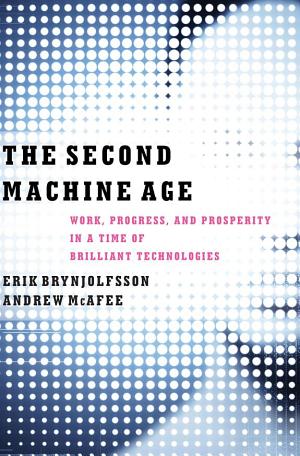
Sponsor: "The Second Machine Age"

Our sponsor this week is The Second Machine Age, the New York Times bestseller that Kevin Kelly calls "the best explanation of the technology revolution yet written."

From Google's autonomous cars to machines that can diagnose diseases more accurately than doctors, MIT's Erik Brynjolfsson and Andrew McAfee—two thinkers at the forefront of their field—reveal the forces driving the reinvention of our lives and our economy. Drawing on years of research and up-to-the-minute trends, Brynjolfsson and McAfee identify the best strategies for survival and offer a new path to prosperity.

A fundamentally optimistic book, The Second Machine Age will alter how you think about issues of technological, societal, and economic progress.

Buy your copy today:

AmazonBarnes & NobleiBookstoreIndieboundPowell's

Michael Schulman is a staff writer for The New Yorker. He recently profiled Jeremy Strong of Succession.

”There's an interesting moment that's part of this job where you’ve spent a lot of time with someone and it often feels very personal and very intimate. And then when you go to write the piece, you have to sort of take a breath and say to yourself, Okay, I'm not writing this for this person. I'm writing this for the reader.

A Conspiracy of Hogs: The McRib as Arbitrage

The absurd scale of McDonald’s’ economics suggests a company more like a commodity trader than a chain of restaurants.

At this volume, and with the impermanence of the sandwich, it only makes sense for McDonald’s to treat the sandwich as a sort of arbitrage strategy: at both ends of the product pipeline, you have a good being traded at such large volume that we might as well forget that one end of the pipeline is hogs and corn and the other end is a sandwich. McDonald’s likely doesn’t think in these terms, and neither should you.

Making murder respectable

On the utility of euphemisms:

In the upper reaches of the British establishment, euphemism is a fine art, one that new arrivals need to master quickly. “Other Whitehall agencies” or “our friends over the river” means the intelligence services (American spooks often say they “work for the government”). A civil servant warning a minister that a decision would be “courageous” is saying that it will be career-cripplingly unpopular. “Adventurous” is even worse: it means mad and unworkable. A “frank discussion” is a row, while a “robust exchange of views” is a full-scale shouting match. (These kind of euphemisms are also common in Japanese, where the reply maemuki ni kento sasete itadakimasu—I will examine it in a forward-looking manner—means something on the lines of “This idea is so stupid that I am cross you are even asking me and will certainly ignore it.”)

Alice Gregory has written for GQ, The New York Times, n+1 and Harper's.

"If you don't have a real story with a beginning, middle and an end, you owe it to the reader to kind of serve as their chaperone."

Thanks to TinyLetter and EA SPORTS FIFA WORLD CUP for sponsoring this week's episode.

Slaying of State Senator's Associate Remains a Mystery in Baltimore

Karen Holloman opened the door of her uncle's apartment with his best friend, Larry Young, a step behind. As they edged inside, she looked to her left and saw the end of her uncle's bed and his motionless feet. "He's been in here asleep all along," Holloman muttered, for a moment annoyed at the worry he had caused by not answering his phone. Her anger froze as she entered his room: The Rev. Marvin Moore lay dead in his bed, a bullet hole through the back of his head, a pool of blood gathered beneath his limp arm.

Business, Casual.

TheFacebook, as it was then called, had just reached 1.5 million users:

In the end, Zuckerberg says, quarrels over money rarely come up because money is not their priority. “We’re in a really interesting place because if you look at the assets we have, we’re fucking rich,” Zuckerberg adds. “But if you look at like the cash and the amount of money we have to live with, we’re dirt poor. All the stuff we own is tied up in random assets” like servers and the company itself. “Living like we do now, it’s, like, not that big of a deal for us. We’re not like, Aw man, I wish I had a million dollars now. Because, like, we kind of like living like college students and being dirty. It’s fun."

Terrence McCoy is The Washington Post's Rio de Janeiro Bureau Chief. He won the George Polk award for his series "The Amazon, Undone" on the illegal and often violent exploitation of the rainforest.

“When I first got to Brazil, the Amazon was an arena of mystique. But after you spend a fair amount of time in the Amazon, it becomes quite clear what the struggle is—and how human that struggle is.”

This is the last of a week-long series of conversations with winners of this year's George Polk Awards in Journalism.

Andrew Leland is an editor at The Believer and hosts The Organist

"I think a good editor has a strong stomach for crazy assholes. Because often crazy assholes are really brilliant great writers."

Thanks to TinyLetter and Squarespace for sponsoring this week's episode.

Eli Saslow is a staff writer at the Washington Post and a contributor at ESPN the Magazine.

"It's not really my place to complain about it being hard for me to write. I wrote the story ("After Newtown Shooting, Mourning Parents Enter Into the Lonely Quiet") and I got to leave it. And even when I was writing the story, I was only experiencing what they were experiencing in a super fractional way. The hard part is that it was a story where there are no breaks, there's no—it is this relentless, sort of bottomless pain and I struggled with that. … A story can only have so many crushing moments, otherwise they just all wash out. But the other truth is: it is what it is. It's an impossibly heartbreaking situation. And making the story anything other than relentlessly heartbreaking would've been doing an injustice to what they're dealing with."

Thanks to TinyLetter and Squarespace for sponsoring this week's episode.

Jonathan Abrams covers the NBA for Grantland.

"Players know that with the stories I do I'm not trying to burn anybody. I'm trying to tell a story for what it's worth and be honest to that person. ...That's one of my main goals, that you know why this person is [a certain] way when they step on the court. You know why Monta Ellis is going to keep shooting the ball. You know why Zach Randolph is such a gritty player. What these guys have gone through growing up, it materializes in their game."

Thanks to this week's sponsor, TinyLetter!

</blockquote>

Abe Streep is a journalist and contributing editor for Outside. His new book is Brothers on Three: A True Story of Family, Resistance, and Hope on a Reservation in Montana.

”The way journalists talk about, ‘Did you get the story?’—that's not how I see this. That would be extractive in this setting, I think. If someone shares something personal with me, that is a serious matter. It's a gift and you’ve got to treat it with great respect.”

Lauren Markham is the author of The Far Away Brothers: Two Young Migrants and the Making of an American Life and has written for The New York Times Magazine, The Guardian, and VQR. Her new book is A Map of Future Ruins: On Borders and Belonging.

“It took me a while to figure out that this is actually a book about storytelling, about journalistic storytelling, about the kind of myths we spin culturally and politically, about history, about current events, and the role of journalism within all of that, and my role as a journalist.”