Best Article Business Crime World
Cocaine, Inc.
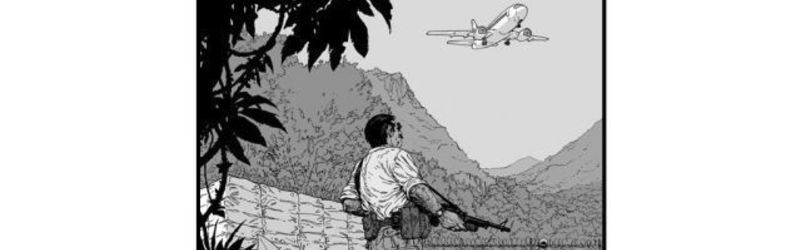
How a Mexican drug cartel makes its billions.
Showing 25 articles matching best fc points to buy Buyfc26coins.com is FC 26 coins official site..KzUT.
Best Article Business Crime World
How a Mexican drug cartel makes its billions.

The rise and fall of a chubby Idaho pizza delivery boy turned weed kingpin.
Inside the maze of an Amazon scam storefront empire.

Best Article Arts History Music
The making of Blonde on Blonde in Nashville.

The secret lives of Facebook moderators in America.
The best women’s soccer team in the world fights for equal pay.

The life and work of a Manhattan psychoanalyst.
A psychoanalytic reading of social media and the death drive.

On the retirement of Ted Williams.

On losing your Beloved in 2020.
The noon chimes in the bell-clock tower rising above him to the building's 307-foot pinnacle sounded: pom-pom-pom-pom . . . 16 notes, high and sweet. Some say the chimes say a poem: "Lord, through this hour "Be Thou my guide, "For in Thy power "I do confide." After the chimes, there is a long pause -- 23 seconds if you hold a wristwatch on it -- time enough for a practiced man to reload three rifles and a shotgun.
“Doc” Quigg’s wire report on the 1966 Texas Tower shooting on the campus of UT-Austin.
She calls claiming to be Amy Pascal, Kathleen Kennedy, or some other powerful woman in entertainment. She knows personal details about her mark as well as the woman she is impersonating.
She offers work, then sends them—photographers, make-up artists, soldiers—around the world to bilk them out of modest amounts of cash.
A two-part write-around of the world’s only billionaire.
He was a silent boy — a silent young man. With years the habit of silence became the habit of concealment. It was not long after the Standard Oil Company was founded, before it was said in Cleveland that its offices were the most difficult in the town to enter, Mr. Rockefeller the most difficult man to see. If a stranger got in to see any one he was anxious. "Who is that man?" he asked an associate nervously one day, calling him away when the latter was chatting with a stranger. "An old friend, Mr. Rockefeller." "What does he want here? Be careful. Don't let him find out anything." "But he is my friend, Mr. Rockefeller. He does not want to know anything. He has come to see me." "You never can tell. Be very careful, very careful." This caution gradually developed into a Chinese wall of seclusion. This suspicion extended, not only to all outsiders but most insiders. Nobody in the Standard Oil Company was allowed to know any more than was necessary for him to know to do his business. Men who have been officers in the Standard Oil Company say that they have been told, when asking for information about the condition of the business, "You'd better not know. If you know nothing you can tell nothing."
Joe Weisenthal is the executive editor of news for Bloomberg Digital and the co-host of What’d You Miss? and Odd Lots.
"If I don’t say yes to this, then I can never say yes to anything again. Because when else am I going to get a chance in life to co-host a tv show? Even if it’s terrible, and I’m terrible at it, and it’s cancelled after three months, and everyone thinks it’s awful, for the rest of my life, I’ll be able to say I co-hosted a cable TV show. And so I was like, you know what—I have to say yes to this."
Thanks to MailChimp, Big Questions, and Credible.com for sponsoring this week's episode.
Will Mackin is a U.S. Navy veteran who served with a SEAL team in Iraq and Afghanistan. His debut book is Bring Out the Dog.
“I wanted to write nonfiction and I started writing nonfiction. And the reason I did that was — first of all, I felt all the people did all the hard work, and who was I to take liberties? And the second reason was, I just felt an obligation to the men and women who I served with not to misrepresent them, or what they’d been through, or what it had meant to them, or how they felt about it. I kept piling these requirements on to myself: Well, if I present this particular event in this light, this guy’s going to get his feelings hurt. Or, I don’t know how this guy’s family will feel about me talking about this. And it became debilitating, all those restrictions, I kind of kept layering on myself. I was talking to George Saunders at one point about this, and I was like, ‘I don’t know if this book is going to happen. I’m just stuck’ And he pointed out, ‘You’re putting all these restrictions on yourself because it puts this perfect book off in the never-to-reach future. If you remove those and start fictionalizing things and getting at it a different way, maybe it’ll work for you.’”
Thanks to MailChimp and Breach for sponsoring this week's episode.
From Driving Miss Daisy to Green Book.
Not knowing what these movies were “about” didn’t mean it wasn’t clear what they were about. They symbolize a style of American storytelling in which the wheels of interracial friendship are greased by employment, in which prolonged exposure to the black half of the duo enhances the humanity of his white, frequently racist counterpart. All the optimism of racial progress — from desegregation to integration to equality to something like true companionship — is stipulated by terms of service.
The 1966 Esquire profile, with notes from the author.
On Thursday, October 10, Gay Talese will tape a live episode of the Longorm Podcast at NYU. The event is free and open to the public.
Andy Ward, a former editor at Esquire and GQ, is the editorial director of nonfiction at Random House.
"How you gain that trust is a hard thing to quantify. The way I try do it is by caring. If you don't care about every word and every sentence in the piece, writers pick up on that. ... Ultimately, it's their book or their magazine article. Their name is on it, not mine. I always try to keep that in mind."
Thanks to this week's sponsors: TinyLetter and EA SPORTS FIFA 14.
Basketball is considered one of the most difficult sports to effectively bet on, therefore gamblers like Haralabos Voulgaris who make a handsome living on NBA lines are a rare breed, whose knowledge of the game and personal statistical databases rival most of the league’s front-offices’.
The first entry in the City by City project, on a Baltimore funeral:
My homeboy is interred at a cemetery with a swan lake where we used to take our girls at night because it was a park with a lake and it was just over the line and in the county.
On the life of illegal immigrant fruit pickers.
Without 1 million people on the ground, on ladders, in bushes—armies of pickers swooping in like bees—all the tilling, planting, and fertilizing of America's $144 billion horticultural production is for naught. The fruit falls to the ground and rots.
“Fear is running rampant in the Curia, where the mood has rarely been this miserable. It’s as if someone had poked a stick into a beehive. Men wearing purple robes are rushing around, hectically monitoring correspondence. No one trusts anyone anymore, and some even hesitate to communicate by phone.”
There is a little-known network of 11 federal prisons in America called Criminal Alien Requirement facilities. They exclusively house men who lack U.S. citizenship and have been convicted of crimes. They are all run privately. And over the last 18 years, they have allowed scores of inmates to die from diseases that could have been treated.
Omar Mohammed (most certainly not his real name), a former Iraqi cop, is widely believed to be the most skilled and prolific terrorist hunter alive. Recently, he personally killed two of Al-Qaeda’s senior commanders in Iraq. He has already been shot and blown up, and with U.S. forces on their way out, his chances of survival in Baghdad are slim.
Behind the scenes, a small team of FBI agents spent years trying to solve a stubborn mystery — whether officials from Saudi Arabia, one of Washington’s closest allies, were involved in the worst terror attack in U.S. history. This is their story.