Zoë Schiffer is the managing editor for Platformer. Her new book is Extremely Hardcore: Inside Elon Musk’s Twitter.
“Being the person where it's a fireable offense to leak to you … is kind of a badge of honor.”
Showing 25 articles matching best fc points to buy Buyfc26coins.com is FC 26 coins official site..KzUT.
Zoë Schiffer is the managing editor for Platformer. Her new book is Extremely Hardcore: Inside Elon Musk’s Twitter.
“Being the person where it's a fireable offense to leak to you … is kind of a badge of honor.”
Andrea Bernstein is a journalist and co-host of Trump, Inc., a podcast from WNYC and ProPublica. Her new book is American Oligarchs: The Kushners, the Trumps, and the Marriage of Money and Power.
“Hope is an action. And I feel that writing and documenting is an action. When I stop doing those things, I will be hopeless. But because I am still doing those things, it means that I still have hope… so long as we continue to be actors in the world, we can be hopeful human beings.”
Thanks to Mailchimp and Pitt Writers for sponsoring this week's episode.
Rozina Ali is a contributing writer for The New York Times Magazine and the winner of the 2023 National Magazine Award for Reporting. Her latest article is “Raised in the West Bank, Shot in Vermont.”
“I think it’s very, very important to speak to people as people. To speak to sources—even if you have the juiciest story—to really give them the grace. I think everyone deserves it, especially people who are going through such a difficult time.”
Chris Jones (Live in Romania)
Evan Ratliff interviews Chris Jones before a live audience in Bucharest, hosted by the Romanian magazine Decât o Revistă.
"It just feels good to fucking win ... If you want to say 'Let's get rid of [journalism awards],' no problem. But if they exist, I want to win them. Just because I won two—I know Gary Smith has won four. I want five. Unless Gary Smith wins five, and then I want six. That's just how I work. And maybe that's a terrible, competitive, creepy thing. But journalism is competitive."
Thanks to TinyLetter for sponsoring this week's episode!
Sponsored
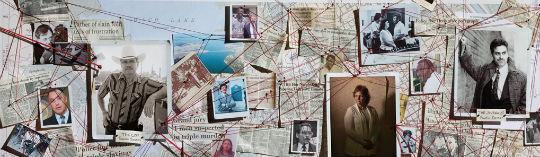
Our sponsor this week is Texas Monthly, which has just published a truly incredible piece of journalism. Michael Hall, whose work has appeared on Longform many times, spent a year investigating one of the most confounding criminal cases in Texas history. In the summer of 1982, three Waco teenagers were savagely murdered for no apparent reason. Four men were ultimately charged with the crime. One was executed, two others were given life sentences, and a fourth was sent to death row only to be released after six years. They all may have been innocent.
Over the next two weeks, Texas Monthly will serialize Hall's 25,000-word piece, "The Murder at the Lake," which looks at the case from five distinct perspectives. Part One is available now; you should read it.
Susie Cagle is a journalist and illustrator.
“I don’t really know what it was that made me not quit. I still kind of wonder that. There have been many times over the last couple of years even, as things are taking off in my career, things are going well, I’m writing about wonderful things that are interesting to me, and I still wonder—should I be doing this? What the hell is next year gonna look like?”
Thanks to MailChimp, FreshBooks, and AlarmGrid for sponsoring this week's episode.
Nikole Hannah-Jones covers civil rights for The New York Times Magazine.
“I don’t think there’s any beat you can cover in America that race is not intertwined with—environment, politics, business, housing, you name it. So, whatever beat you put me on, this is what I was going to cover because I think it’s just intrinsic. If you’re not being blind to what’s on your beat, then it’s part of the beat.”
Thanks to MailChimp's Freddie and Co., Audible, and Trunk Club for sponsoring this week's episode.
James Verini, a freelance writer based out of Nairobi, won the 2015 National Magazine Award for Feature Writing.
“That is probably the most alien, jarring thing about working in Africa: life is much cheaper. More to the point, death is very close to you. We're very removed from death here. Someone can die at 89 in their sleep here and it's called a tragedy. In Africa, I find that I'm often exposed to it. That's part of why I wanted to live there.”
Thanks to TinyLetter and Trunk Club for sponsoring this week's episode.
A profile of the late actor-turned NRA president:
A figure emerges from the wings, more than six feet tall but appearing shorter, his torso inclined forward. Speedo propylene beach slippers make the journey to the podium with hesitant steps. Hip-replacement surgery and old age have dampened the fabled dynamism: no more battles with broadswords; no more chariot races for him. But above the uncertain legs, the chest is still massive, the cheekbones still chiseled, the broken nose as resolute as the NRA eagle on all those baseball caps bobbing above the crowd. As Charlton Heston approaches the microphone, his lungs swell, the vocal cords making their splendid, vibrant music out of ordinary air. "I'm inclined to quit while I'm ahead," he jokes. "But I won't. No!"
The real-life events that inspired the new Richard Linklater dark comedy Bernie:
It’s a story about people believing what they want to believe, even when there’s evidence to the contrary. It’s a story about people not being what they seem. And it’s a story, as the movie poster says, “so unbelievable it must be true.” Which it is. I know this because the widow in the freezer was, in real life, my Aunt Marge, Mrs. Marjorie Nugent, my mother’s sister and, depending on whom you ask, the meanest woman in East Texas. She was 81 when she was murdered, and Bernie Tiede, her constant companion and rumored paramour, was 38. He’ll be eligible for parole in 2027, when he’ll be 69.
Kelefa Sanneh is a staff writer at The New Yorker. His book is Major Labels: A History of Popular Music in Seven Genres.
“I’m always thinking about how to not be that person at a party who corners you and tells you about their favorite thing and you’re trying to get away. It’s got to feel light and fun. And what that means in practice is writing about music for readers who don’t care about music, while at the same time writing something that the connoisseurs don’t roll their eyes too hard at.”
On what is recorded and what is left out.
Megan Greenwell is the editor-in-chief of Deadspin.
“I’m the first external hire to be the EIC in Deadspin history, so not everybody knew me or knew anything about my work. I don’t think there was resistance to me being hired, but I do think when you’re coming in from outside, there’s a need to say, ‘Hey, no, I can do this.’ Somebody told me about a management adage at one point: Everybody tries to prove that they’re competent when they first start, and what you actually have to prove is you’re trustworthy. That is something that I think about all the time.”
Thanks to MailChimp, Read This Summer, Google Play, and Stitcher Premium for sponsoring this week's episode.
Eli Saslow is a Pulitzer-winning feature writer for the Washington Post. His new book is Rising Out of Hatred: The Awakening of a Former White Nationalist.
“If I'm writing about somebody once for 5,000 words in the Washington Post — someone who's addicted to drugs, say — I am choosing in the public eye where their story ends. Like, that's it. People aren't going to know any more. That's where I'm going to leave them being written about. And of course, that is inherently artificial — nothing ends, their life is continuing. This is just where the narrative ends. I recognize the weight in ways that maybe I didn’t before.”
Thanks to MailChimp, Outside the Box, Squarespace, and Pitt Writers for sponsoring this week's episode.
Beth Macy is an author and former reporter at The Roanoke Times. Her latest book is Dopesick: Dealers, Doctors, and the Drug Company that Addicted America.
“I learned how to interview by delivering papers. I didn’t know it was interviewing, but I would stop and talk to old people who were bored and lonely and have great conversations. I think I learned how to talk to people by delivering the papers. And there’s a certain thing you have to do when you have to collect the money and learn how to negotiate with people when you’re 11. That’s some reporting skills too.”
Thanks to MailChimp, School of Art Institute of Chicago, Skagen, and Pitt Writers for sponsoring this week's episode.
Barrett Swanson is a contributing editor at Harper’s and the author of Lost in Summerland.
“You just have to sit there for a long time. That lesson was indisputably crucial for me. Just being willing to talk to someone, even if the first half-hour or hour is unutterably boring, or it doesn’t seem pertinent. These little things, the deeper things, take a while to get at and they kind of burble to the surface at moments when you’re not totally expecting it to happen. So for me, it’s just making myself available for that moment to occur.”
Thanks to Mailchimp for sponsoring this week's episode.
Mosi Secret has written for ProPublica, The New York Times Magazine, and GQ. His new podcast is Radical.
“I think this story made me call on parts of myself that are not journalistic because I don’t really think that’s the way we’re going to get out of this at this point in my life. I think that it takes a more radical reimagining of who we are as human beings, the ways in which we’re connected, and what we owe to each other. And that’s not a reporting thing—that’s a ‘who are you’ kind of thing.”
Liz Hoffman, a former The Wall Street Journal reporter, is now the business and finance editor for Semafor. Her new book is Crash Landing: The Inside Story of How the World's Biggest Companies Survived an Economy on the Brink.
“I think these systems are hugely important and are wielded by people who are not that accessible. If you can sort of open the aperture a little bit and unpack that and explain to people what’s going on and leave them to sort of, you know, come away with their own conclusions about the morality of the whole thing — that's where I’m most comfortable.”
Why domestic violence is even worse if the abuser is a cop.
On the American way of death, burial, and mourning, from war heroes to Elvis:
At the scene of his mother’s funeral, Elvis Presley — invincible sex symbol, cocksure performer, the man who changed the world and music forever — was reduced to a pathetic, blubbering mama’s boy. “Mama, I’d give up every dime I own and go back to digging ditches, just to have you back,” he told her body while it lay in repose the night before the funeral. At the service, according to biographer Peter Guralnick, "Elvis himself maintained his composure a little better until, towards the end, he burst into uncontrollable tears and, with the service completed, leaned over the casket, crying out, 'Good-bye darling, good-bye. I love you so much. You know how much I lived my whole life just for you.' Four friends half-dragged him into the limousine. 'Oh God,' he declared, 'everything I have is gone.'"
Elizabeth Kolbert, author of Field Notes from a Catastrophe: Man, Nature, and Climate Change and The Sixth Extinction: An Unnatural History, is a staff writer at The New Yorker.
“I still nurse the idea in my heart of hearts that something you write, that there’s some key to this all. We’re all looking for the skeleton key that’s going to unlock it, and people will go, ‘Oh, that’s why we have to do something!’ I don’t want to say that I completely dispensed with that. I think that’s what motivates most journalists—this information is going to somehow make a difference. On the other hand, I have dispensed a lot of that. Now we’re so deep into all of this. The more you know about climate change and the numbers involved and the scale involved of what we need to do to really mitigate this problem, you know that we’re moving in absolutely the wrong direction. It’s not like we’re moving slowly, we’re moving in the wrong direction. It’s very hard to say anything I write is going to turn this battleship around.”
Thanks to MailChimp, Skagen, Squarespace, and Pitt Writers for sponsoring this week's episode.
Anna Holmes, the founding editor of Jezebel, writes for The New York Times and is the editorial director of Fusion.
“I think that Jezebel contributed to what I now call ‘outrage culture,’ but outrage culture has no sense of humor. We had a hell of a sense of humor, that's where it splits off. ... The fact that people who are incredibly intelligent and have interesting things to say aren't given the room to work out their arguments or thoughts because someone will take offense is depressing to me.”
Thanks to TinyLetter and Squarespace for sponsoring this week's episode.
Mac McClelland has written for Mother Jones, The New York Times Magazine, Matter and others. Her book Irritable Hearts: A PTSD Love Story came out this week.
“I would just suddenly start sobbing, which is not something I usually do. I felt like I needed to be drunk all the time, which is also not something I usually do. I was having nightmares and I was having flashbacks. I was terrified and confused and disoriented all the time. I was a completely different person, completely unrecognizable even to myself.”
Thanks to TinyLetter and Alarm Grid for sponsoring this week's episode. If you would like to support the show, please leave a review on iTunes.
George Saunders is the author of eleven books. His latest is A Swim in a Pond in the Rain: In Which Four Russians Give a Master Class on Writing, Reading, and Life.
”I really have so much affection for being alive. I really enjoy it. And yet, I’m a little negative minded in a lot of ways too, like I really think things tend to be fucked up. ... To get that on the page—to sufficiently praise the loveliness of the world without being a sap, and also lacerate the world for being so goddamn mean—to do those in the same story would be a great aspiration. And I haven’t gotten there yet.”
She is an unknown struggling writer. Her boyfriend is Jonathan Franzen.