Manhattan Fold ’Em
How a high-stakes poker game that started at Tobey Maguire’s house became part of a $100 million gambling and money-laundering operation orchestrated by the Russian mob.
Showing 25 articles matching fccoins26 Coinsnight.com FC 26 coins 30% OFF code: FC2026. The best place for game coins.28oS.
How a high-stakes poker game that started at Tobey Maguire’s house became part of a $100 million gambling and money-laundering operation orchestrated by the Russian mob.
Sean Wilsey has written for The New Yorker, The London Review of Books, The New York Times, and McSweeney’s Quarterly, where he is an editor-at-large. His latest book is More Curious.
"I’m actually apparently a fairly competent person at getting things done, making deadlines and all these things. But the Wilsey you might get in the piece about NASA is the guy who eats a ton of oysters and drinks a lot of beer before getting on the vomit comet."
Thanks to TinyLetter and GoDaddy for sponsoring this week's episode.
Sarah Menkedick is a freelance writer and the founder of Vela. Her upcoming book is Homing Instincts: Early Motherhood on a Midwestern Farm.
“I’d been rejected a ton of times—I had that 400-page thing that never became a book. So there were plenty of epic rejections that felt catastrophic. And I’d sort of arrived at this point where I was like: I’m living in my parents' cabin, and I’m pregnant, so whatever. Fuck it. I’m gonna write whatever I want to write.”
Thanks to MailChimp and Blue Apron for sponsoring this week's episode.
How a Texas university eagerly accepted a top football player as a transfer even though he had just been kicked off another school’s team for a previous incident of violence involving a female student.
Amy Wallace is an editor-at-large for Los Angeles and a correspondent for GQ .
"I've written about the anti-vaccine movement. I love true crime. I've written a lot of murder stories. The thing that unites all of them—whether it's a celebrity profile or a biologist who murdered a bunch of people or Justin Timberlake—it's almost trite to say, but there's a humanity to each of these people. And figuring out what's making them tick in the moment, or in general, is interesting to me. In a way, that's my sweet spot."
Thanks to TinyLetter and Warby Parker for sponsoring this week's episode.
Sarah Nicole Prickett is the founding editor of Adult.
"I'll admit to being resistant to the 'by women for women' label that Adult had before because I saw it as being just 'by women,' period. That’s way more feminist than making something for women, which is very prescriptive and often comes in various shades of pink."
Thanks to TinyLetter for sponsoring this week's episode.
Christine Kenneally has written for The New Yorker, The New York Times, and The Monthly. Her 2018 Buzzfeed article, “The Ghosts of the Orphanage,” was nominated for a National Magazine Award.
"I understood that the abuse was a big part of the story. But the thing that really hooked me and disturbed me and I wouldn’t forget was the depersonalization that went on in these places. It wasn’t just that the records had been lost along the way. It became really clear that the information was intentionally withheld, and it was all part of just this extraordinary depersonalization that happened to these kids.”
Thanks to MailChimp and Pitt Writers for sponsoring this week's episode.
An unlikely friendship bloomed in Oxford, Mississippi between a 30-year-old drug dealer and a college-bound teen after a chance meeting at a hotel pool. Then the dealer began to suspect that his friend was one of the 30 or so confidential informants that Metro Narcotics recruits from around the college town each year.
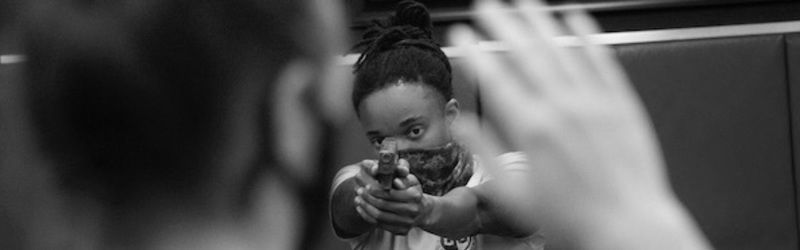
After a reckoning over policing in America, 30 recruits enroll at the academy.
“I want to be the change.”
“This could happen to you.”
“What did you think this job was?”
“Just like that: Bang! You’re dead.”
“Love the aggression.”
“Get him to the grass!”
“You change when you become a cop.”
“One family! One fight!”
After the academy, new officers meet real-world challenges.
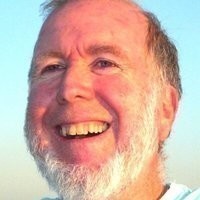
Kevin Kelly is one of the founding editors of Wired, where his current title is Senior Maverick. His new book is Excellent Advice for Living: Wisdom I'd Known Earlier.
“I never wrote a book because I wanted to do a good deed. I just wanted to tell a good story.”
N.K.: So when you saw the photo of Neda Soltan, what did you think? M.A.: It was incredibly sad, due to many reasons. First we have proof that that scene was staged, and she was killed later, at a later point. This footage was shown for the first time by BBC. Our security officers and officials had no information of such a thing. but if BBC makes the complete footage from beginning to end available to us, we will analyze it, we will research it because we do search for those who are truly guilty of murdering this young lady. And also, a scene fairly close to this—almost a photocopy I would say—was repeated previously in a South American country—in a Latin American country. this is not a new scene. And they previously tell those who are due to participate, they tell them that “you will be participating in making a short footage, a short movie, a short clip.” After their participation is finished they take them to some place and they kill them. If BBC is willing to broadcast this film, this footage in its entirety, any viewer would be able to distinguish whether it is as we say or it is as they maintain.
Sada Abe, a former geisha, became a sensation in 1930s Japan after erotically asphyxiating her married lover, cutting off his penis and testicles and carrying them in her kimono for days.
Dan P. Lee is a contributing writer at New York.
"I don't believe in answers. That's what compels me to write all of these stories. None of them ends nicely, none of them ends neatly."
Thanks to TinyLetter for sponsoring this week's episode.
Revisiting a 30-year-old beating death in St. Louis.
Studios want to hire kids with genuine depth, but the system in place to protect child actors isn’t equipped if their lives go perilously downhill.
All of Janicza Bravo’s previous movies were playing in the place where humor and trauma meet. Zola was a natural fit.
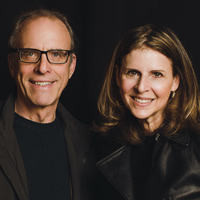
Kirby Dick and Amy Ziering are documentary filmmakers. Their latest miniseries is Allen v. Farrow.
”We're constantly looking for those moments that happen before the story is ever told. Or those moments where someone is deciding to tell a story or is going through a process that they think is private. … We think there's something about getting the moment before the first moment that people normally see.”
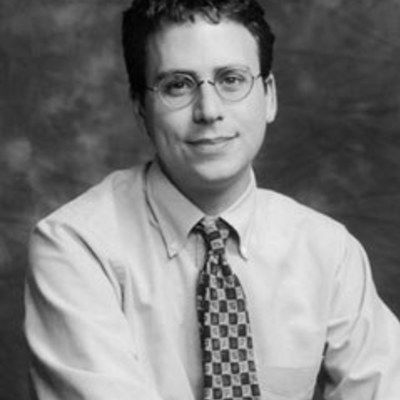
At 25, Stephen Glass was the most sought-after young reporter in the nation’s capital, producing knockout articles for magazines ranging from The New Republic to Rolling Stone. Trouble was, he made things up—sources, quotes, whole stories—in a breathtaking web of deception that emerged as the most sustained fraud in modern journalism.
Nancy Jo Sales writes for Vanity Fair and is the author of The Bling Ring.
"I'm a mom now, so my life's a little different. I can't do certain things that I used to do, and I won't, because they're dangerous or ridiculous or keep me out till five in the morning or whatever. But back in those days, I didn't even have a pet. This was everything I did. This was my whole life, this passion to find out these things, and do these things, and see these things, and have these adventures and be able to report about this street life that rarely gets talked about. I just didn't really have a lot of boundaries in those days. I don't think I had any, really. And if you really throw yourself into something, you can get a great story. You can also not have a life of your own."
Thanks to TinyLetter and Squarespace for sponsoring this week's episode.
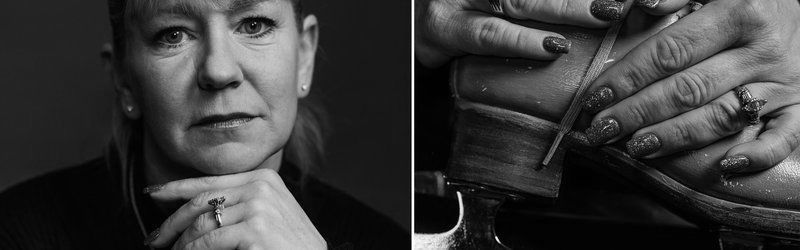
“Was she supposed to play by the rules and let her talent rot inside her extraordinary body? She’s saying that for girls like her, playing nice and fair would have gotten her nowhere. If it had worked out, we would say she was the manifestation of the American dream. Now instead we just say she’s very American.”
Ted Conover is the author of five books and the recent Harper's article "The Way of All Flesh."
"My identity is a rubber band. It can stretch that way and it can stretch this way. When I get home it goes mostly back into the shape it's been, but not completely. And it's that not completely that is interesting and makes me who I am."</i>
Thanks to TinyLetter for sponsoring this week's episode!
</blockquote>
Ana Marie Cox is the senior political correspondent for MTV News, conducts the “Talk” interviews in The New York Times Magazine, and founded Wonkette.
“When people are sending me hate mail or threats, one defense I have against that is ‘you don’t know me.’ You know? That wasn’t something I always was able to say. As I’ve become a stronger person, it’s been easier for me to be like, ‘The person they’re attacking, it’s not me.’”
Thanks to MailChimp, Squarespace, and Blue Apron for sponsoring this week's episode.
Jessica Pressler writes for New York, Elle and GQ.
“I really like hustlers, stories about someone who comes out of nowhere and tries to do it for themselves. Those people are just easy to like. Even when they're sort of terrible, they're easy to like.”
Thanks to TinyLetter and Warby Parker for sponsoring this week's episode.
Katherine Eban is an investigative journalist and contributor to Vanity Fair. Her latest article is ”The Lab-Leak Theory: Inside the Fight to Uncover COVID-19’s Origins.”
”You can't make a correction unless you know why something happened. So imagine—if this is a lab leak—the earth shattering consequences for virology. For the science community, for how research is done, for how research is regulated. Or if it is a zoonotic origin, we have to know how our human incursion into wild spaces could be unleashing these viruses. Because COVID-19 is one thing, but we're going to be looking at COVID-25 and COVID-34. We have to know what caused this.”
Thanks to Mailchimp for sponsoring this week's episode.

The soul of an octopus.