Showing 25 articles matching fccoins26 Coinsnight.com FC 26 coins 30% OFF code: FC2026. The best place for game coins.28oS.

Will Mackin is a U.S. Navy veteran who served with a SEAL team in Iraq and Afghanistan. His debut book is Bring Out the Dog.

“I wanted to write nonfiction and I started writing nonfiction. And the reason I did that was — first of all, I felt all the people did all the hard work, and who was I to take liberties? And the second reason was, I just felt an obligation to the men and women who I served with not to misrepresent them, or what they’d been through, or what it had meant to them, or how they felt about it. I kept piling these requirements on to myself: Well, if I present this particular event in this light, this guy’s going to get his feelings hurt. Or, I don’t know how this guy’s family will feel about me talking about this. And it became debilitating, all those restrictions, I kind of kept layering on myself. I was talking to George Saunders at one point about this, and I was like, ‘I don’t know if this book is going to happen. I’m just stuck’ And he pointed out, ‘You’re putting all these restrictions on yourself because it puts this perfect book off in the never-to-reach future. If you remove those and start fictionalizing things and getting at it a different way, maybe it’ll work for you.’”

Thanks to MailChimp and Breach for sponsoring this week's episode.
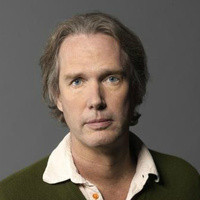
John Seabrook is a New Yorker staff writer and the author of The Song Machine: Inside the Hit Factory.

“Whether or not the piece succeeds or fails is not going to depend on whether I’m up to the minute on the latest social media spot to hang out or the latest slang words that are thrown around. It’s going to be the old eternal verities of structural integrity. So much of it is narrative and figuring out the tricks—and they are tricks, really—that make it go as a narrative. And that’s really the most interesting thing. Because you never ultimately have a formula that goes from piece to piece; it’s always going to have to be rediscovered every time you work on a long piece. And that’s kind of fun.”

Thanks to MailChimp and MasterClass for sponsoring this week's episode.

Jenny Odell is a multidisciplinary artist and the author of How to Do Nothing: Resisting the Attention Economy.

“I’ve noticed that the times I’m extra susceptible to being on social media is when I am feeling personally insecure or when I’m dealing with existential dread. That within itself is not part of the attention economy - that’s just a human being having feelings and reacting to things. For me, it’s a question of like, ’What do I do with that?’ I can either feed it back into the attention economy and actually get more of it back - more anxiety or more existential dread - or I can go in this other direction and spend time alone or with people who care about the same things. Those are places where I can bring my feelings and they won’t destroy me.”

Thanks to Mailchimp, Substack, and Pitt Writers for sponsoring this week's episode.

PJ Vogt is the co-host of Reply All.

“Every radio story is broken. Everything is missing some piece it’s supposed to have. Everything has some weird interview that didn’t go the way you thought it was going to go, or you thought you had an answer but you were wrong.”

Thanks to MailChimp, Squarespace, and Blinkist for sponsoring this week's episode.

Anna Holmes, the founding editor of Jezebel, writes for The New York Times and is the editorial director of Fusion.

“I think that Jezebel contributed to what I now call ‘outrage culture,’ but outrage culture has no sense of humor. We had a hell of a sense of humor, that's where it splits off. ... The fact that people who are incredibly intelligent and have interesting things to say aren't given the room to work out their arguments or thoughts because someone will take offense is depressing to me.”

Thanks to TinyLetter and Squarespace for sponsoring this week's episode.

Daniel Alarcón, a novelist and the co-founder of Radio Ambulante, has written for Harper's, California Sunday, and the New York Times Magazine.

“I’m a writer. I’ve written a bunch of books, and I care a lot about my sentences and my prose and all that. But would I be willing to defend my book in a Peruvian prison? That’s a litmus test I think a lot of writers I know would fail.”

Thanks to MailChimp, Audible, and Home Chef for sponsoring this week's episode.

This Is My Brain on Chantix

Chantix is a pill that decreases the pleasurable effects of cigarettes. It also causes hallucinations, suicidal thoughts and waking nightmares:

A week into my Chantix usage, I started to feel as if the city landscape had imperceptibly shifted around me. Mundane details began to strike me as having deep, hidden significance. The neon arch above McDonald’s: The lights blinked on and off in some sort of pattern, and I needed to crack the code.

Style That Works on Your Schedule

Our sponsor this week is Trunk Club, a new way to shop. Trunk Club takes the pain out of finding great men's clothing: instead of having to go the store, you'll get a personal stylist who will find the best clothes to fit your style and budget, then send them right to your door. Keep what you like, give back what you don't free of charge.

There are no hidden fees, no subscriptions, no waiting in line. Just fantastic clothes handpicked for you. Try Trunk Club today.

Michael Lewis has written for The New Republic, Vanity Fair and The New York Times Magazine. His latest book is Flash Boys.

“When you're telling a story, you're essentially playing the cards you're dealt. ... Sometimes the hand is very easy to play. Sometimes the hand is difficult to play. At the end, I just try to think, ‘Is there anything I would have done differently?‘ ‘Is there any trick I missed?’ If I don't have the feeling that I missed something big, I feel happy about the book.”

Thanks to TinyLetter and Audible for sponsoring this week's episode.

Dan Taberski is the host of Missing Richard Simmons and Surviving Y2K.

“Why would you walk into podcasting, where not a lot of rules have been written yet, why would walk into that space and be like, I'm just going to stick to the rules over here. It doesn't make any sense. ... Sourcing, respect for privacy — all these rules are here for a reason. And there's a line you shouldn't cross. But I don't see the point of not walking up to that line and looking over it. Because that is where interesting stuff is happening. ... To be able to earn that ability to cross the line a little bit and then jump back to where you belong, I think that's where beautiful storytelling happens.”

Thanks to MailChimp and Pitt Writers for sponsoring this bonus episode.

Jonathan Goldstein is an audio producer and the host of Heavyweight.

“I wasn’t taking myself very seriously, initially. I liked working with my friends and family because I think I was a little more comfortable with them. Then in the second season people were writing in with real problems, and they were looking at me as a kind of expert. It was terrifying to meet with these people and see the look of hopefulness in their eyes. ... I realized I need to step it up and even if I didn’t feel like an expert—an expert in an invented field that doesn’t really exist—that I’d really have to take that on with seriousness.”

‘We Will Have to Go Through a Hell to Reach Our Future. There Is No Other Way.’

Yemen on the brink of hell:

In a sense, south Yemen itself offers a grim cautionary tale about the events now unfolding in Taiz and across the country. Until 1990, when the two Yemens merged, South Yemen was a beacon of development and order. Under the British, who ruled the south as a colony until 1967, and the Socialists, who ran it for two decades afterward, South Yemen had much higher literacy rates than the north. Child marriage and other degrading tribal practices came to an end; women entered the work force, and the full facial veil became a rarity. It was only after Ali Abdullah Saleh imposed his writ that things began to change. When the south dared to rebel against him in 1994, Saleh sent bands of jihadis to punish it. The north began treating the south like a slave state, expropriating vast plots of private and public land for northerners, along with the oil profits. Tribal practices returned. Violent jihadism began to grow.

Maggie Haberman covers the White House for The New York Times.

“If I start thinking about it, then I’m not going to be able to just keep doing my job. I'm being as honest as I can — I try not to think about it. If you’re flying a plane and you think about the fact that if the plane blows up in midair you’re gonna die, do you feel like you can really focus as well? So, I’m not thinking about [the stakes]. This is just my job. This is what we do. Ask me another question.”

Thanks to MailChimp, Bombfell, Babbel, and HelloFresh for sponsoring this week's episode.
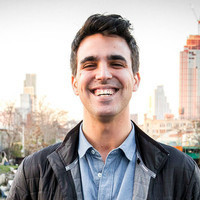
Jonah Weiner is a contributing writer for The New York Times Magazine and co-author of the newsletter Blackbird Spyplane.

“It's a version of myself. It's a hyperbolic version of myself. And I think it keeps it fun for me. It doesn't feel like a job. Ideally, it keeps it fun for readers. And I think that there actually is this function where X out of 10 people coming to it, their eyes are going to cross and they're going say, I'm out. No thanks. And that's fine, because the Y out of 10 who stick around feel that much more in on something and it just makes it feel like a funky, special place.”

Reggie Ugwu is an arts reporter for The New York Times.

“I find that even though I talk to celebrities or popular artists, I’m not all that interested in celebrity. I’m pretty uninterested in celebrity. But I’m really interested in creativity.”

Thanks to Mailchimp for sponsoring this week's episode.

Cheryl Strayed is the author of Wild and Tiny Beautiful Things.

“There's a long history, of women especially, saying 'Well, I just got lucky.' I didn't just get lucky. I worked my fucking ass off. And then I got lucky. And if I hadn't worked my ass off, I wouldn't have gotten lucky. You have to do the work. You always have to do the work.”

Thanks to TinyLetter, Trunk Club, and HP Matter for sponsoring this week's episode.

Shadow Campus

An investigation into Boston’s off-campus housing.

  1. A House Jammed with Students, a Life of Promise Lost

    The fire that killed a Boston University student in a house filled with 13 other people and only one exit.

  2. Overcrowded and at Risk: A Way of Life, and Sometimes, Death for Student Tenants

    Examining the laws around off-campus housing and their lack of enforcement.

  3. A Devastating Mismatch: City vs. Scofflaw Landlords

    How the giants in the student rental trade do business.