Running with the Bully
“Twenty-five years ago, I used to live in fear of Trevor Latham kicking my ass nearly every day. I grew up to be a writer. He grew up to run one of the toughest biker gangs in America. And then I tracked him down.”
Showing 25 articles matching better-drink-my-own-piss.
“Twenty-five years ago, I used to live in fear of Trevor Latham kicking my ass nearly every day. I grew up to be a writer. He grew up to run one of the toughest biker gangs in America. And then I tracked him down.”
A son on his father's career behind the bar.
Excerpted from Two and Two.

The author survives a bite by a venomous snake in a remote area of Yosemite National Park.
My leg, from toe to hip, turned black and yellow and eventually swelled to 24 inches, more than twice its normal circumference.
Twenty years ago my hometown made national headlines when the local college staged an internationally acclaimed play about gay men and the AIDS crisis. The people I grew up with are still feeling the aftershocks.
Black women have been telling the truth about America for a long time. As a Black woman in journalism, my obligation is no less than that.
Meghan Daum's latest book of essays is The Unspeakable.
“As writers we think, well there has to be closure, there has to be a beginning middle end, the character has to go through a change. And then in life we're supposed to have some sort of arc or aha moment, as if the experience isn't legitimate unless we get something out of it. That's so culturally constructed, as they say. It's so artificial.”
Thanks to TinyLetter, Scribd, and Oscar for sponsoring this week's episode.
Sarah Marshall is a writer and hosts the podcast You're Wrong About.
”I love it when people tell me that listening to the way I talk about these people in the stories that we tell, and just about the world generally, has made them practice empathy more. I almost feel like I have preserved this a-little-bit-past version of myself, because I've been on this journey throughout the pandemic of becoming pretty cynical, and then deciding cynicism is a luxury and that it feels better, ultimately, to try to believe in people.”
Delivered at the Austin Convention Center on March 15, 2012.
In the beginning, every musician has their genesis moment. For you, it might have been the Sex Pistols, or Madonna, or Public Enemy. It's whatever initially inspires you to action. Mine was 1956, Elvis on the Ed Sullivan Show. It was the evening I realized a white man could make magic, that you did not have to be constrained by your upbringing, by the way you looked, or by the social context that oppressed you. You could call upon your own powers of imagination, and you could create a transformative self.
"I have the sensation, as do my friends, that to function as a proficient human, you must both 'keep up' with the internet and pursue more serious, analog interests."
An essay on technology’s reach into daily life.
A profile of California congressman Darrell Issa:
A few days after we met in Las Vegas, Issa called me. He was concerned about all my questions regarding his early life and didn’t see why they were newsworthy. The conversation was awkward.
Revealing the murder of 109 Vietnamese civilians during a 1968 search-and-destroy mission on a rumored Viet Gong stronghold, often referred to in military circles as Pinkville, actually the village of My Lai.
What’s Madoff like as a prisoner? According to his fellow inmates, he’s cheap (“You couldn’t get an ice-cream cone off him”), he’s unrepentant (“Fuck my victims”), and he’s eager to dole out financial advice.
"It is one thing for you to get a correct image, and it is another thing for me to spoil my life."
Michael Paterniti, a correspondent for GQ, has also written for Esquire, Rolling Stone and Outside. His latest book is The Telling Room.
"I want to see it, whatever it is. If it's war, if it's suffering, if it's complete, unbridled elation, I just want to see what that looks like—I want to smell it, I want to taste it, I want to think about it, I want to be caught up in it."
Thanks to this week's sponsors: TinyLetter and Hari Kunzru's Twice Upon a Time, the new title from and Atavist Books.
The writer contemplates beauty and identity following reconstructive surgery.
There was a long period of time, almost a year, during which I never looked in a mirror. It wasn’t easy, for I’d never suspected just how omnipresent are our own images. I began by merely avoiding mirrors, but by the end of the year I found myself with an acute knowledge of the reflected image, its numerous tricks and wiles, how it can spring up at any moment: a glass tabletop, a well-polished door handle, a darkened window, a pair of sunglasses, a restaurant’s otherwise magnificent brass-plated coffee machine sitting innocently by the cash register.
Vauhini Vara is a contributing writer at Wired and author of the novel The Immortal King Rao.
“With a magazine story, it might be like six months or a year or two, if it's something that took you a long time. With this [novel], it was 13 years for me, but the sort of emotional arc felt similar, where there were these periods of despair and a sense that like, this wasn't going anywhere, and then these periods where like, I'm a genius and this is going to be the best book ever written. You go back and forth, as we do with our journalism. But then with every draft of it, I always felt like, all right, this is better than the last draft at least. I don't know what the next one is going to look like, but this is definitely an improvement. And I feel like that's what kept me feeling like I was at least moving in the right direction.”
Robert Samuels and Toluse Olorunnipa are reporters for The Washington Post and co-authors of the new book His Name Is George Floyd: One Man’s Life and the Struggle for Racial Justice.
“Looking at George Floyd's family history, looking at the poverty that he grew up in, looking at the schools that he attended, which were segregated, looking at the opportunities that were denied to him and the struggles he had in the criminal justice system—it's an extraordinary American experience, in part because it's so outside of the norm of what we think of when we think of the American dream…. And so we wanted to be able to showcase that that kind of extraordinary American experience is ordinary for so many people.”
George Saunders has written for The New Yorker and GQ. His latest collection of short stories is Tenth of December.
“Maybe you would understand your artistry to be: put me anywhere. I'll find human beings, I'll find human interest, I'll find literature. And I guess you could argue the weirder, or maybe the less explored the place, the better.”
Thanks to TinyLetter and Audible for sponsoring this week's episode. For a free audiobook of your choice, go to audiblepodcast.com/longform.
I can’t ask anything. Once in a while if I’m forced into it I will conduct an interview, but it’s usually pro forma, just to establish my credentials as somebody who’s allowed to hang around for a while. It doesn’t matter to me what people say to me in the interview because I don’t trust it.
Kindler could be remorseful after letting loose -- he'd send women flowers the day after bringing them to tears -- but that didn't prevent the next explosion. Says an executive who worked closely with him: "Don't call me at five o'clock in the morning and rip my face off, then call me at 11 o'clock at night and tell me how much you love me."
But now, being a celebrity yourself, you feel differently? I've subsequently changed my opinion. Brad Pitt doesn't have a superpower at his back. He just has some crazed fans and paparazzi. But now, having had all three, I must say, I'm not terribly impressed with the experience.
On the nature of violence.
When my brother was twelve, I found six mice nailed to the wall of the abandoned tree house in the woods near our apartment. He spent a lot of time there. It seemed to me the little mouse faces were frozen in agony. As though they’d been alive when he’d hammered the nails through them.
Cheryl Strayed is the author of Wild and Tiny Beautiful Things. Her new podcast is Sugar Calling.
“I think that we have this limited idea of what ambition is. All through my twenties, you wouldn’t necessarily have looked at me and been like, ‘she’s ambitious.’ I mean, I was working as a waitress. I was goofing around and doing all kinds of things. But I was always writing. And I was always really sure and clear and serious about my writing. My ambition was this secret thing within me that I dedicated myself to.”
Thanks to Mailchimp and Pitt Writers for sponsoring this week's episode.
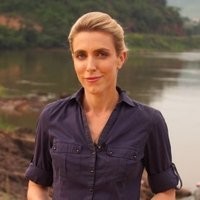
Clarissa Ward is the chief international correspondent for CNN. Along with field producer Brent Swails and photojournalists William Bonnett and Scott McWhinnie, Ward won the 2022 George Polk Award for her real-time coverage of the rapid rise of the Taliban as U.S. forces withdrew from Afghanistan last summer.
“I used to come back from war zones and feel completely disconnected from my life—disconnected from my friends, from my family. I would look down on people about the conversations they were having about silly things. I would feel kind of numb and miserable. And then I realized that if you want to be able to keep doing this work, you have to choose to embrace the privileges that you've been given. And you have to choose joy and choose love and be kind to yourself and have a glass of wine and go dancing or run up a mountain—whatever it is that does it for you, embrace it. That is part of the tax you pay for surviving these things: You've got to continue to love life.”
This is the first in a week-long series of conversations with winners of this year's George Polk Awards in Journalism.
“It was offensive to me on a certain level that when Saw and those other movies came out, people said, “Well, torture porn really started with Seven.” Fuck you. There’s enough pervy shit going on in Seven that I don’t have to get on my high horse to defend its artistic sensibilities.”