How Scorned Women and a Casanova Cop Caught L.A.’s ‘Dine-and-Dash Dater’
Paul Gonzales scammed his online dates into buying him expensive dinners. Then they made him pay.
Showing 25 articles matching fccoins26 Coinsnight.com FC 26 coins 30% OFF code: FC2026. The best place for game coins.28oS.
Paul Gonzales scammed his online dates into buying him expensive dinners. Then they made him pay.
Specialists Solomon Bangayan and Marc Seiden fought together in Bravo Company’s 3rd Platoon in Iraq. Both were killed. Here’s how they made it home.

The New Yorker has lifted its paywall on stories published since 2007. The following picks are available free for the first time.

“I don’t know what other singers feel when they articulate lyrics, but being an 18-karat manic-depressive and having lived a life of violent emotional contradictions, I have an overacute capacity for sadness as well as elation. I know what the cat who wrote the song is trying to say. I’ve been there—and back. I guess the audience feels it along with me. They can’t help it. Sentimentality, after all, is an emotion common to all humanity.”
A conversation with Vasily Gotov:
"Russia undoubtedly celebrated the reports in American media about its activities. They want to instill doubt. They want to be part of the agenda. They want to penetrate our media culture. Russian penetration is dramatically overstated in American media, but that only serves them better. It creates the impression that they're more powerful than they are. That discussions like this are necessary at all is a tremendous win for Russia."
Robert Samuels and Toluse Olorunnipa are reporters for The Washington Post and co-authors of the new book His Name Is George Floyd: One Man’s Life and the Struggle for Racial Justice.
“Looking at George Floyd's family history, looking at the poverty that he grew up in, looking at the schools that he attended, which were segregated, looking at the opportunities that were denied to him and the struggles he had in the criminal justice system—it's an extraordinary American experience, in part because it's so outside of the norm of what we think of when we think of the American dream…. And so we wanted to be able to showcase that that kind of extraordinary American experience is ordinary for so many people.”
Ta-Nehisi Coates is a national correspondent for The Atlantic. His latest book, Between the World and Me, just won the National Book Award.
“When I first came to New York, I couldn't see any of this. I felt like a complete washout. I was in my little apartment, eating donuts and playing video games. The only thing I was doing good with my life was being a father and a husband. That was it. David [Carr] was a big shot. And he would call me in, just out of the blue, to have lunch. I was so low at that point. ... He said, I think you're a great bet. ... He was remembering people who had invested in him when he was low. That more than anything is why I'm sad he's not here for all of this. Because it's for him. It's to say to him, you were right.”
Please become a Longform Supporter. Make your contribution here.
Thanks to MailChimp, Casper, Squarespace, MasterClass, and "The Message" for sponsoring this week's episode.
Hillary Frank is the creator of The Longest Shortest Time podcast and the author of Weird Parenting Wins.
“I think motherhood is not valued in our culture. We don’t value the work of mothers both at home and then at work. Mothers are the most discriminated against people at work. They’re discriminated more against than fathers or people without children. Mothers are promoted less, hired less, and paid less. People are forced out of their jobs after they announce that they’re pregnant, they’re passed over for promotions, and they get horrible, discriminatory comments like, ‘Oh, don’t you really think you want to be at home? Do you really want to come back?‘ And American work culture is not set up for people to be parents and mothers.”
Thanks to MailChimp, The Great Courses Plus, and Pitt Writers for sponsoring this week's episode.
On Jews:
The Jews are happy in the United States. There are now two hundred congregations of them here, half of whom have arrived within the last twelve years. They are good citizens, firmly attached to those liberal principles to which they owe their deliverance from degrading and oppressive laws, and are rising in the esteem of the people among whom they dwell. Their attachment to the system of universal education is hereditary; it dates back three thousand years; and though their religious feelings are wounded by the opening exercises of many public schools, they would not for that reason destroy them.
Doug Bock Clark has written for GQ, Wired, and The New Yorker. His new book is The Last Whalers: Three Years in the Far Pacific with a Courageous Tribe and a Vanishing Way of Life.
“I think for me the answer has always been you just find the people. You just listen to their stories. I think we're all microcosms, right? We're all fractals of the bigger world. Whether it's my own life or your life or the Lamalerans or other people I've encountered reporting. I think one of the things I'm constantly aware of is how these sort of greater world historical forces are working on us and shaping our lives. For more people than most people would assume, if you just followed their life and looked at it in the particulars but also in the broader circumstances, you could probably draw larger themes from them and their experiences. I never had any worries about whether I could expand the Lamaleran story. It was always just about getting those specific stories right, and I knew the rest of it would come.”
Thanks to MailChimp, Squarespace, and Pitt Writers for sponsoring this week's episode.

Nelson Cruz’s family was so sure Judge ShawnDya Simpson would free him, they brought a change of clothes to his hearing. Then everything took an unexpected turn.
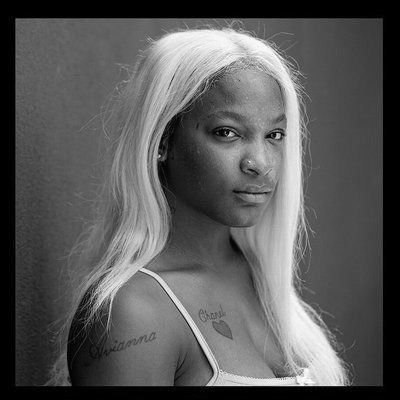
What happens when trying to escape poverty means separating from your family at 13?
Eli Sanders is an associate editor at The Stranger and the winner of the 2012 Pulitzer Prize for feature writing.
"There was one particular moment in the trial, which I described, where ... there was just not any human ability to be detached from what was happening in front of you, what was being shared. It was so painful, you could not help but cry, and there was no reason to deny that that moment had happened."
Thanks to TinyLetter for sponsoring this week's episode!
Joshua Yaffa is a correspondent for The New Yorker, the author of Between Two Fires: Truth, Ambition, and Compromise in Putin's Russia, and has been reporting from Ukraine for the last several weeks. His most recent article is "What the Russian Invasion Has Done to Ukraine."
“I’m not at all a conflict reporter. I don't like it, though who would like being in these situations? But this is the story, right? If you cover this part of the world, if the war in 2014 felt like the tectonic plates of history were shifting, now they're just erupting, crashing. This is the asteroid-impact event for this part of the world with effects that will last similarly long going forward.”
Joshua Davis is a contributing editor at Wired and author of the new ebook John McAfee's Last Stand.
"This is a pretty unique situation [for me]. Never has a multimillionaire tech pioneer gone on the lam for a murder and called me from hiding. Yeah, this is a first."
Thanks to TinyLetter for sponsoring this week's episode!
Theo Baker is the investigations editor at The Stanford Daily. The first college student ever to win a George Polk Award, Baker received a special recognition for uncovering allegations that pioneering research co-authored by Stanford President Marc Tessier-Lavigne, a renowned neuroscientist, was supported in part by manipulated imagery.
“It’s useful to intellectualize it because when you actually get going, this is something that keeps me up at night. … It’s the last thing I think about when I go to sleep, and the first thing on my mind when I wake up.”
This is the first in a week-long series of conversations with winners of this year's George Polk Awards in Journalism.
Delivered at the Austin Convention Center on March 15, 2012.
In the beginning, every musician has their genesis moment. For you, it might have been the Sex Pistols, or Madonna, or Public Enemy. It's whatever initially inspires you to action. Mine was 1956, Elvis on the Ed Sullivan Show. It was the evening I realized a white man could make magic, that you did not have to be constrained by your upbringing, by the way you looked, or by the social context that oppressed you. You could call upon your own powers of imagination, and you could create a transformative self.
How a Texas woman pushed for autopsy reform.
Clinical autopsies, once commonplace in American hospitals, have become an increasing rarity and are conducted in just 5 percent of hospital deaths. Grief-stricken families like the Carswells desperately want the answers that an autopsy can provide. But they often do not know their rights in dealing with either coroners or medical examiners, who investigate unnatural deaths, or health-care providers, who delve into natural ones.
He left China at 10 and would never see his mother again. He lived in extreme poverty once he arrived in America. He found his calling in art, became the creative force behind one of Disney’s iconic films, but didn’t get recognition for his brilliance until late in his life, when in addition to painting and illustrating he began to make fantastical kites.
“These documents show how Palantir applies Silicon Valley’s playbook to domestic law enforcement. New users are welcomed with discounted hardware and federal grants, sharing their own data in return for access to others’. When enough jurisdictions join Palantir’s interconnected web of police departments, government agencies, and databases, the resulting data trove resembles a pay-to-access social network—a Facebook of crime that’s both invisible and largely unaccountable to the citizens whose behavior it tracks.”
Paul Ford is a writer and programmer.
"You don't really read a newspaper to preserve journalism, or save great journalism, or to keep the newspaper going. You read it because it gives you a sense of power or control over the environment that you're in, and actually sort of helps you define what your personal territory is, and what the things are that matter for you. As long as products serve that need—as long as books allow you to explore spaces that it's otherwise really hard for you to explore and so on—I think people will continue to read them."
A two-part write-around of the world’s only billionaire.
He was a silent boy — a silent young man. With years the habit of silence became the habit of concealment. It was not long after the Standard Oil Company was founded, before it was said in Cleveland that its offices were the most difficult in the town to enter, Mr. Rockefeller the most difficult man to see. If a stranger got in to see any one he was anxious. "Who is that man?" he asked an associate nervously one day, calling him away when the latter was chatting with a stranger. "An old friend, Mr. Rockefeller." "What does he want here? Be careful. Don't let him find out anything." "But he is my friend, Mr. Rockefeller. He does not want to know anything. He has come to see me." "You never can tell. Be very careful, very careful." This caution gradually developed into a Chinese wall of seclusion. This suspicion extended, not only to all outsiders but most insiders. Nobody in the Standard Oil Company was allowed to know any more than was necessary for him to know to do his business. Men who have been officers in the Standard Oil Company say that they have been told, when asking for information about the condition of the business, "You'd better not know. If you know nothing you can tell nothing."
Not available in full:
“Death Sentence” (Timothy Bolger • Long Island Press)
“A Design for Healing” (Melissa Harris • The Chicago Tribune)
“A Killing in Cordova: The Trial and Tribulations of Harry Ray Coleman” (Graham Hillard • Memphis Magazine)
“Taxpayers’ $8.4 million Spent on Doomed Project” (Mike Morris • Houston Chronicle)
On the evening of November 7th 1974, the 7th Earl of Lucan, an inveterate gambler and Backgammon champion with a taste for power boats, snuck into his estranged wife’s basement. He then bludgeoned their nanny with a lead pipe and placed her in a canvas sack, before attempting to murder his wife. Recognizing his voice, she convinced him that she could him escape, then slipped out a bathroom window. Lord Lucan was never seen again.
Clarence Thomas, then-chairman of the U.S. Equal Employment Opportunity Commission, profiled by Juan Williams:
He agrees with Reagan's characterization of the civil-rights leaders as old men fomenting discontent to justify their own "rather good positions." "The issue is economics—not who likes you." Thomas has told me. "And when you have the economics, people do have a way of changing their attitudes toward you. I don't see how the civil-rights people today can claim Malcolm X as one of their own. Where does he say black people should go begging the Labor Department for jobs? He was hell on integrationists. Where does he say you should sacrifice your institutions to be next to white people?"