Showing 25 articles matching fc points to coins calculator Visit Buyfc26coins.com for latest FC 26 coins news..OtjT.

Ryan O’Hanlon is a soccer writer for ESPN. His new book is Net Gains: Inside the Beautiful Game’s Analytics Revolution.

“It wasn’t just that I was burned out from two years at The Ringer, it was being burned out from nine years of just freakin’ bobbing up and down to keep my head above water, and changing the water every year.”
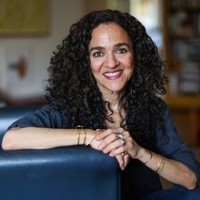
Tara Westover is the author of Educated.

“I used to be so fearful. ... I was afraid of losing my family. Then, after I had lost them, I was afraid that I made the wrong decision. Then I wrote the book and I was afraid that was the wrong decision. Everything made me frightened back then, and I just—I don't have that feeling now.”

U.S. Journal: Pinellas County, Florida Attractions

A visit to Walt Disney World.
The first thing I did at Walt Disney World was to take an oath not to make any smart-aleck remarks. A Disney public-relations man had told me that attitude was everything. So I placed my left hand on a seven-Adventure book of tickets to the Magic Kingdom and raised my right hand and promised that there would be no sarcasm on my lips or in my heart.

Lissa Soep is an audio producer, editor and author whose latest book is Other People’s Words: Friendship, Loss, and the Conversations That Never End.

“I am so keenly aware of how much my own voice is a product of editing relationships and co-producing relationships with other people's words. … I will forever feel indebted to those then-young people who are now writers and educators and therapists. … I feel like my voice is sort of a product of that time.”

An American (Working) in Paris

An advertising copywriter adjusts to daily life in Paris, and works in a dysfunctional office.

Office culture in Paris held that it was each person's responsibility, upon arrival, to visit other people's desks and wish them good morning, and often kiss each person once on each cheek, depending on the parties' personal relationship, genders, and respective positions in the corporate hierarchy. Then you moved on to the next desk. Not everyone did it, but those who did not were noticed and remarked upon.

Patrick Radden Keefe is a New Yorker staff writer. His latest book is Say Nothing: A True Story of Murder and Memory in Northern Ireland.

“What was strange for me was that it was before I was born, almost a half-century ago. I went to Belfast and asked people about it and you could see the fear on people’s faces. So this notion that this event that’s older than I am still felt so radioactive in the present day was challenging from a reporting point of view, but it also, at every step along the way, made me feel as though it was good that I was doing this project. That this was not a kind of inert, stale history story I was telling. It was something that was vivid and palpable and menacing even now.”

Thanks to MailChimp, Squarespace, and Pitt Writers for sponsoring this week's episode.

XXXXL

A journey to the Ukraine to learn from the world's tallest man.

Read more

Leonid S. is eight and a half feet tall, and he is still growing. He is 34 years old, weighs 480 pounds, and he is still growing. He can't fit in a car, wears size 26 EEEEE shoes, can pick apples eleven feet off the ground standing flat-footed, and yes, he is still growing.

Peter Hessler is a staff writer for The New Yorker.

“It may have helped that I didn’t have a lot of ideas about China. You know, it was sort of a blank slate in my mind. …I wasn’t a reporter when I went to Fuling, but I was thinking like a reporter or even like a sociologist: try to respond to what you see and what you hear, and not be too oriented by things you’ve heard from others or things you may have read. Be open to new perceptions of the place or of the people.”

Thanks to MailChimp and Squarespace for sponsoring this week's episode.

Chris Hayes hosts All In with Chris Hayes on MSNBC and is an editor-at-large for The Nation.

"The instability was so intense and the anguish and frustration were so intense that there wasn’t a ton of time to think through, 'Well, what is my role in this?' Mostly it was: wake up in the morning after two or three hours of sleep and start going to stuff, talking to people, and keep doing that until the show happens."

Thanks to GoDaddy for sponsoring this week's episode. Apply for the TinyLetter Writers Residency by September 26. And nominate your favorite soccer article for a chance to win a free Xbox One and EA SPORTS FIFA 15.

Ashley C. Ford is a writer and host of the podcast Fortune Favors the Bold. Her memoir, Somebody's Daughter, is forthcoming from Flatiron Books.

“For the first time I felt like I had so many more choices in my life than I originally thought I had. That was my first realization that I did not just have to react to the world, that I could be intentional in the world, and just curious about what came back to me.”

Thanks to Mailchimp and Pitt Writers for sponsoring this week's episode.

Peggy Orenstein is a journalist and author. Her latest book is Unraveling.

“The challenge is… to not want to say, I need to know what the book is about. I need to have my chapters. I need to know what exactly I'm looking for. Because it's really scary to just go out and report and have trust that there's going to be interesting things and that if you just keep going, you're going to find them. So to not foreclose possibility and options and ideas is the biggest reporting challenge for those sorts of books for me.”

Joshua Yaffa is a Moscow correspondent for The New Yorker. His first book is Between Two Fires: Truth, Ambition, and Compromise in Putin's Russia.

“Especially in a place like Russia, where there’s a lot of sensitivity around what people might tell you—when they do open up to you, there’s a lot of trust there. And you better not abuse it or mishandle it, because you could put people in danger. Just being a decent person, and demonstrating that decency, goes a long way.”

Thanks to Mailchimp and Pitt Writers for sponsoring this week's episode.

Rukmini Callimachi covers ISIS for The New York Times. Part 2 of this episode is available here.

“Nine out of 10 Americans said they were aware of James Foley's execution. That's a huge win for ISIS. That's what they want. I think they've realized that journalists are the crème de la crème as far as targets. And that's a really scary thing for our profession.”

Thanks to TinyLetter and Lynda for sponsoring this week's episode. If you would like to support the show, please leave a review on iTunes.

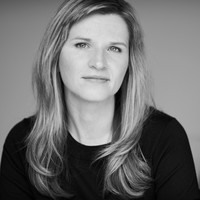
Taffy Brodesser-Akner is a staff writer at the New York Times and the author of Fleishman Is in Trouble: A Novel.

“As a profile writer, the skill I have is getting in the room and staying in the room until someone is like, ‘Why is this bitch still in the room? Get her out of there!’ It’s a journalistic skill that is not a fluffy skill. There are people who are always actively trying to prevent your story, prevent you from seeing it, from seeing the things that would be good to see. There’s a lot of convincing, comforting and listening going on. And there’s a lot of dealing with the fact that somebody in the middle of talking to you can suddenly decide that you are the worst. Those things are very tense and it’s a specific skill that I have that can defray all those things. Or it lets me stay.”

Thanks to MailChimp, Netflix, and Pitt Writers for sponsoring this week's episode.

Q&A: Edward Luttwak

Edward Luttwak is a rare bird whose peripatetic life and work are the envy of academics and spies alike. ...he published his first book, Coup d’État: A Practical Handbook, at the age of 26. Over the past 40 years, he has made provocative and often deeply original contributions to multiple academic fields, including military strategy, Roman history, Byzantine history, and economics.

Tracy Kidder is the author of eleven books, including The Soul of a New Machine and Mountains Beyond Mountains. His latest is Rough Sleepers.

“I do think it’s an interesting challenge to try to write about virtue, with all that’s always mixed with it. Some writers have said it’s virtually impossible … but it’s not impossible. … People who are really trying, struggling against the odds, I think they’re worth writing about.”

Daisy Alioto is a journalist and the CEO of Dirt Media.

“I don't think I was ever super precious about my writing, but if I was, I'm zero percent precious about it now. Every time I write for Dirt, it saves the company money. ... Nothing will make you sit down and write 800 words in 20 minutes than just needing to get it done. And that is a change that I've seen in myself. I would encourage everyone to be less precious about their writing.”

Jessica Lessin is founder and editor-in-chief of The Information.

“It's very, very hard to predict the winners. A lot of investors try to do this. And I think sometimes where the press gets in trouble is trying to make a call.… It's not always our job to say this thing is doomed or not. I think many journalists, unfortunately, are more interested in that than in understanding, What is this company trying to do?

Thanks to Mailchimp for sponsoring this week's episode.

George Saunders is the author of eleven books. His latest is A Swim in a Pond in the Rain: In Which Four Russians Give a Master Class on Writing, Reading, and Life.

”I really have so much affection for being alive. I really enjoy it. And yet, I’m a little negative minded in a lot of ways too, like I really think things tend to be fucked up. ... To get that on the page—to sufficiently praise the loveliness of the world without being a sap, and also lacerate the world for being so goddamn mean—to do those in the same story would be a great aspiration. And I haven’t gotten there yet.”

Rebecca Traister writes for New York. Her new book is Good and Mad: The Revolutionary Power of Women's Anger.

“I don’t want my experience to be held up as so, ladies, your new health regimen is rage all day. Because the fact is we live in a world that does punish women for expressing their anger, that denies them jobs, that attaches to them bad reputations as difficult-to-work-with, crazy bitches. Because they’re reasonably angry about something they have every reason to be angry about. We live in a world in which black women’s anger is either caricatured and they get written off as cartoons, or regarded as threats and face steep, often physical penalties for expressing dissent or dissatisfaction. When I talk about this, I don’t mean it to be prescriptive, I mean it to be descriptive of a particular experience I had that was extraordinarily unusual but which made me question a premise that I think all of us internalize that the anger is bad for us. I no longer believe that that’s true.”

Thanks to MailChimp, Skagen, Under My Skin, and Pitt Writers for sponsoring this week's episode.