What Happens When the Government Uses Facebook as a Weapon?
A report from the Philippines, “the test lab for fake news.”
Showing 25 articles matching fc points to coins calculator Visit Buyfc26coins.com for latest FC 26 coins news..OtjT.
A report from the Philippines, “the test lab for fake news.”
Matthieu Aikins, on the eve of a move to Kabul. Aikins is a correspondent for GQ, Harper's and Wired.
"There's no real objective framework for deciding what the value of your life is, versus the value of a story ... Especially when you go to places where people are getting killed for the silliest reasons, and a life is worth so little, you realize you don't necessarily have to value yourself as this, like, precious commodity that can't be risked in any way. And that's just a personal choice, and it's actually a very selfish one, because obviously, if you have loved ones, you're affecting them by making that choice. In any case, it's just a different headspace that you inhabit."
Paul Ford is a writer and programmer.
"You don't really read a newspaper to preserve journalism, or save great journalism, or to keep the newspaper going. You read it because it gives you a sense of power or control over the environment that you're in, and actually sort of helps you define what your personal territory is, and what the things are that matter for you. As long as products serve that need—as long as books allow you to explore spaces that it's otherwise really hard for you to explore and so on—I think people will continue to read them."
Sean Flynn is a GQ correspondent and National Magazine Award winner.
"I find it satisfying to be able to give a voice to people that sort of get lost…You know, when these big horrible things happen, and the spotlight is very briefly on them, and then it moves away, and it's not that I'm dragging them out and forcing them to 'Relive your horrible moments!' It's more a thing of, 'If you'd like to relive your horrible moment, if you want people to know what actually happened, talk to me. I will tell your story.'"
Thanks to TinyLetter and the The Literary Reportage concentration at NYU's Arthur L. Carter Journalism Institute for sponsoring this week's episode.
How the pop psychedelic author helped jumpstart the modern apocalypse movement after an alleged visit from “Quetzal-coatl, a mystical bird-serpent in Mayan myths.”
The number one place Tampa Bay cops visit: Walmart. And it’s not even close — they average two trips an hour.
Ta-Nehisi Coates is the author of Between the World and Me and a national correspondent for The Atlantic. His latest cover story is “My President Was Black."
“[People] have come to see me as somebody with answers, but I don’t actually have answers. I’ve never had answers. The questions are the enthralling thing for me. Not necessarily at the end of the thing getting somewhere that’s complete—it’s the asking and repeated asking. I don’t know how that happened, but I felt like after a while it got to the point where I was seen as having unique answers, and I just didn’t. I really, really didn’t.”
Thanks to MailChimp, Casper, and Audible for sponsoring this week's episode.
Wandering a Detroit reduced to “crackhouses and churches” with “outlaw biker Jesus” Pastor Steve.
A Native American family’s fight for housing security in the city and on the reservation.
Sabrina Rubin Erdely, a contributing editor at Rolling Stone, has also written for GQ, Philadelphia and SELF.
"I think that people are, by their nature, good and want to act rightly. So I'm very interested in why people do these things that result in really bad actions. My lack of outrage actually is one of the things that probably helps me in my reporting because I really am propelled by this pure curiosity. ... I just want to know, 'Where did that come from?'"
Thanks to TinyLetter and PillPack for sponsoring this week's episode.
James Verini, a freelance writer based out of Nairobi, won the 2015 National Magazine Award for Feature Writing.
“That is probably the most alien, jarring thing about working in Africa: life is much cheaper. More to the point, death is very close to you. We're very removed from death here. Someone can die at 89 in their sleep here and it's called a tragedy. In Africa, I find that I'm often exposed to it. That's part of why I wanted to live there.”
Thanks to TinyLetter and Trunk Club for sponsoring this week's episode.
PJ Vogt is the host of Search Engine.
“One of our tests editorially is if we think we’ve got something good, but we haven’t started reporting or recording on it, I’ll just try asking the question at dinner and stuff. If it derails conversations, that’s a really good sign.”
Elif Batuman is a novelist and a staff writer at The New Yorker. Her latest article is “Japan’s Rent-a-Family Industry.”
“I hear novelists say things sometimes like the character does something they don’t expect. It’s like talking to people who have done ayahuasca or belong to some cult. That’s how I felt about it until extremely recently. All of these people have drunk some kind of Kool Aid where they’re like, ‘I’m in this trippy zone where characters are doing things.’ And I would think to myself, if they were men—Wow, this person has devised this really ingenious way to avoid self-knowledge. If they were women, I would think—Wow, this woman has found an ingenious way to become complicit in her own bullying and silencing. It’s only kind of recently—and with a lot of therapy actually—that I’ve come to see that there is a mode of fiction that I can imagine participating in where, once I’ve freed myself of a certain amount of stuff I feel like I have to write about, which has gotten quite large by this point, it would be fun to make things up and play around.”
Thanks to MailChimp, Google Play, and Pitt Writers for sponsoring this week's episode.
Sixteen-year-old Kalief Browder was accused of taking a backpack. He spent the next three years on Rikers Island, without trial.
Katie Engelhart is a journalist and the author of the new book The Inevitable: Dispatches on the Right to Die.
“Billions of dollars of government money goes to the nursing home industry every year. And nobody has a nursing home correspondent. Nobody has an assisted living correspondent…. That's wild to me. As a journalist, someone tells me, Oh, there's an industry. It's hugely underregulated. It's getting billions of dollars a year. It is not super-accountable for that money. Who wouldn't want to cover that?”
Thanks to Mailchimp for sponsoring this week's episode.
Ta-Nehisi Coates is an author and journalist. He served as guest editor for the September issue of Vanity Fair, titled "The Great Fire."
“There’s this pressure to say something. Say something. The world’s burning, say something. But I try to stay where I’ve been or where I’ve tried to be in my career. ... Good things take time. You gotta let things cook. You can’t insta-bake something like this.”
Thanks to Mailchimp for sponsoring this week's episode.
Tom Bissell is a journalist, critic, video game writer, and author of The Disaster Artist: My Life Inside The Room, the Greatest Bad Movie Ever Made. His latest book is Magic Hours.
“I kind of have come around to maybe not as monkish or fanatical devotion to sentence idolatry as I was when I was a younger writer, earlier in my career. I think I’m coming around to a place where a lot of middle-aged writers get to, which is: I tried to rewire and change the world with the beauty of language alone—it didn’t work. Now how about I try to write stuff that’s true, or that’s not determined to show people I am a Great Writer. Like a lot of young writers, you’re driven by that. Then at a certain point you realize A) you’re not going to be the Great Writer you wanted to be, and B) the determination of that is completely beyond your power to control, so best that you just write as best you can and as honestly as you can, and everything else just sort of becomes gravy.”
Thanks to MailChimp and Tripping.com for sponsoring this week's episode.
Jenny Kleeman is a journalist, broadcaster and the author of the new book Sex Robots and Vegan Meat: Adventures at the Frontier of Birth, Food, Sex, and Death.
“It’s better to cover one thing in a really illuminating way than to try and explore every single aspect of a topic in a really superficial way. So if there’s one thing that particularly interests you or fascinates you, if there’s just one question you want to ask, do as much research as you can on that one question and you’ll end up with a much more illuminating interview than something that is a precis of their entire field. Because anyone can do that.”
Thanks to Mailchimp for sponsoring this week's episode.
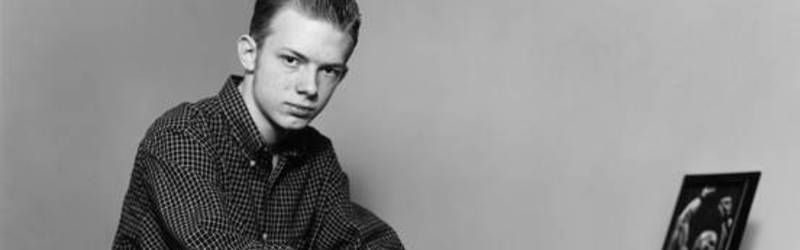
Using several email addresses and a lot of exclamation points, teenager Jonathan Lebed worked finance message boards in the morning before school and made almost a million bucks. Then he made the head of the S.E.C. look like a fool.
Sean Fennessy is the editor-in-chief of The Ringer and a former Grantland editor. He hosts The Big Picture.
"What I try to do is listen to people as much as I can. And try to be compassionate. I think it’s really hard to be on the internet. This is an internet company, in a lot of ways. We have a documentary coming out that’s going to be on linear television that’s really exciting. Maybe we’ll have more of those. But for the moment, podcast, writing, video: it’s internet. [The internet] is an unmediated space of angst and meanness and a willingness to tell people when they’re bad, even when they’ve worked hard on something. That’s like the number one anxiety that I feel like we’re dealing with on a day-to-day basis with everybody, myself included."
Thanks to MailChimp, Mubi, and "Dear Franklin Jones" for sponsoring this week's episode.
Sarah Maslin Nir, a reporter for The New York Times, recently published an exposé of labor practices in the nail salons of New York.
“The idea of a discount luxury is an oxymoron. And it’s an oxymoron for a reason: because someone is bearing the cost of that discount. In nail salons it’s always the person doing your nails, my investigation found. That has put a new lens on the world for me.”
Thanks to TinyLetter, Trunk Club, and Aspiration for sponsoring this week's episode.
In 1976, a school bus carrying 26 children and their driver disappeared from a small California town, capturing the world’s attention.
Mitchell Prothero covers intelligence and crime for Vice News. His new podcast with Project Brazen is Gateway: Cocaine, Murder, and Dirty Money in Europe.
“I’m really interested in transnational networks—crime, intelligence. I’m fascinated by the gray. Like, when is something legal and when is something illegal? One thing with this Gateway project [was that] nobody could ever tell me that moment where money goes from absolutely being illegal to being legal.”
Michael Pollan writes for The New York Times Magazine and The New Yorker and is the author of nine books. His latest is How to Change Your Mind: What the New Science of Psychedelics Teaches Us About Consciousness, Dying, Addiction, Depression, and Transcendence.
“I don’t like writing as an expert. I’m fine doing public speeches as an expert. Or writing op-ed pieces as an expert. But as a writer, it’s a killer. Nobody likes an expert. Nobody likes to be lectured at. And if you’ve read anything I’ve written, I’m kind of an idiot on page one. I am the naïve fish out of water. I’m learning though. The narrative that we always have as writers is our own education on the topic. We can recreate the process of learning that's behind the book.”
Thanks to Mailchimp and Pitt Writers for sponsoring this week's episode.
Shane Bauer, a senior reporter for Mother Jones, spent four months working undercover as a guard in a private prison.
“The thing that I grappled with the most afterward was a feeling of shame about who I was as a guard and some of the things that I had done. Sending people to solitary confinement is hard to come to terms with—even though, in that situation, I don't know what else I could have done. ... I had to do what I could to keep myself safe.”
Thanks to MailChimp for sponsoring this week's episode.