Showing 25 articles matching iraq podcast.

Nick Bilton is a special correspondent for Vanity Fair and the author of American Kingpin: The Epic Hunt for the Criminal Mastermind Behind the Silk Road.

“I’ve been covering tech for a long, long time. And the thing I’ve always tried to do is cover the people of the tech culture, not the tech itself. … I've always been interested in the good and bad side of technology. A lot of times the problem in Silicon Valley is that people come up with a good idea that’s supposed to do a good thing—you know, to change the world and make it a better place. And it ends up inevitably having a recourse that they don’t imagine.”

Thanks to MailChimp, Viacom, and Audible for sponsoring this week's episode.
Patricia Bosworth is a journalist and biographer. Her latest book is The Men in My Life.

“The [acting] rejections are hellish and ghastly. At least they were to me. And I got tired of being rejected so much and also tired of not being able to control my life. And as soon as I became a writer, I had this control, I felt more active, more energized. But it was a decision that took a long time coming.”

Thanks to MailChimp, Squarespace, and Heaven's Gate for sponsoring this week's episode.

Michelle Dean is a journalist and critic. Her new book is Sharp: The Women Who Made an Art of Having an Opinion.

“There isn’t one answer. I wish there was one answer. The answer is: You just have to wing it. And I’m learning that — I’m learning to be okay with the winging it. ... I guess the lesson to me of what went on with a lot of women in the book is: You have to be comfortable with the fact that some days are going to be good, and some days are going to not be good.”

Thanks to MailChimp for sponsoring this week's episode.
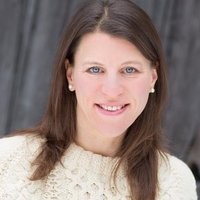
Kara Swisher is the executive editor and co-founder of Recode.

“I do the work. I just work harder than other people. I really do. I work harder, I interview more people, I call more people, I text more people. And so I find out, and they can not talk to me — fine. I know anyway. I’d like to talk to you, I’d like to give you a chance. I’d like to be fair. I’d like to hear your side of the story. And the most important thing is, I think smart people – and these are very smart people — like smart questions. They don’t like the fawning questions. They don’t like being licked up and down all day. Some of the day they like it. They want someone who knew them before they were billionaires. Because when you’re a billionaire, every day you’re so smart. Everyone wants something from you.”

Thanks to MailChimp, Mubi, and Findaway Voices, for sponsoring this week's episode. And thanks to Pop-Up Magazine for making our live show possible!

Sarah Schweitzer is a former feature writer for the Boston Globe.

“I just am drawn, I think, to the notion that we start out as these creatures that just want love and were programmed that way—to try to find it and to make our lives whole. We are, as humans, so strong in that way. We get knocked down, and adults do some horrible things to us because adults have had horrible things done to [them]. There are some terrible cycles in this world. But there’s always this opportunity to stop that cycle. And there are people who come along who do try that in their own flawed ways.”

Thanks to MailChimp and AlarmGrid for sponsoring this week's episode.
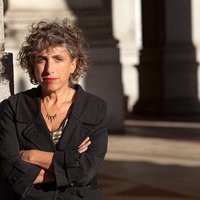
Craig Mod is a writer and photographer. His podcast is On Margins.

“You pick up an iPad, you pick up an iPhone—what are you picking up? You’re picking up a chemical-driven casino that just plays on your most base desires for vanity and ego and our obsession with watching train wrecks happen. That’s what we’re picking up and it’s counted in pageviews, because—not to be reductive and say that it’s a capitalist issue, but when you take hundreds of millions of dollars of venture capital, and you’re building models predicated on advertising, you are gonna create fucked-up algorithms and shitty loops that take away your attention. And guess what? You need to engage with longform texts. You need control of your attention. And so I think part of what subverted our ability to find this utopian reading space is the fact that so much of what’s on these devices is actively working to destroy all of the qualities needed to create that space.”

Thanks to MailChimp for sponsoring this week's episode.
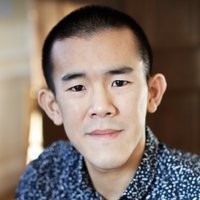
Andrea Bernstein is a journalist and co-host of Trump, Inc., a podcast from WNYC and ProPublica. Her new book is American Oligarchs: The Kushners, the Trumps, and the Marriage of Money and Power.

“Hope is an action. And I feel that writing and documenting is an action. When I stop doing those things, I will be hopeless. But because I am still doing those things, it means that I still have hope… so long as we continue to be actors in the world, we can be hopeful human beings.”

Thanks to Mailchimp and Pitt Writers for sponsoring this week's episode.
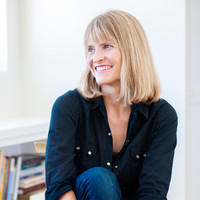
Ed Yong is the author of I Contain Multitudes and a science writer at The Atlantic. His most recent article is "How the Pandemic Will End."

“Normally when I write things that are about a pressing societal issue, those pieces feel like they’re about things that need to get solved in timeframes of, say, months or years. ... But now I’m writing pieces that are affecting people’s choices and lives, and hopefully the direction of the entire country, on an hourly basis. The changes I hope to see, I hope to see immediately. Like right now. And that does create a massive sense of urgency, a sense of pressing, incredibly high stakes. And it’s a burden.”

Thanks to Mailchimp and Pitt Writers for sponsoring this week's episode.
Dana Goodyear is a staff writer for The New Yorker and host of the new podcast Lost Hills.

“I do find people who take risks—artistic and physical or even intellectual risks—really interesting. ... There are so many people that I have written about who take a really long time with their projects, whether years or decades, and they might or might not work out. ... They just don't go along with what's received, and they—at a great personal cost—often do things that are very different. And then those things are the things in our world that are the most fascinating or feel the most human.”

Thanks to Mailchimp and CaseFleet for sponsoring this week's episode.

Susan Glasser, the former editor of Politico and Foreign Policy, writes the "Letter from Washington" column for the The New Yorker. Her most recent book, written with Peter Baker, is The Divider: Trump in the White House, 2017-2021.

“There’s a great benefit to leaving Washington and then coming back, or frankly leaving anywhere and then coming back. I think you have much wider open eyes. Washington, like a lot of company towns, takes on a logic of its own, and things that can seem crazy to the rest of the country, to the rest of the world, somehow end up making more sense than they should when you’re just doing that all day long, every day.”

Mac McClelland has written for Mother Jones, The New York Times Magazine, Matter and others. Her book Irritable Hearts: A PTSD Love Story came out this week.

“I would just suddenly start sobbing, which is not something I usually do. I felt like I needed to be drunk all the time, which is also not something I usually do. I was having nightmares and I was having flashbacks. I was terrified and confused and disoriented all the time. I was a completely different person, completely unrecognizable even to myself.”

Thanks to TinyLetter and Alarm Grid for sponsoring this week's episode. If you would like to support the show, please leave a review on iTunes.
Kate Fagan is a columnist and feature writer for ESPN. Her latest book is What Made Maddy Run: The Secret Struggles and Tragic Death of an All-American Teen.

“When I was professionally closeted, I was kind of bitter. I didn’t have a ton of empathy. And I don’t think I always asked the right question, because I wouldn’t ask people questions that I wouldn’t want to be asked…I had walls up. I wouldn’t even allow myself to be vulnerable in my writing. Because the whole point of my existence at that time was to circumvent any moment that could create vulnerability in a way that would frighten me. And I think you could that see in my writing.”

Thanks to MailChimp and HelloFresh for sponsoring this week's episode.
PJ Vogt is the co-host of Reply All.

“Every radio story is broken. Everything is missing some piece it’s supposed to have. Everything has some weird interview that didn’t go the way you thought it was going to go, or you thought you had an answer but you were wrong.”

Thanks to MailChimp, Squarespace, and Blinkist for sponsoring this week's episode.

Kierna Mayo is the showrunner and head writer for the Lena Horne Prize for Artists Creating Social Impact. She is the former editor-in-chief of EBONY and Honey Magazine, which she co-founded at age 27.

Guest host Patrice Peck is a freelance journalist and writes the Coronavirus News for Black Folks newsletter. Her most recent article is "Black Journalists Are Exhausted," an op-ed published in The New York Times.

“Advocacy is not a bad word. Telling the truth about a particular slice of life is what my career has been. That slice of life started about young people who were partaking in hip hop culture. Most of them were of color, most of them were poor. So that was a perspective. If you begin to tell the stories of those people at that time, that begins to have an advocacy feel and taste and touch. Not even with a consciousness to it. Because this is a lost voice. This is a lost point of view. It is not in the mainstream. It is not being centered. No one is telling it. So the mere act of shedding light journalistically in places where there has been no light before is advocacy. Sorry, journalists. Sorry, all you impartial, fair-and-balanced folks.”

Thanks to Mailchimp for sponsoring this week's episode.

Elon Green is a journalist whose work has appeared in The New York Times Magazine, The Awl, New York, and other publications. His new book is Last Call: A True Story of Love, Lust, and Murder in Queer New York.

“The murders and the murderer should not be the driver. It should simply be the catalyst for the other story. And the other story is the victims. And the other story is the political backdrop and the environment that they are walking through.”

Thanks to Mailchimp for sponsoring this week's episode.

Doree Shafrir is a co-host of podcast Forever35, the former executive editor of Buzzfeed, and the author of the new memoir Thanks for Waiting: The Joy (& Weirdness) of Being a Late Bloomer.

”Right now I can make my living from podcasting, but I don’t know what the advertising market for podcasts is going to look like in five years or even one year. The blog advertising market cratered. So one of the challenges of being my own ‘brand’ is that I always do have to think about, what is the next thing? Because in my experience in media, nothing is ever good for too long.”

Thanks to Mailchimp and The London Review of Books for sponsoring this week's episode.

Susan Burton is an editor at This American Life, the author of the memoir Empty, and the host of the podcast The Retrievals.

“I know I have much more anger than I reveal, and I don’t think that’s uncommon. Especially for women. There’s been a lot of attention to that in recent years—the anger of women, how it’s expressed and not expressed. But I think that among the things I’ve stifled for years are just my true feelings, and I’ve always wanted to be close to people and to be intimate with people, and have often felt that I have trouble making myself known or being known or being understood. And so...it felt good to be known.”

Mosi Secret has written for ProPublica, The New York Times Magazine, and GQ. His new podcast is Radical.

“I think this story made me call on parts of myself that are not journalistic because I don’t really think that’s the way we’re going to get out of this at this point in my life. I think that it takes a more radical reimagining of who we are as human beings, the ways in which we’re connected, and what we owe to each other. And that’s not a reporting thing—that’s a ‘who are you’ kind of thing.”

Jen Percy is the author of Demon Camp: A Soldier's Exorcism.

"As is the nature of obsession, you just start gathering materials, hoarding documents and taking notes in a way that’s totally chaotic and overwhelming. You don’t even care yet because you’re so excited by what you’re gathering. If you start trying to make a narrative out of it too soon it will be false or fall apart."

Thanks to TinyLetter and Dear Thief, the new novel by Samantha Harvey, for sponsoring this week's episode.
Gideon Lewis-Kraus is the author of A Sense of Direction.

"My best friend, who is a fiction writer, she once said to me that she saw a lot of the things I was doing as 'wring tenderness from absurdity.' That wouldn't have occurred to me to put it that way, but that does seem to me [what] I like to do ... I am someone who can very easily be dismissive, or even contemptuous. And one of the things I like about reporting a story, particularly reporting a story that is ultimately, counterintuitively, positive, is that it gives me a chance to work through that, and be the more tender, sympathetic person that I would like to be in real life."

Chris Jones (Live in Romania)

Evan Ratliff interviews Chris Jones before a live audience in Bucharest, hosted by the Romanian magazine Decât o Revistă.

"It just feels good to fucking win ... If you want to say 'Let's get rid of [journalism awards],' no problem. But if they exist, I want to win them. Just because I won two—I know Gary Smith has won four. I want five. Unless Gary Smith wins five, and then I want six. That's just how I work. And maybe that's a terrible, competitive, creepy thing. But journalism is competitive."

Thanks to TinyLetter for sponsoring this week's episode!

Patrick Radden Keefe is a staff writer at The New Yorker.

"I tend not to like really prescriptive writing, and as often as not what I want to do is kind of get in and find the stories and the narratives almost as a delivery mechanism to just get people to sit up and think about it. Honestly, the areas that I'm interested in are so obscure, often, that the thing that I want is for people just to understand and care a little bit more than they did before."

Thanks to TinyLetter for sponsoring this week's episode!

Starlee Kine is a contributor to This American Life and the New York Times Magazine.

"There's a fearlessness I had when I was younger that I don't have now ... It threw me into a crisis, the Internet in general. You're more cautious about what you kind of have out there. There's that, that I just don't want people to know every single thing anymore, but there's [also] an inner fear that did not exist before, an inner censoring that was not there."

Thanks to TinyLetter for sponsoring this week's episode!

Andy Ward, a former editor at Esquire and GQ, is the editorial director of nonfiction at Random House.

"How you gain that trust is a hard thing to quantify. The way I try do it is by caring. If you don't care about every word and every sentence in the piece, writers pick up on that. ... Ultimately, it's their book or their magazine article. Their name is on it, not mine. I always try to keep that in mind."

Thanks to this week's sponsors: TinyLetter and EA SPORTS FIFA 14.

Meghan Daum's latest book of essays is The Unspeakable.

“As writers we think, well there has to be closure, there has to be a beginning middle end, the character has to go through a change. And then in life we're supposed to have some sort of arc or aha moment, as if the experience isn't legitimate unless we get something out of it. That's so culturally constructed, as they say. It's so artificial.”

Thanks to TinyLetter, Scribd, and Oscar for sponsoring this week's episode.