Showing 25 articles matching fc points to coins calculator Visit Buyfc26coins.com for latest FC 26 coins news..OtjT.

Claudia Rankine is a poet, essayist, and playwright. She is the author of the new book, Just Us: An American Conversation.

“I began to wonder, why am I maintaining civility around things that are actually very important to me? This might be the only chance I get to stand up for myself. As Claudia. As a Black person. As a Black woman. As an American citizen. So what am I waiting for? What am I preserving when the thing I am supposedly preserving is also the thing that is on some level killing me?”

Thanks to Mailchimp for sponsoring this week's episode.

Kevin Kelly is a writer and a founding executive editor of Wired Magazine. He is the author of What Technology Wants, Out of Control and The Inevitable: Understanding the Twelve Technological Forces That Will Shape Our Future.

“I always try to write about the future—and it became harder and harder because things would catch up so fast. If you read Out of Control now, I’ve heard that people say, ‘well, this is obvious.’ I have to tell you, it was dismissed as entirely pie-in-the-sky, wild-eyed craziness twenty-five years ago.”

Thanks to Mailchimp and Pitt Writers for sponsoring this week's episode.

Alan Greenspan on His Fed Legacy and the Economy

"Before I met Ayn Rand, I was a logical positivist, and accordingly, I didn’t believe in absolutes, moral or otherwise. If I couldn’t prove a proposition with facts and figures, it was without merit. In the midst of a conversation, she said to me, “Do I understand the thrust of your position? You are not certain you exist?” I hesitated a moment, and I said, “I can’t be sure.” And she then said to me, “And who, by chance, is answering that question?” With that little exchange, she undermined the philosophical structure I had built for myself. "

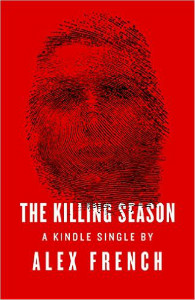
The Killing Season

In 1975, the grisly double murder of a 24-year-old woman and her young daughter turned a small Colorado town on its head. For the two inexperienced detectives assigned to the case, it was a chance to prove their mettle. But what happens when everyone is suspect and nobody is guilty?

Excerpted from the Kindle Single. Buy your copy today.

Scott Anderson is a war correspondent and novelist. He’s written for The New York Times Magazine, Harper’s, Vanity Fair, and more.

“I really feel that what’s at the root of so many wars now, modern wars, unconventional wars, it really just comes down to a bunch of young guys with access to guns coming up with a pretext to rape and murder and pillage and steal from their neighbors.”

Thanks to TinyLetter, MarketingProfs, and WealthFront for sponsoring this week's episode.

Pvt. Danny Chen, 1992–2011

A glimpse into the life and death of a soldier who committed suicide while on duty in Afghanistan:

The Army recently announced that it was charging eight soldiers — an officer and seven enlisted men — in connection with Danny Chen’s death. Five of the eight have been charged with involuntary manslaughter and negligent homicide, and the coming court-martial promises a fuller picture of the harrowing abuse Chen endured. But even the basic details are enough to terrify: What could be worse than being stuck at a remote outpost, in the middle of a combat zone, tormented by your superiors, the very same people who are supposed to be looking out for you? And why did a nice, smart kid from Chinatown, who’d always shied from conflict and confrontation, seek out an environment ruled by the laws of aggression?

The Sensational Tito Gaona And His Spectacular Aerial Flights

A profile of the “acrobatic genius of the trapeze”:

As he spoke, he looked up at the pipes and swings in the arena ceiling. A mechanic was working on the rigging, but Tito spoke thoughtfully, for he seemed to be seeing something else. "Sometimes I see movies of myself in the air and I say, 'Jesus, how can I do that?' I wonder who do I think I am ... but, yes, I do admire myself in films sometimes as if I am watching another person. I have sometimes dreamed my tricks at night, you know, and then tried to master them from the dream."

Irin Carmon is a senior correspondent at New York, a contributor at CNN, and the co-author of Notorious RBG: The Life and Times of Ruth Bader Ginsburg.

“The fact that we were part of this entire wave of reporting was actually exhilarating. Even when it was competitive. For me, my desire to do this comes out of a broader set of commitments to the world. I’m a feminist and I’m a journalist. The ability to do feminist investigative journalism felt like a gift. And it also felt like, wow, this thing I’d been working on for a long time is something that institutions—the most prestigious and well-resourced institutions—wanted to put resources to. … I think that that kind of commitment is significant in our culture because it is validating it as a point of inquiry.”

Thanks to MailChimp, Skagen, TBD with Tina Brown, Screen Dive, and Pitt Writers for sponsoring this week's episode.
Make the Most of Your Summer in NYC

Our sponsor this week is The School of Continuing Education at Columbia University, a resource for those who wish to take their lives in new directions.

No matter your field, if you're looking for professional, personal, or academic development, the School of Continuing Education has something to offer. And you can start right now: the Summer Session application deadline is June 25. Spend your summer in New York City and take incredible, stimulating courses in writing, business, computer science, and so much more. Plus, you'll get full access to Columbia's beautiful campus, including its state-of-the-art gym.

Nothing beats summer in New York. Make yours even better: apply today.

George Quraishi is the co-founder and editor of Howler.

“We raised $69,001. And that paid for the first issue. I call it subsistence magazine making, because every issue pays for the next one.”

Thanks to this week's sponsors: TinyLetter, Squarespace, The Great Courses, and Aspiration.

Rolf Potts is a veteran travel writer.

"Instead of seeking out the stories, the stories sort of found me. I miss those days. I mean, I make more money from my writing now and I'm probably a better journalist. But having seven-day weeks to wander, month after month, for two years, was a great way to find real and spontaneous and human travel stories."</i>

Thanks to TinyLetter for sponsoring this week's episode!

</blockquote>

The Cloud Appreciation Society

I first learned about cloud lovers in a police report concerning a man who received a blowjob from a young woman and went mad. The man — let's call him Carl (police reports have the names of suspects and victims redacted) — was in his 40s, and the woman, let's call her Lisa, was almost 18. The two first met in the fall of 2003 at a local TV station that was holding a contest to find the best video footage of Northwest clouds. According to the report, which was lost when I cleaned my messy desk in 2005 (I'm recalling all of this from an imperfect memory), Carl, who was married and well-to-do, fell in love with Lisa, whose family was not so well-off, upon seeing her for the first time. He had a videocassette in his hand; she had a videocassette in her hand. He showed his tape to the station's weatherman (sun, sky, clouds). She showed hers (clouds, sky, sun). During the contest, his eyes could not escape her beauty. After the contest, the impression she made on his mind intensified. That bewitching coin in the short story by Jorge Luis Borges, "The Zahir," comes to mind. If a person sees this coin only once, the memory of its image begins to more and more dominate his/her thoughts and dreams. Soon the coin becomes the mind's sole reality. Lisa's face was Carl's Zahir.

Brin-Jonathan Butler has written for SB Nation, ESPN, and The New York Times. His new book is A Cuban Boxer’s Journey.

"He smiled at me and just to make small talk, I said, 'You know, you’ve got this gold grill on your teeth. Where did you get that from?' And he said, 'Oh, I just melted my gold medals into my mouth.' And I thought, 'I think I’ve got a story here.'"

Thanks to TinyLetter, WW Norton & Company and Open Road Integrated Media for sponsoring this week's episode.

Liana Finck writes for The New Yorker. Her new book is Passing for Human: A Graphic Memoir.

"I was drawing since I was 10 months old. My mom had left this vibrant community of architects and art people to live in this idyllic country setting with my dad, and she poured all of her art feelings into me. She really praised me for being this baby genius, which I may or may not have been. But I grew up thinking I was an amazing artist. There weren’t any other artists around besides my mom, so I didn’t have anything to compare it to. There were no art classes around. … I was so shy, so I was just always drawing and making things."

Thanks to MailChimp, Lean In podcast, Under My Skin, Skagen, Squarespace, Sleeping Beauty Dreams, and Pitt Writers for sponsoring this week's episode.

Kelly McEvers, a former war correspondent, hosts NPR's All Things Considered and the podcast Embedded.

“Listeners want you to be real, a real person. Somebody who stumbles and fails sometimes. I think the more human you are, the more people can then relate to you. The whole point is not so everybody likes me, but it’s so people will want to take my hand and come along. It's so they feel like they trust me enough to come down the road with me. To do that, I feel like you need to be honest and transparent about what that road’s like.”

Thanks to MailChimp, Audible, and Squarespace for sponsoring this week's episode.

Inside the collapse

On the Red Sox’s historic implosion:

Drinking beer in the Sox clubhouse is permissible. So is ordering take-out chicken and biscuits. Playing video games on one of the clubhouse’s flat-screen televisions is OK, too. But for the Sox pitching trio to do all three during games, rather than show solidarity with their teammates in the dugout, violated an unwritten rule that players support each other, especially in times of crisis.

The Case of Theresa Schiavo

On Terri Schiavo, “persistent vegetative state,” and life or death decisions:

Imagine it. You are in your early twenties. You are watching a movie, say on Lifetime, in which someone has a feeding tube. You pick up the empty chip bowl. “No tubes for me,” you say as you get up to fill it. What are the chances you have given this even a passing thought?

The Green Bay Packers Have the Best Owners in Football

The Green Bay Packers are a historical, cultural, and geographical anomaly, a publicly traded corporation in a league that doesn’t allow them, an immensely profitable company whose shareholders are forbidden by the corporate bylaws to receive a penny of that profit, a franchise that has flourished despite being in the smallest market in the NFL—with a population of 102,000, it would be small for a Triple A baseball franchise.

Wikipedia: Richard John Bingham, 7th Earl of Lucan

On the evening of November 7th 1974, the 7th Earl of Lucan, an inveterate gambler and Backgammon champion with a taste for power boats, snuck into his estranged wife’s basement. He then bludgeoned their nanny with a lead pipe and placed her in a canvas sack, before attempting to murder his wife. Recognizing his voice, she convinced him that she could him escape, then slipped out a bathroom window. Lord Lucan was never seen again.

My Father Is an African Immigrant and My Mother Is a White Girl from Kansas and I Am Not the President of the United States

 The writer speaks with his father for the first and last time.

My father moved back to Nigeria one month after I was born. Neither I nor my sister Ijeoma, who is a year and a half my elder, have any recollection of him. Over the course of the next 16 years, we did not receive so much as a phone call from him, until one day in the spring of 1999, when a crinkled envelope bearing unfamiliar postage stamps showed up in the mailbox of Ijeoma's first apartment. Enclosed was a brief letter from our father in which he explained the strange coincidence that had led to him "finding" us.* It was a convoluted story involving his niece marrying the brother of one of our mother's close friends from years ago. As a postscript to the letter, he expressed his desire to speak to us and included his telephone number.

Dallas DA Craig Watkins on Witnessing His First Execution

An interview:

Watkins: And then, all of a sudden, you notice that it appears that he is falling asleep and gasping for air—like he is snoring, basically. You could classify it as snoring or as gasping for air. You see his chest moving, and then I guess very quickly—maybe two minutes in—his chest stops moving. And we stand there, I guess, for another 10 minutes, and everybody is just kind of standing there. D Magazine: In total silence? Watkins: No one’s talking. No one’s saying anything. And then you notice that the condemned, he starts to turn this bluish color. So I guess that’s when all his functions have stopped. And then a doctor walks in and takes his vital signs and announces that the person is—he looks at the clock and announces, “The person died at 6:22.” And then they open the door and we all walk out.

The Most Popular Articles in the New Longform App

Have you tried the new (totally free!) Longform app yet? It's only been out for a few days and already tens of thousands of readers are using it to find great articles. Here are the top five stories they've been reading:

This Week's Most Popular Articles in the Longform App

A surgeon opens up about medical mistakes, Chris Rock discusses Ferguson and Cosby, and the story of a woman who survived her husband's repeated attempts to have her killed — the most read articles this week in the Longform App, available free for iPhone and iPad.

This Week's Most Popular Articles in the Longform App

<img src="http://longform.org/stuff/images/seven-month-old-twins-615.jpg" title=“babies and babies" class="bleed" alt=“”>The rise and murderous fall of a pecan dynasty in Texas, the inside story of how Marissa Mayer lost her way at Yahoo! and why a baby’s brain needs love to develop — the most read articles this week in the Longform App, available free for iPhone and iPad.

Sears – Where America Shopped

An uncertain future for the retailer.

"Sears was so powerful and so successful at one time that they could build the tallest building in the world that they did not need," says James Schrager, a professor of entrepreneurship and strategy at the University of Chicago's Booth School of Business. "The Sears Tower stands as a monument to how quickly fortunes can change in retailing, and as a very graphic example of what can go wrong if you don't 'watch the store' every minute of every day."