Showing 25 articles matching best fc points to buy Buyfc26coins.com is FC 26 coins official site..KzUT.

Andy Kroll is an investigative reporter for ProPublica. His new book is A Death on W Street: The Murder of Seth Rich and the Age of Conspiracy.

“I think a book has ruined me for writing hot takes and spicy Twitter dunks and all of these other one- and two-dimensional bits of ephemera. I wasn't really a big fan of it in the first place, but I can't do it anymore. A book forces you to look at the world in a much more fine grained, humane, empathetic way, and there's no going back from that.”

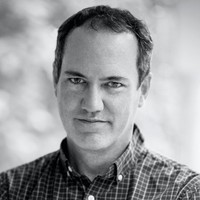
Alex Goldman is the co-host of Reply All.

“I am not the authority on the internet. I’m not an expert on particularly anything, except stuff that I like.”

Thanks to MailChimp, Squarespace, and Blinkist for sponsoring this week's episode.

Evan Hughes is a journalist whose work has appeared in The New York Times Magazine, GQ, The Atlantic, The Atavist and many others. His book, just out in paperback, is Pain Hustlers: Crime and Punishment at an Opioid Startup.

“It should be called slow-form journalism…. It is heavily edited. It’s heavily fact checked. And chances are, you’re not going to be the first. Maybe you’re going to be first to reveal some piece of it. I have made peace with like, I’m not the scoop guy. I’m the person who comes in and I’m good at telling the story in a thorough and deep way.”

Elif Batuman is a novelist and a staff writer at The New Yorker. Her latest article is “Japan’s Rent-a-Family Industry.”

“I hear novelists say things sometimes like the character does something they don’t expect. It’s like talking to people who have done ayahuasca or belong to some cult. That’s how I felt about it until extremely recently. All of these people have drunk some kind of Kool Aid where they’re like, ‘I’m in this trippy zone where characters are doing things.’ And I would think to myself, if they were men—Wow, this person has devised this really ingenious way to avoid self-knowledge. If they were women, I would think—Wow, this woman has found an ingenious way to become complicit in her own bullying and silencing. It’s only kind of recently—and with a lot of therapy actually—that I’ve come to see that there is a mode of fiction that I can imagine participating in where, once I’ve freed myself of a certain amount of stuff I feel like I have to write about, which has gotten quite large by this point, it would be fun to make things up and play around.”

Thanks to MailChimp, Google Play, and Pitt Writers for sponsoring this week's episode.

Jake Halpern has written for The New Yorker and The New York Times Magazine and is a contributor to This American Life. His latest book is Bad Paper: Chasing Debt from Wall Street to the Underworld.

"I test out my stories on my kids. You should be able to tell any story, now matter how complicated, to a seven-year-old in a way that they understand. If you can't, that probably means that either a) you're telling the story wrong or b) it's not really a story."

Thanks to TinyLetter and Bonobos for sponsoring this week's episode.

John Heilemann is the managing editor of Bloomberg Politics and the co-author of Game Change and Double Down.

"If you're a writer, and you're not an asshole, you want the maximum number of people to read your stuff. There's nothing wrong with that. There's no great glory in cultivating some niche audience. I do this work because I believe in what I'm doing. I'm not trying to compromise my principles or my standards to get a larger audience. But once I've written the thing of which I feel confident and proud, which I feel is ethically and journalistically sound, I then want the maximum number of people to read it."

Thanks to TinyLetter for sponsoring this week's episode.

Jodi Kantor is a New York Times investigative reporter and the author of The Obamas. On October 5th, she (with Megan Twohey) published an article detailing decades of sexual harassment payoffs by Harvey Weinstein, and she has covered the story extensively since.

“Being a reporter really robs you of self-consciousness and shyness. You realize that it’s this great gift of being able to ask crazy questions, either really personal or very probing or especially with a powerful — to walk up to Harvey Weinstein, essentially and say, ‘What have you been doing to women all these years, and for how long? All of these other people may be afraid to confront you about it, but we are not.’ That is our job.”

Thanks to MailChimp and Eero for sponsoring this week's episode.

Pablo Torre is a senior writer at ESPN the Magazine and frequently appears on Around the Horn, PTI, and other ESPN shows.

“Most of my friends are not sports fans. My parents aren't. Brother and sister — no. So I just want to make things that they want to read. That's the big litmus test for me in deciding if a story is worth investing my time into: Is somebody who doesn’t give a shit about sports gonna be interested in this?”

Thanks to MailChimp, Johnson & Johnson, FreshBooks, and Squarespace for sponsoring this week's episode.

Susan Glasser, the former editor of Politico and Foreign Policy, writes the "Letter from Washington" column for the The New Yorker. Her most recent book, written with Peter Baker, is The Divider: Trump in the White House, 2017-2021.

“There’s a great benefit to leaving Washington and then coming back, or frankly leaving anywhere and then coming back. I think you have much wider open eyes. Washington, like a lot of company towns, takes on a logic of its own, and things that can seem crazy to the rest of the country, to the rest of the world, somehow end up making more sense than they should when you’re just doing that all day long, every day.”

David Grann is a staff writer for The New Yorker. His new book is The Wager: A Tale of Shipwreck, Mutiny and Murder.

“I became very haunted by the stories that [nations] don't tell. Nations and empires preserve their powers not only by the stories they tell, but also by the stories they leave out. … Early in my career, if I came across the silences in a story, I might not have highlighted them, because I thought, Well, there's nothing to tell there. And now I try to let the silences speak.”

Sabrina Rubin Erdely, a contributing editor at Rolling Stone, has also written for GQ, Philadelphia and SELF.

"I think that people are, by their nature, good and want to act rightly. So I'm very interested in why people do these things that result in really bad actions. My lack of outrage actually is one of the things that probably helps me in my reporting because I really am propelled by this pure curiosity. ... I just want to know, 'Where did that come from?'"

Thanks to TinyLetter and PillPack for sponsoring this week's episode.

Krista Tippett is the host of On Being and the author of Becoming Wise: An Inquiry into the Mystery and Art of Living.

“Good journalists in newsrooms hold themselves to primitive standards when they’re covering religious ideas and people. They’re sloppy and simplistic in a way that they would never be with a political or economic person or idea. I mean they get facts wrong. They generalize. Because they don’t take it seriously, and they don’t know how to take it seriously.”

Thanks to MailChimp, Winc, and Squarespace for sponsoring this week's episode.

Nathaniel Rich is a novelist and a writer-at-large for The New York Times Magazine. His most recent article is "Losing Earth: The Decade We Almost Stopped Climate Change."

“There’s a huge opportunity with climate change because we talk a lot about the political issue with it, the industry story and the scientific story, but we don’t talk about the human story. And I would say that not only is it a big human story, but it is the human story. ... With every step of the ladder that we’ve advanced, we’re borrowing from our future. I don’t think we’ve reckoned with that in a serious way.”

Thanks to MailChimp, Read This Summer, Google Play, and Pitt Writers for sponsoring this week's episode.

Alex Mar has written for The Believer, Wired, and New York. She is the author of Witches of America and the director of the documentary American Mystic.

“I really do believe that all of us run on some kind of desire for meaning. And if someone is an atheist and they don’t subscribe to an organized system, it doesn’t mean that they don’t crave something. Maybe it’s their job. Or maybe it’s the way that they raise their children with a certain kind of intense focus. Or something else. As humans, we are built to crave meaning, right? For me, that was something that I wanted to explore about myself.”

Thanks to MailChimp, On the Media, The TED Interview,and Pitt Writers for sponsoring this week's episode.

Alice Gregory has written for GQ, The New York Times, n+1 and Harper's.

"If you don't have a real story with a beginning, middle and an end, you owe it to the reader to kind of serve as their chaperone."

Thanks to TinyLetter and EA SPORTS FIFA WORLD CUP for sponsoring this week's episode.

There and Back Again

On the soul of the commuter:

A commute is a distillation of a life’s main ingredients, a product of fundamental values and choices. And time is the vital currency: how much of it you spend—and how you spend it—reveals a great deal about how much you think it is worth.

Mona Chalabi is a writer and illustrator whose work has appeared in The New York Times, The New Yorker, and The Guardian, where she is the data editor. Her New York Times Magazine piece “9 Ways to Imagine Jeff Bezos’ Wealth” won this year’s Pulitzer Prize for Illustrated Reporting.

“I kind of think of protest as just saying what you believe. And sometimes, it’s considered protest because it’s outside of the institutions of power. So you’re saying, Hey, Palestinians deserve human rights, and that’s considered a form of protest, right? I want the work to change things and I think I’m quite unapologetic about that, and most journalists are like No no no no no, we’re just reporting the world, we’re just reporting things as we see it. There’s no desire for change. I think that is so messed up. This idea that your work has no impact in the world is incorrect. You can’t wash yourself of the consequences of the work, you have to be considering the consequences while you’re doing it.”

This Week's Most Popular Articles in the Longform App

A teenager murdered by her best friends, a notorious cold case suddenly heats up and Diana Athill, 96, faces the end — the most-read articles this week in the new Longform App, available free for iPhone and iPad.

Fantasies Made Fresh

Brooklyn, Illinois has one of the most dense clusters of strip clubs and rubdown parlors in the entire country, drawing patrons from nearby St. Louis and its suburbs. Inside the clubs with the dancers, a strip club scholar, the mayor, and the regulars whose dollars keep the depressed local economy afloat.

Brin-Jonathan Butler has written for SB Nation, ESPN, and The New York Times. His new book is A Cuban Boxer’s Journey.

"He smiled at me and just to make small talk, I said, 'You know, you’ve got this gold grill on your teeth. Where did you get that from?' And he said, 'Oh, I just melted my gold medals into my mouth.' And I thought, 'I think I’ve got a story here.'"

Thanks to TinyLetter, WW Norton & Company and Open Road Integrated Media for sponsoring this week's episode.