Love in the Time of Robots
What happens when robots act just like humans?
Showing 25 articles matching fccoins26 Coinsnight.com FC 26 coins 30% OFF code: FC2026. The best place for game coins.28oS.
What happens when robots act just like humans?
One man’s quest to stop horse racing deaths.
A restless history of Washington Heights.
Can one agonizing defeat destroy a life?
There has never been a better time to commit financial crimes.
Anatomy of an outbreak.
Inside an infected White House.
A profile of YouTube yogi Adriene Mishler
In Belarus, a travel writer wrestles with his role.
A nephew investigates his uncle’s suicide
Ten years ago, Bitcoin creator Satoshi Nakamoto’s disappeared.
Joshua Yaffa is a Moscow correspondent for The New Yorker. His first book is Between Two Fires: Truth, Ambition, and Compromise in Putin's Russia.
“Especially in a place like Russia, where there’s a lot of sensitivity around what people might tell you—when they do open up to you, there’s a lot of trust there. And you better not abuse it or mishandle it, because you could put people in danger. Just being a decent person, and demonstrating that decency, goes a long way.”
Thanks to Mailchimp and Pitt Writers for sponsoring this week's episode.
Gainsbourg decked out his home at 5 Rue de Verneuil in Saint Germain all in black, inspired by a time when he was younger when he'd somehow got the keys to Salvador Dali's house and made love to his first wife in every room while Dali was away. He even stole a small token souvenir in the form of a picture from Dali's porn collection. (Serge was obsessed with Dali and the pair later became friends. The title of 'Je T'Aime... Moi Non Plus' - roughly translated as 'I love you, me neither' - was inspired by something Dali was once supposed to have said: "Picasso is Spanish - so am I; Picasso is a genius - so am I; Picasso is a communist - me neither.")
“One afternoon about three days ago the Editorial Enforcement Detail from the Rolling Stone office showed up at my door, with no warning, and loaded about 40 pounds of supplies into the room: two cases of Mexican beer, four quarts of gin, a dozen grapefruits, and enough speed to alter the outcome of six Super Bowls. There was also a big Selectric typewriter, two reams of paper, a face-cord of oak firewood and three tape recorders – in case the situation got so desperate that I might finally have to resort to verbal composition.”
“The ‘hard’–science fiction writers dismiss everything except, well, physics, astronomy, and maybe chemistry. Biology, sociology, anthropology—that’s not science to them, that’s soft stuff. They’re not that interested in what human beings do, really. But I am. I draw on the social sciences a great deal. I get a lot of ideas from them, particularly from anthropology. When I create another planet, another world, with a society on it, I try to hint at the complexity of the society I’m creating, instead of just referring to an empire or something like that.”
Andy Greenwald covers television for Grantland.
“People are enthusiastic about TV. People want to read about it. They want to talk about it. They want to know more. They want to extend its presence in their lives. People used to talk about the water cooler show, but the internet is that water cooler now and people want to be part of the conversation.”
Thanks to TinyLetter, Two5six Festival, The Great Courses, and Aspiration for sponsoring this week's episode.
Amy Harmon, a Pulitzer Prize winner, covers the intersection of science and society for the New York Times.
"I'm not looking to expose science as problematic and I'm not looking to celebrate it. But it can be double edged. Genetic knowledge can certainly be double edged. Often the science outpaces where our culture is in terms of grappling with it, with the implications of it. Part of the reason for this widespread fear about GMOs is people don't understand what it is. I'm looking for an emotional way or a vehicle through which to get people to read about it. It's an excuse to talk about the science, not just explain it. … My contribution, what I can do, is try to tell a story that will engage people in the story and then they'll realize at the end that they learned a little bit about the science."
Thanks to TinyLetter and Squarespace for sponsoring this week's episode.
Ever since childhood, Brian Regan had been made to feel stupid because of his severe dyslexia. So he thought no one would suspect him of stealing secrets.
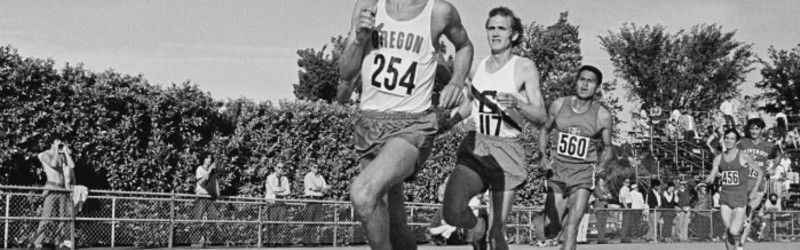
Champions, record-breakers, frauds, and underdogs — our favorite articles about runners.
Timothy Brown was diagnosed with HIV in the ’90s. In 2006, he found that a new, unrelated disease threatened his life: leukemia. After chemo failed, doctors resorted to a bone marrow transplant. That transplant erased any trace of HIV from his body, and may hold the secret of curing AIDS.
In 16 months, he has broken into more than a thousand homes up and down the San Fernando Valley. According to the police, his haul is worth anywhere from $16 million to $40 million. And yet because he has cultivated so many aliases, law-enforcement officials have been hard-pressed to learn his real name—Ignacio Peña Del Río—much less comprehend his unlikely background.
"Of course, sexuality has never only been about reproduction, obviously, with human beings, anyway. But at the moment it's almost cut free to kind of float wherever it will float. And sexuality has been mixed with many things that I think the ancients would have been surprised to find it mixed with."

From high school gyms in New York to beaches in Hawaii, our favorite stories by the New Yorker writer. Orlean’s archive on Longform.

From video games to Chuck Lorre, traveling in Vietnam to the Loch Ness monster, Bissell’s stories on Longform.
“Look, we all know that every city is unique. That’s all we talk about when we talk about cities, those things that make New York different from L.A., or Tokyo different from Albuquerque. But focusing on those differences misses the point. Sure, there are differences, but different from what? We’ve found the what.”