Showing 25 articles matching iraq podcast.

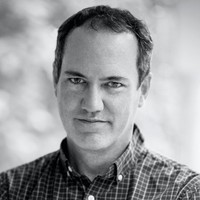
Craig Mod is a writer and photographer who has two newsletters, Roden and Ridgeline. His new book is Things Become Other Things.

“There'll be days where … I’m doing a walk and I'll just be like, I don't know what is going to move me today. And then out of the blue, there'll be this small interaction that when you really pay attention to it, it contains kind of this universe of kindness and patience that you otherwise pass by or ignore. If you're in the general mode of looking at things and then being able to take that experience and try to transmute it into an essay for the evening and send it out, it just develops your eye. You just start being able to look more and more and more closely.”

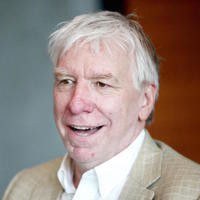
Jerry Saltz is a Pulitzer-winning art critic for New York.

“To this day I wake up early and I have to get to my desk to write almost immediately. I mean fast. Before the demons get me. I got to get writing. And once I’ve written almost anything, I’ll pretty much write all day, I don’t leave my desk, I have no other life. I’m not part of the world except when I go to see shows.”

Thanks to MailChimp and Pitt Writers for sponsoring this week's episode.

Lissa Soep is an audio producer, editor and author whose latest book is Other People’s Words: Friendship, Loss, and the Conversations That Never End.

“I am so keenly aware of how much my own voice is a product of editing relationships and co-producing relationships with other people's words. … I will forever feel indebted to those then-young people who are now writers and educators and therapists. … I feel like my voice is sort of a product of that time.”

Jerry Saltz is a Pulitzer-winning art critic for New York.

“To this day I wake up early and I have to get to my desk to write almost immediately. I mean fast. Before the demons get me. I got to get writing. And once I’ve written almost anything, I’ll pretty much write all day, I don’t leave my desk, I have no other life. I’m not part of the world except when I go to see shows.”

Thanks to MailChimp, TapeACall, The Dream, Squarespace, and Pitt Writers for sponsoring this week's episode.

Mary Childs is a co-host of the podcast Planet Money and the author of The Bond King: How One Man Made a Market, Built an Empire, and Lost It All.

“I love aberrations. I love when things go wrong. You get a high stress situation, you get all of the manifestations of personality. We're our most selves, if not our best selves, at those times. I like the [stories] that have embedded in them all of those conduits of power and that reveal the greater system.”

Josh Levin is the national editor at Slate. He is the host of the podcast Hang Up and Listen and the author of The Queen: The Forgotten Life Behind an American Myth.

“I think it’s a strength to make a thing, one that people might have thought was familiar, feel strange. And reminding people - in general, in life - that you don’t really know as much as you think you know. I think that carries over into any kind of storytelling.”

Thanks to Mailchimp, Squarespace and Pitt Writers for sponsoring this week's episode.

Paul Tough is a contributing writer to the New York Times Magazine and the author of The Years That Matter Most: How College Makes or Breaks Us.

“The nice thing about a book as opposed to a magazine article is that it’s less formulaic. As a writer, it gives you more freedom — you’re trying to create an emotional mood where ideas have a place to sit in a person’s brain. And when people are moved by a book, it’s not by being told, ‘Here’s the problem, here’s the answer, now go do it.’ It’s by having your vision of the world slightly changed.”

Thanks to MailChimp and Pitt Writers for sponsoring this week's episode.

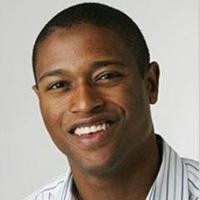
Carvell Wallace is a podcast host and has written for The New Yorker and The New York Times Magazine. He is the co-author, with Andre Iguodala, of The Sixth Man.

“So much of my life experience coalesces into things that are useful… All those years that I was obsessing over this that or the other thing, all the weird stuff that I would do, all the weird things that happened to me, all the places I found myself in that I didn’t want to be in but were interesting - this is all part of what makes me the writer that I am today.”

Thanks to Mailchimp, Pitt Writers, Native, and Villains for sponsoring this week's episode.

Nilay Patel is editor-in-chief of The Verge and hosts the podcast Decoder.

“The instant ability—unmanaged ability—for people to say horrible things to each other because of phones is tearing our culture apart. It just is. And so sometimes, I’m like, Man, I wish our headline had been: ‘iPhone Released. It’s A Mistake.’ … But I think there’s a really important flipside to that … a bunch of teenagers are able to create culture at a scale that has never been possible before. Also, a bunch of marginalized communities are able to speak with coordinated voices and make change very rapidly. And that balance—I don’t think we’ve quite understood.”

Thanks to Mailchimp for sponsoring this week's episode.

Evan Hughes is a journalist whose work has appeared in The New York Times Magazine, GQ, The Atlantic, The Atavist and many others. His book, just out in paperback, is Pain Hustlers: Crime and Punishment at an Opioid Startup.

“It should be called slow-form journalism…. It is heavily edited. It’s heavily fact checked. And chances are, you’re not going to be the first. Maybe you’re going to be first to reveal some piece of it. I have made peace with like, I’m not the scoop guy. I’m the person who comes in and I’m good at telling the story in a thorough and deep way.”

Nathaniel Rich writes for Rolling Stone, Harper's and the New York Times Magazine. His latest novel is Odds Against Tomorrow.

"I'm drawn to obsession. I think I'm an obsessive in a way, probably most writers are. It's an obsessive act to sit at a desk by yourself."

Thanks to TinyLetter and EA SPORTS FIFA WORLD CUP for sponsoring this week's episode.

Jack Hitt contributes to Harper’s, The New York Times Magazine, and This American Life.

“I’ve always lived more or less unemployed in these markets, and happily so. I think being unemployed keeps you a little more sharp in terms of looking for stories. It never gets any easier. That motivation and that desperation, whatever you want to call that, is still very much behind many of the conversations I have all day long trying to find those threads, those strings, that are going to pull together and turn into something.”

Thanks to MailChimp, Audible, and Squarespace for sponsoring this week's episode.

Adam McKay is a film director, writer, and host of the podcast Death at the Wing.

“Sometimes you do a project and then you look back and you’re like, Ah, shit. I let some of myself get in the way of that. It sucks, but it’s also a part of it. And there are so many times where you’re excited that the story did take off, the wind did catch the sail and it went off on its own. And that just feels so good that it far outweighs the times when you make a mistake, or let something go wrong, or too long, or hit the wrong tone. Which is going to happen. There’s no way around it. But those times when it all just catches perfectly—it’s just so exciting that you keep doing it.”

Thanks to Mailchimp for sponsoring this week's episode.

Jonathan Abrams covers the NBA for Grantland.

"Players know that with the stories I do I'm not trying to burn anybody. I'm trying to tell a story for what it's worth and be honest to that person. ...That's one of my main goals, that you know why this person is [a certain] way when they step on the court. You know why Monta Ellis is going to keep shooting the ball. You know why Zach Randolph is such a gritty player. What these guys have gone through growing up, it materializes in their game."

Thanks to this week's sponsor, TinyLetter!

</blockquote>

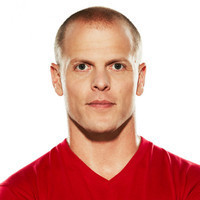
Tim Ferriss is the author of The Four-Hour Workweek and The Four-Hour Body.

“If you have a fitness magazine, you can’t just write one issue, ‘Here are the rules!’ ... My job, conversely, is to make myself obsolete. The last thing I want to be is a guru, someone people come to for answers. I want to be the person people come to for better questions.”

Thanks to TinyLetter and The Great Courses for sponsoring this week's episode.

Caity Weaver is a staff writer at GQ.

“I always try to remember: you don’t have to tell people what you’re not good at. You don’t have to remind them of what you’re not doing well or what your weak points are. Don’t apologize for things immediately. Always give a little less information than they need. Don’t overshare.”

Thanks to MailChimp for sponsoring this week's episode.

Donovan X. Ramsey is a journalist and author of the new book When Crack Was King: A People’s History of a Misunderstood Era.

“I've only ever wanted to write about Black people—and that includes the elements of our lives that are difficult. I’ve always prided myself on being able to metabolize that information and not really be harmed by it. And this book really taught me that writing and processing is not just something that you do in your head. That the information does go through you as you're trying to make sense of it. And it's not happening to you, right? It's not like a direct form of PTSD that you have, but you do experience some trauma when you open up your imagination in that way.”

Sloane Crosley is the author of I Was Told There’d Be Cake and several other books. Her new memoir is Grief Is for People.

“You take a little sliver of yourself and you offer it up to be spun around in perpetuity in the public imagination. That is the sacrifice you make. And it makes everything just a little bit worse. So it's the opposite of catharsis, but it's worth it. It's worth it for what you get in return: a book.”

Kelsey McKinney is a features writer and co-owner at Defector.com. She hosts the podcast Normal Gossip and is the author of the upcoming book You Didn't Hear This From Me: (Mostly) True Notes on Gossip.

“I was always very interested in how you strategize a creative career. And I think that that is an unsexy thing to talk about, right? It's much sexier to be like, Oh, I love working on my sentence-level craft, which is not true for me. But I think that a lot of a creative career is understanding it is still a job, and then understanding how you make sure that within the container of the job you can do the work that you want to do. That is a really difficult balance to make. So if you can understand how people who have done it before you, you can copy them.”

Laura June is author of Now My Heart Is Full.

“Parenting wasn’t considered literary fodder for a long time. I think women in particular are raised not to complain. Which is not what I was doing. If you have to boil it down, it’s base emotion. Then you’re complaining about how hard it is. Or, the opposite end, you’re bragging. There’s no in between. Most of my writing is in between.”

Thanks to MailChimp, Read This Summer, Google Play, and Pitt Writers for sponsoring this week's episode.

Anand Gopal has written for The Wall Street Journal, Harper’s and Foreign Policy. He’s the author of No Good Men Among the Living: America, the Taliban, and the War Through Afghan Eyes.

“When I got to the Taliban, I got out my notebook and tried to ask the hard-hitting questions. ‘What are you fighting for? Why are you doing this? What’s happening with the civilians you’re killing?’ And of course you do that and you get boilerplate answers and icy stares. So I just started asking them questions about their childhood. ... People love to talk about themselves and he began to open up and very subtly something shifted and it no longer became about the war and America versus the Taliban, it became about him being an Afghan and his experience.”

Thanks to TinyLetter and Lynda for sponsoring this week's episode. If you would like to support the show, please leave a review on iTunes.

Andy Greenwald covers television for Grantland.

“People are enthusiastic about TV. People want to read about it. They want to talk about it. They want to know more. They want to extend its presence in their lives. People used to talk about the water cooler show, but the internet is that water cooler now and people want to be part of the conversation.”

Thanks to TinyLetter, Two5six Festival, The Great Courses, and Aspiration for sponsoring this week's episode.

Wesley Yang writes for New York and other publications.

“If a person remains true to some part of their experience, no matter what it is, and they present it in full candor, there’s value to that. People will recognize it. Once I knew that was true, I knew I could do this.”

Thanks to MailChimp, Home Chef, and Trunk Club for sponsoring this week's episode.

Rukmini Callimachi covers ISIS for The New York Times and is the host of Caliphate.

“My major takeaway that I have come away with in this work is go to the enemy. Talk to the enemy. I think that the way that Al Qaeda and ISIS is typically covered is by reporters who just speak to officials in Washington. ... That’s only one side of the story. And I have learned so much by seeking out their documents, reading their propaganda ... speaking to them themselves.”

Thanks to MailChimp, Read This Summer, Google Play, and Stitcher Premium for sponsoring this week's episode.

Beth Macy is an author and former reporter at The Roanoke Times. Her latest book is Dopesick: Dealers, Doctors, and the Drug Company that Addicted America.

“I learned how to interview by delivering papers. I didn’t know it was interviewing, but I would stop and talk to old people who were bored and lonely and have great conversations. I think I learned how to talk to people by delivering the papers. And there’s a certain thing you have to do when you have to collect the money and learn how to negotiate with people when you’re 11. That’s some reporting skills too.”

Thanks to MailChimp, School of Art Institute of Chicago, Skagen, and Pitt Writers for sponsoring this week's episode.