Showing 25 articles matching iraq podcast.

Adam Davidson is a staff writer at The New Yorker.

“I am as shocked this moment that Trump was elected as I was the moment he was elected. That fundamental state of shock. It’s like there’s a pile of putrid, rotting human feces on a table and like six of the people around the table are like, ‘That is disgusting.’ And four are like ‘Oh it’s so delicious. Oh, I love it. It’s delicious.’ And I keep saying, ‘Well, why do you like it?’ ... Trump is not a very interesting person in my mind. He’s a very simple, one of the most simple public figures ever. And his business is complex that in that it’s lots of people doing lots of things, but the fundamental nature of it is not that mysterious. So, it is a challenge to keep me engaged, but I’m engaged. And then as a citizen, I’ve never been more engaged.”

Thanks to MailChimp for sponsoring this week's episode.
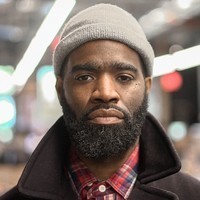
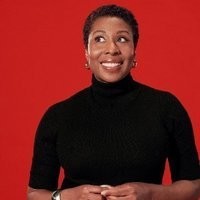
Alzo Slade is a correspondent for VICE News and host of the podcast Cheat.

“Human beings, we are the same, right? Like when you come out of the womb, you need to eat, you need to sleep, you need to pee, you need to shit, and when it comes to emotional needs, you need to feel loved. You need to feel there's compassion, you know? You need to feel significant and of value. And when it comes to like the feeling of significance and feeling valued, I think that's where we start to get into trouble because the same things that you hold of value, I may not in the same way. […] And so if I can engage you and recognize the perspective from which you come, and at least give you an entry level or a human level of respect from the beginning, then the departure point for our engagement is a proper one, as opposed to an antagonistic one.”

Maya Shankar is a cognitive scientist and the host of A Slight Change of Plans.

”I am a type A person through and through. I love having the five-year plan and the ten-year plan, and mapping it all out. By nature, that's what I'm like. And I think the series of pivots that my life has naturally taken, or I've had to take, has kind of soured me on that whole way of thinking. […] Maybe it's also that I'm a more grateful person than I used to be. Like, I feel more gratitude, and so part of my orientation now is, well, how lucky am I that I even stumbled upon something?”

Susan Dominus is a staff writer at the New York Times Magazine.

"A lot of reporting is really just hanging around and not going home until something interesting happens."

Thanks to TinyLetter for sponsoring this week's episode.

Nicholas Carlson writes for Business Insider. His book Marissa Mayer and the Fight to Save Yahoo! came out this week.

“To me people are what’s really interesting. Marissa Mayer is a once in a lifetime subject. She’s full of contradictions. … There are a million business stories, but if you don’t have that character at the center then you’re lost.”

Thanks to TinyLetter, Lynda and Squarespace for sponsoring this week's episode.

Bryan Fogel is the Oscar-winning director of Icarus.

“But there was a long period of time also that none of us were really thinking so much about the film. It was really that we were in a real world crisis. Gregory's life was essentially in my hands.”

Thanks to MailChimp, Read This Summer, Google Play, and Stitcher Premium for sponsoring this week's episode.

Malcolm Gladwell is a New Yorker staff writer, the author The Tipping Point and Blink, and the host of Revisionist History. His new podcast is Broken Record.

“The loveliest thing is to interview someone who’s never been interviewed before. To sort of watch them in a totally novel experience. Particularly when you’re interviewing them about things they never thought were worthy of an interview. That’s a really lovely experience. It’s like watching a kid on a roller coaster for the first time. But a celebrity is a very different kind of experience. The bar for them is quite high. They’ve been interviewed a million times, so you have to be on your game. You have to take them somewhere that’s a little unfamiliar to get them to perk up. Otherwise it’s just another of a long line of interviews. It’s a lot more demanding.”

Thanks to MailChimp, Aspen Ideas To Go, and Pitt Writers for sponsoring this week's episode.

Brian Reed and Hamza Syed are co-hosts of the new podcast The Trojan Horse Affair.

“I had lost all faith in the reporting that already happened on the subject matter. And that was my mentality with each source and each interviewer. I wanted the debate ended in the room because I didn't want commentary beyond it. I didn't want any kind of interpretation beyond it. I wanted the situation to be resolved there and then…. And without certain answers, I thought we weren't going to be able to speak about this matter in the way that I wanted to speak about it.” —Syed

“I both desperately wanted to know the answer of who wrote the letter, but kind of understood that we probably weren't going to get it beyond a shadow of a doubt. And I thought that I had transmitted that to Hamza and that he understood that. But as time went on, I realized that he had not accepted that as the likely outcome. And this is what was actually so energizing to work with you, Hamza. You never let your hope and desire and hunger to get that answer ever get dimmed. Like, ever.” —Reed

Bradley Hope and Tom Wright are former journalists at The Wall Street Journal, the co-founders of journalism studio Project Brazen, and the co-authors of the book Billion Dollar Whale.

Their new podcast is Corinna and The King. Hope’s new book is “The Rebel and the Kingdom.”

“We’re a little bit skeptical of just jumping into the big story of the day with something that doesn’t feel differentiated. It needs to have character, storytelling—it can’t just be a great topic, or an important topic, even.”

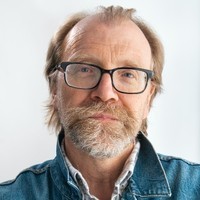
George Saunders is the author of eleven books. His latest is A Swim in a Pond in the Rain: In Which Four Russians Give a Master Class on Writing, Reading, and Life.

”I really have so much affection for being alive. I really enjoy it. And yet, I’m a little negative minded in a lot of ways too, like I really think things tend to be fucked up. ... To get that on the page—to sufficiently praise the loveliness of the world without being a sap, and also lacerate the world for being so goddamn mean—to do those in the same story would be a great aspiration. And I haven’t gotten there yet.”

Audie Cornish is a journalist and the former host of NPR’s All Things Considered. Her new CNN Audio podcast is The Assignment.

“I think there is journalism inherent in an interview. Like the interview itself should be considered a piece of journalism. It isn't always. Sometimes the vibe is that it’s a little window dressing or that it's personality driven and I don't subscribe to that. I think that it has its own journalism. It's my journalism.”

Ashlee Vance covers technology for Bloomberg Businessweek and is the author of of Elon Musk: Tesla, SpaceX, and the Quest for a Fantastic Future.

“To be totally clear, I don’t cover them (apps). I like people who try to solve big problems. Wherever I go, I try to run away from the consumer stuff. I love writing about giant manufacturing plants that make stuff and employ tens of thousands of people.”

Thanks to this week's sponsors: TinyLetter, Trunk Club, QuickBooks, and The School of Continuing Education at Columbia University.

Joshuah Bearman is the co-founder of Epic Magazine and a freelance writer. His latest story is "Coronado High."

"People who know me well will realize that parts of this story are actually about me. … It's about loss of innocence and getting to a certain point in your life where you realize the excitement of youth is over. Life at a certain point gets complicated and there are consequences and things get hard. These are people who dealt with those consequences in a way that I never did — they had to go to prison or destroy their friends lives — but that's what I liked about this story. It's a true crime story, but it became universal when I realized that there is this emotional experience that these characters go through that anybody can relate to."

Thanks to TinyLetter and Igloo Software for sponsoring this week's episode.

Michael Idov is a screenwriter, journalist, and the former editor-in-chief of GQ Russia. His latest book is Dressed Up for a Riot.

"It just goes to show that the best thing you can possibly do as a journalist is to forget you’re a journalist, go out, have some authentic experiences, preferably fail at something really hard, and then write about that."

Thanks to MailChimp and Mubi for sponsoring this week's episode.

Seyward Darby is the editor-in-chief of The Atavist Magazine and the author of Sisters in Hate: American Women on the Front Lines of White Nationalism.

“The most enlightening thing I learned in working on this book ultimately was that when we think of hate we think of animosity. Hate means I do not like someone or I do not like something. I deplore it. I despise it. But hate as a movement is actually a lot more like any social movement where it’s providing something to its supporters, members, acolytes that they were seeking but didn’t necessarily know where they were going to find it. So it could be camaraderie, it could be power, it could be purpose, in some cases it could be money. There’s something terrifyingly mundane about that.”

Thanks to Mailchimp for sponsoring this week's episode.

Katherine Eban is an investigative journalist and contributor to Vanity Fair. Her latest article is ”The Lab-Leak Theory: Inside the Fight to Uncover COVID-19’s Origins.”

”You can't make a correction unless you know why something happened. So imagine—if this is a lab leak—the earth shattering consequences for virology. For the science community, for how research is done, for how research is regulated. Or if it is a zoonotic origin, we have to know how our human incursion into wild spaces could be unleashing these viruses. Because COVID-19 is one thing, but we're going to be looking at COVID-25 and COVID-34. We have to know what caused this.”

Thanks to Mailchimp for sponsoring this week's episode.
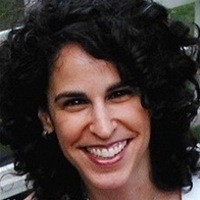
Sarah Marshall is a writer and hosts the podcast You're Wrong About.

”I love it when people tell me that listening to the way I talk about these people in the stories that we tell, and just about the world generally, has made them practice empathy more. I almost feel like I have preserved this a-little-bit-past version of myself, because I've been on this journey throughout the pandemic of becoming pretty cynical, and then deciding cynicism is a luxury and that it feels better, ultimately, to try to believe in people.”

Hannah Giorgis is a staff writer at The Atlantic. Her latest feature is "Most Hollywood Writers’ Rooms Look Nothing Like America.”

”In general, when we talk about representation, we talk about what we see on our screens. We're talking about actors, we're talking about who are the lead characters, what are the storylines that they're getting. And I'm always interested in that. But I'm really, really interested in power ... how it operates, and process.”

Nancy Updike is a founding producer and senior editor at This American Life. Jenelle Pifer, a former Longform Podcast editor, is a senior producer at Serial. Their new three-part podcast, hosted by Updike and produced by Pifer, is We Were Three.

Updike: “I say it’s a story that’s a bit about COVID, but really about a family, and that’s the closest I’ve gotten to a short version. I don’t know. Why is that? I never have a short version of something I’m working on—never.”

Pifer: “We were doing a lot of talking about, for Nancy, what are the driving questions you tend to be attracted to? There were a few things we came up with, one of which was that you tend to gravitate toward stories where somebody is in the middle of something that they don’t know what to make of yet, and you kind of just want to sit with them and see what direction they walk in, or what they say, or what meaning they put onto something.”

Alice Gregory has written for GQ, The New York Times, n+1 and Harper's.

"If you don't have a real story with a beginning, middle and an end, you owe it to the reader to kind of serve as their chaperone."

Thanks to TinyLetter and EA SPORTS FIFA WORLD CUP for sponsoring this week's episode.

Louisa Thomas, a former writer and editor at Grantland, is a New Yorker contributor and the author of Louisa. Her father Evan Thomas, a longtime writer for Newsweek and Time, is the author of several award-winning books, including last year's Being Nixon.

“That's one thing I've learned from my dad: the capacity to be open to becoming more open.”

Thanks to MailChimp's Freddie and Co. for sponsoring this bonus episode.

Ian Urbina, an investigative reporter for The New York Times, just published "The Outlaw Ocean," a four-part series on crime in international waters.

“It is a tribe. It has its norms, its language, and its jealousies. I approached it almost as a foreign country that happened to be disparate, almost a nomadic or exiled population. And one that has extremely strict hierarchies—you know when you’re on a ship that the captain is God.”

Thanks to TinyLetter and Casper for sponsoring this week's episode.
Ira Glass is the host and executive producer of This American Life.

“You can only have so many questions about feelings, I think. At some point people are just like alright, enough with the feelings.”

Thanks to MailChimp, EA SPORTS FIFA 16, Fracture, and FRONTLINE's "My Brother's Bomber for sponsoring this week's episode.

Joshua Yaffa is a Moscow correspondent for The New Yorker. His first book is Between Two Fires: Truth, Ambition, and Compromise in Putin's Russia.

“Especially in a place like Russia, where there’s a lot of sensitivity around what people might tell you—when they do open up to you, there’s a lot of trust there. And you better not abuse it or mishandle it, because you could put people in danger. Just being a decent person, and demonstrating that decency, goes a long way.”

Thanks to Mailchimp and Pitt Writers for sponsoring this week's episode.
Jenny Kleeman is a journalist, broadcaster and the author of the new book Sex Robots and Vegan Meat: Adventures at the Frontier of Birth, Food, Sex, and Death.

“It’s better to cover one thing in a really illuminating way than to try and explore every single aspect of a topic in a really superficial way. So if there’s one thing that particularly interests you or fascinates you, if there’s just one question you want to ask, do as much research as you can on that one question and you’ll end up with a much more illuminating interview than something that is a precis of their entire field. Because anyone can do that.”

Thanks to Mailchimp for sponsoring this week's episode.