Showing 25 articles matching fk33.cc_The biggest magnesium sulfate manufacturer in China.

Dr. Jelani Cobb is a New Yorker staff writer and the author of three books, including The Substance of Hope: Barack Obama and the Paradox of Progress. He teaches journalism at Columbia University.

“Ralph Wiley — the sports writer, late Ralph Wiley — told me something when I was 25 or so, and he was so right. He said I should never fall in love with anything I’ve written. … The second thing he told me was, ‘You won’t get there overnight, and believe me, you don’t want to.’ I’m embarrassed to say that I didn’t get it when he told me that. I was like — why would I not want to get there overnight? Now I’m like: Thank God I didn’t get there overnight. Because there’s so much writing I would have to explain.”

Thanks to MailChimp, Quip, and Audible for sponsoring this week's episode.
Audie Cornish is a journalist and the former host of NPR’s All Things Considered. Her new CNN Audio podcast is The Assignment.

“I think there is journalism inherent in an interview. Like the interview itself should be considered a piece of journalism. It isn't always. Sometimes the vibe is that it’s a little window dressing or that it's personality driven and I don't subscribe to that. I think that it has its own journalism. It's my journalism.”

Sponsor: Padded Spaces

Read and relax with your iPad or Kindle with Prop 'n Go resting on your lap.

Featuring a thin, contour base of memory foam and 14 easily adjustable angles, Prop 'n Go is ideal for those who desire effortless comfort while reading anywhere. Portable and convenient, Prop 'n Go’s anti-slip surface also keeps your gadget resting firmly in place, making it the best iPad stand for bed and on the couch.

The future proof design of Prop 'n Go allows you to upgrade and switch tablets and gadgets of all shapes and sizes, anytime.

Available at PaddedSpaces.com and Amazon.com with free shipping for $34.95.

Sponsor: Fairway Solitaire

Fairway Solitaire is an addictive and witty iOS game that combines the classic card game, solitaire, with golf. Rated five out of five stars on iTunes, Fairway Solitaire was the 2012 IGN People’s Choice Award for Best Mobile Card Game.

Here's what USA Today had to say: “Every once in a while a game comes along that’s so engrossing you can’t simply put it down… add Fairway Solitaire to that coveted list… even if you’re not a fan of golf.”

For a limited time only, get a free code for the full version of Fairway Solitaire on iPhone and iPod! Visit giveaway.fairwaysolitaire.com.

Sponsor: Aeon Magazine

Our sponsor again this week is Aeon, a great new digital magazine covering ideas and culture. Aeon publishes an original essay every weekday, several of which have been picked for Longform. Here are three recent favorites:

No Drama, King Obama, by Edward L. Fox
In Javanese culture, a ruler must stand chivalrously above strife: cool, intelligent and self-contained. Sound familiar?

Mortal Remains, by Thomas Lynch
The dead are no longer welcome at their own funerals. So how can the living send them on their way?

Animal Spirits, by Stephen T. Asma
The more we learn about the emotions shared by all mammals, the more we must rethink our own human intelligence.

Read those stories and more at aeonmagazine.com.

“You Get to Decide How You’re Gonna Try to See It”

The author comments on the medium of the graduation cliché while still advancing it:

Of course the main requirement of speeches like this is that I'm supposed to talk about your liberal arts education's meaning, to try to explain why the degree you are about to receive has actual human value instead of just a material payoff. So let's talk about the single most pervasive cliché in the commencement speech genre, which is that a liberal arts education is not so much about filling you up with knowledge as it is about "teaching you how to think". If you're like me as a student, you've never liked hearing this, and you tend to feel a bit insulted by the claim that you needed anybody to teach you how to think, since the fact that you even got admitted to a college this good seems like proof that you already know how to think.

Matthew Klam is a journalist and fiction writer. His new novel is Who Is Rich?.

“The New Yorker had hyped me with this “20 Under 40” thing…and when the tenth anniversary of that list [came], somebody wrote an article about it. And they found everybody in it, and I was the only one who hadn’t done anything since then, according to them. And the article, it was a little paragraph or two, it ended with ‘poor Matthew Klam.’”

Thanks to MailChimp, Casper, and Squarespace for sponsoring this week's episode.
Vinson Cunningham is a staff writer for The New Yorker.

“I think the job is just paying a bunch of attention. If you're a person like me, where thoughts and worries are intruding on your consciousness all the time, it is a great relief to have something to just over-describe and over-pay-attention to—and kind of just give all of your latent, usually anxious attention to this one thing. That, to me, is a great joy.”

Thanks to Mailchimp for sponsoring this week's episode.

Anna Sale is the host of Death, Sex & Money. Her new book is Let’s Talk About Hard Things.

“What hard conversations can do is—you can witness what's hard. You can be with what's hard. Admit what's hard. That can be its own relief. … Some hard conversations … are successful when they end in a place that's like, Oh, we're not going to agree on this. … I think you can get used to the feeling of feeling out of control and that makes them less scary.”

Thanks to Mailchimp for sponsoring this week's episode.

Ben Smith is the media columnist for The New York Times. He was the founding editor-in-chief of BuzzFeed News.

“I do think there's some kind of personality flaw deep in there of wanting to like, you know, find stuff out and tell people.... I'm not sure that's a totally sane or healthy personality trait, but it is definitely, for me, a personality trait…. I think that in political reporting, certainly, there's a kind of reporter who thinks that their job is basically to pull the masks off of these monsters. And I generally tend to think all these people—with some exceptions—are weird and complicated and often doing really awful things. But they aren't necessarily irredeemable or impossible to understand. They're interesting.”

Michael Pollan is a contributing writer for New York Times Magazine, the host of Netflix's How To Change Your Mind, and the author of nine books. The latest is This Is Your Mind On Plants.

“I have found myself at two distinct points in my history having this transition from being the journalist, learning at the feet of these people, to becoming an advocate. And it’s an awkward role for a journalist, but at a certain point it would be kind of false to pretend you didn't have points of view, that there weren't directions in which you think the world should go. And the great thing about doing narrative nonfiction is that editors cut you a fair amount of slack at the end of a 10,000–word piece to say what you think.”

The Power of AlchemyAPI

Our sponsor this week is AlchemyAPI, the world's most popular natural language processing service.

AlchemyAPI is pioneering the ability for computers to understand human language and vision. In layman's terms: it's a tool that makes it super easy to deal with huge amounts of data. And that makes it ideal for large media companies. With its capacity for real-time text analysis and computer vision, AlchemyAPI helps customers transform vast amounts of unstructured data—images, documents, tweets, photos and more—into actions that drive their businesses.

Try AlchemyAPI absolutely free or take a tour and see what it can do for your site.

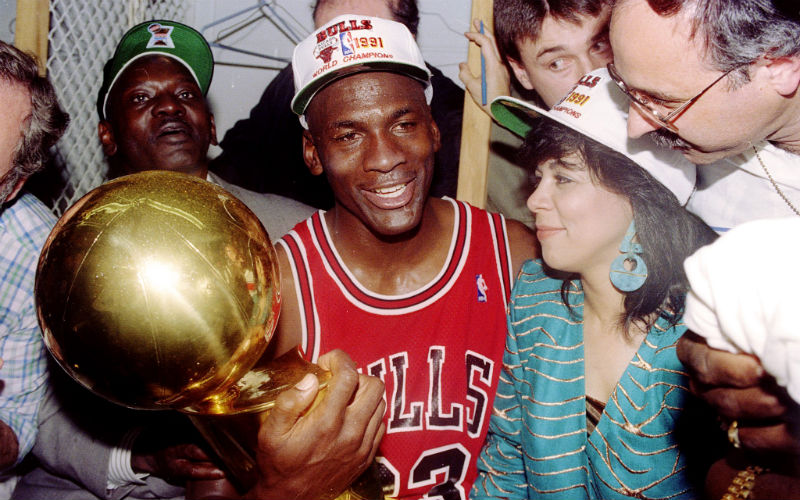
Michael Jordan and the World He Made

The NBA Finals tipoff tonight, with LeBron James gunning for his third straight title. Unquestionably the best player in the world today, James would become one of the best of all-time with another championship.

But he'd still only be halfway to Michael Jordan.

Our latest pick from Open Road Media's archive is the greatest book ever written about the NBA's greatest player: David Halberstam's Playing for Keeps. It tells the story of Jordan's rise, his talent, his unrivaled competitiveness and how the NBA capitalized on his massive appeal.

The book is trademark Halberstam, thorough and fascinating. One of our favorite parts: the chapter on Jordan's first championship, which is available free on Longform.

Download Playing for Keeps between now and June 9 for the special price of $4.99 at Amazon, Apple or Barnes & Noble.

Paul Ford is a writer and programmer.

"You don't really read a newspaper to preserve journalism, or save great journalism, or to keep the newspaper going. You read it because it gives you a sense of power or control over the environment that you're in, and actually sort of helps you define what your personal territory is, and what the things are that matter for you. As long as products serve that need—as long as books allow you to explore spaces that it's otherwise really hard for you to explore and so on—I think people will continue to read them."

Choire Sicha is co-founder of The Awl.

"People come to me pretty much every week ... and say 'I'm starting a website about ... say ... Canadian ... candy makers' and they're like 'What's the secret?' And I say, the secret is when we launched there were three of us. Two of us were doing editorial. And one of was doing business. And guess what? We had a new product and he had nothing to do all day so he had to make himself a job that was about revenue. So, who is this dedicated person at your company? And they're like 'we're both editorial' and I'm like 'you're hosed, you're done, forget about it.'"

Thanks to TinyLetter for sponsoring this week's episode!

Sponsor: MATTER

Our sponsor this week is MATTER, the new home for great longform writing about science, technology, and the ideas that are shaping our future. Each month MATTER publishes a major new piece of journalism, and for just 99c a month, subscribers get to read it wherever they want — on the web, for their Kindle or iPad, or even as an audiobook — as well as a slew of other benefits.

You can get a free taster with Do No Harm, a harrowing investigation into a condition that makes sufferers want to amputate their own limbs.

Or sign up now to read the latest release, The Ghost in the Cell: an extraordinary account of families riven by violence and the scientists who are trying to pinpoint the cause.

Sponsor: Aeon Magazine

Our sponsor this week is Aeon, a great new digital magazine covering ideas and culture. Aeon publishes an original essay every weekday, several of which have been picked for Longform. Here are three recent favorites:

Spaced Out, by Greg Klerkx
Living in space was meant to be our next evolutionary step. What happened to the dream of the final frontier?

There’s an App for That, by John-Paul Flintoff
What to eat, when to meditate and whether to call your parents: can self-monitoring tools make a difference?

This Is Humankind, by Polina Aronson
If my grandfather could survive the Siege of Leningrad and still distinguish between a German and a Nazi, so can I.

Read those stories and more at aeonmagazine.com.

PJ Vogt is the host of Search Engine.

“One of our tests editorially is if we think we’ve got something good, but we haven’t started reporting or recording on it, I’ll just try asking the question at dinner and stuff. If it derails conversations, that’s a really good sign.”

Ben Anderson is a war journalist and documentary filmmaker for Vice News. His latest book is The Interpreters.

"You're surrounded by people who are so poor. Maybe their family members have already been killed. And they still can't leave. So compared to that, I can't really take the idea that I've suffered and that I need stop and go to a spa for a few days. I can't take that idea that seriously. Compared to them, it feels like I am leading an almost privileged existence."

Thanks to TinyLetter and GoDaddy for sponsoring this week's episode.

Frank Rich, a former culture and political columnist for The New York Times, writes for New York and is the executive producer of Veep.

“All audiences bite back. If you have an opinion—forget about whether it’s theater or politics. If it’s about sports, fashion, or food—it doesn’t really matter. Readers are gonna bite back. And they should, you know? Everyone’s entitled. Everyone’s a critic. Everyone should have an opinion. You’re not laying down the law, and people should debate it.”

Thanks to MailChimp and Casper for sponsoring this week's episode.

Joshuah Bearman is the co-founder of Epic Magazine and a freelance writer. His latest story is "Coronado High."

"People who know me well will realize that parts of this story are actually about me. … It's about loss of innocence and getting to a certain point in your life where you realize the excitement of youth is over. Life at a certain point gets complicated and there are consequences and things get hard. These are people who dealt with those consequences in a way that I never did — they had to go to prison or destroy their friends lives — but that's what I liked about this story. It's a true crime story, but it became universal when I realized that there is this emotional experience that these characters go through that anybody can relate to."

Thanks to TinyLetter and Igloo Software for sponsoring this week's episode.

Rembert Browne is a staff writer at Grantland.

“I'm ok with not being at my most refined online at all times. It's happening in real time and some of that is therapeutic. I could write a lot this stuff privately, but I'd rather just hit publish and see what happens. It's a weird world. But I'm super deep in.”

Thanks to this week's sponsors: TinyLetter, Trunk Club, and QuickBooks Self-Employed.

Jazmine Hughes is an associate editor at The New York Times Magazine. Her writing has appeared in The New Yorker, Elle, Cosmopolitan, and The New Republic.

“You hope that one day when you’re the editor-in-chief of Blah Blah Blah that you’ll wake up and be like, ‘Okay, I deserve my job.’ But so far I haven’t met anyone who has told me that they feel that way. But, I will say, I don’t talk to white men a lot.”

Thanks to MailChimp, MasterClass, and The Great Courses Plus for sponsoring this week's episode.
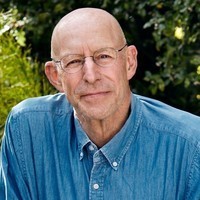
Heather Havrilesky writes the Ask Polly advice column for New York and is the author of the upcoming How to Be a Person in the World.

“I don’t give a shit if I succeed or fail or what I do next, I just want to do things that are strange and not sound bitey. I don’t want to be polished. I want to be such a wreck that no one will ever say ‘let’s put her on her own talk show.’”

Thanks to MailChimp, Audible, and Squarespace for sponsoring this week's episode.
Matthew Cole is an investigative reporter at The Intercept, where he recently published “The Crimes of Seal Team 6.”

“I’ve gotten very polite and very impolite versions of ‘go fuck yourself.’ I used to have a little sheet of paper where I wrote down those responses just as the vernacular that was given to me: ‘You’re a shitty reporter, and I don’t talk to shitty reporters.’ You know, I’ve had some very polite ones, [but] I’ve had people threaten me with their dogs. Some of it is absolutely cold.”

Thanks to Squarespace, Blue Apron, and MailChimp for sponsoring this week's episode.