The Wild Frontier of Animal Welfare
Should humans try harder to protect even wild creatures from predators and disease? Should we care whether they live good lives? Some philosophers and scientists have an unorthodox answer.
Showing 25 articles matching fccoins26 Coinsnight.com FC 26 coins 30% OFF code: FC2026. The best place for game coins.28oS.
Should humans try harder to protect even wild creatures from predators and disease? Should we care whether they live good lives? Some philosophers and scientists have an unorthodox answer.
When word spreads about a 17-year-old in rural Tuscany reputed to have clairvoyant powers, she must withstand followers seeking her wisdom and officials hellbent on tearing her down.
“What it means — for the reporting we do, for the brands we represent, and for our own mental health — that we don’t stop being black people when we’re working as black reporters. That we quite literally have skin in the game.”
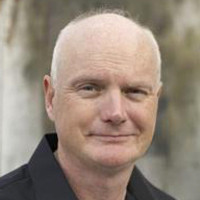
Patrick Symmes is a foreign correspondent and contributor to Outside and Harper's.
"They rolled us up like a cheap carpet. We were locked in a room for 14 hours. And for the first six hours that was okay. Everything was nice; there was coffee. But then the nightshift came on. You could hear gunshots in the street, and these guys were scared. And they were thugs. And they were thugs with a mission: to get rid of every foreigner who might witness what was happening."</i>
Thanks to TinyLetter for sponsoring this week's episode!
</blockquote>
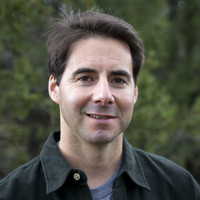
Gabriel Sherman is the national affairs editor at New York and the author of the New York Times best-seller The Loudest Voice in the Room: How the Brilliant, Bombastic Roger Ailes Built Fox News—and Divided a Country.
“There was a time when we got death threats at home. Some crank called and said, ‘We’re gonna come after you. You’re coming after the right, we’re gonna get you.’ That was scary because, again, you don’t know if it’s just a crank when you have right wing websites that are turning you into a target. You know, it’s one thing if they do it with a politician. They have security or handlers—I don’t have any of that.”
Thanks to MailChimp and Audible for sponsoring this week's episode.
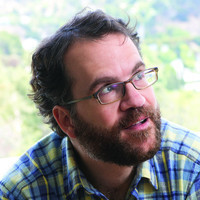
Peter Hessler is a staff writer for The New Yorker.
“It may have helped that I didn’t have a lot of ideas about China. You know, it was sort of a blank slate in my mind. …I wasn’t a reporter when I went to Fuling, but I was thinking like a reporter or even like a sociologist: try to respond to what you see and what you hear, and not be too oriented by things you’ve heard from others or things you may have read. Be open to new perceptions of the place or of the people.”
Thanks to MailChimp and Squarespace for sponsoring this week's episode.
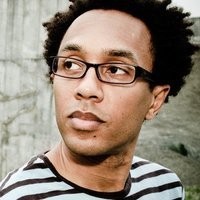
Tom Bissell is a journalist, critic, video game writer, and author of The Disaster Artist: My Life Inside The Room, the Greatest Bad Movie Ever Made. His latest book is Magic Hours.
“I kind of have come around to maybe not as monkish or fanatical devotion to sentence idolatry as I was when I was a younger writer, earlier in my career. I think I’m coming around to a place where a lot of middle-aged writers get to, which is: I tried to rewire and change the world with the beauty of language alone—it didn’t work. Now how about I try to write stuff that’s true, or that’s not determined to show people I am a Great Writer. Like a lot of young writers, you’re driven by that. Then at a certain point you realize A) you’re not going to be the Great Writer you wanted to be, and B) the determination of that is completely beyond your power to control, so best that you just write as best you can and as honestly as you can, and everything else just sort of becomes gravy.”
Thanks to MailChimp and Tripping.com for sponsoring this week's episode.
Jace Clayton is a music writer and musician who records as DJ /rupture. His book is Uproot: Travels in 21st-Century Music and Digital Culture.
“What does it mean to be young and have some sound inside your head? Or to be in a scene that you want to broadcast to the world? That notion of the world is changing, who you’re broadcasting to is changing, all these different things—the tool sets. But there’s this very fundamental joy of music making. I was like, ‘Ok. Let’s find flashpoints where interesting things are happening and can be unpacked that shed different little spotlights on it, but do fall into this wider view of how we articulate what’s thrilling to be alive right now.’”
Thanks to MailChimp for sponsoring this week's episode.
Craig Mod is a writer and photographer. His podcast is On Margins.
“You pick up an iPad, you pick up an iPhone—what are you picking up? You’re picking up a chemical-driven casino that just plays on your most base desires for vanity and ego and our obsession with watching train wrecks happen. That’s what we’re picking up and it’s counted in pageviews, because—not to be reductive and say that it’s a capitalist issue, but when you take hundreds of millions of dollars of venture capital, and you’re building models predicated on advertising, you are gonna create fucked-up algorithms and shitty loops that take away your attention. And guess what? You need to engage with longform texts. You need control of your attention. And so I think part of what subverted our ability to find this utopian reading space is the fact that so much of what’s on these devices is actively working to destroy all of the qualities needed to create that space.”
Thanks to MailChimp for sponsoring this week's episode.

The Estonia was carrying 989 passengers when it sank in 30-foot seas on its way across the Baltic in September 1994. More than 850 lost their lives. The ones who survived acted quickly and remained calm.
Joshuah Bearman is the co-founder of Epic Magazine and a freelance writer. His latest story is "Coronado High."
"People who know me well will realize that parts of this story are actually about me. … It's about loss of innocence and getting to a certain point in your life where you realize the excitement of youth is over. Life at a certain point gets complicated and there are consequences and things get hard. These are people who dealt with those consequences in a way that I never did — they had to go to prison or destroy their friends lives — but that's what I liked about this story. It's a true crime story, but it became universal when I realized that there is this emotional experience that these characters go through that anybody can relate to."
Thanks to TinyLetter and Igloo Software for sponsoring this week's episode.
Buzz Bissinger, a Pulitzer Prize winner, has written for Vanity Fair, The New York Times Magazine, GQ and more. He is the author of several books, including Friday Night Lights.
"It’s quiet. And I really felt I needed that quiet. People say, 'Well anger was your edge, and agitation was your edge, and that’s going to hurt your writing.' I don’t know, maybe. It may be that in order to live a happier life you become a shittier writer. I don't know. But I just couldn't live in that fashion anymore, I just couldn't. It would've destroyed my marriage. It was destroying me."
Thanks to this week's sponsors. Apply for the TinyLetter Writers Residency by September 26. And nominate your favorite soccer article for a chance to win a free Xbox One and EA SPORTS FIFA 15.
Mat Honan is a senior writer at Wired.
"[The tech] industry—especially as it relates to a lot the silly apps and the silly websites and the silly shit that we put up with—is ridiculous. It's just such a hype fest, people living off of jargon and nonsense. There are entire conferences devoted to nonsense! ... I like to skewer that stuff, because I don't want to feel responsible for it. I don't want to feel like I'm making someone go out and buy some piece of shit they don't need."
Thanks to this week's sponsor, TinyLetter!
</blockquote>
In high school, I started to become like a local legend. A hood celebrity, if you will. And you really gotta understand how poppin’ New York City basketball was at that time. I’m playing against Stephon Marbury, Skip 2 My Lou, Alimoe (rest in peace), all these guys who would become household names, they were just kids from around the way. Man, even Cam’ron was super nice!!!
I knew all these guys from when we was little kids playing church basketball, and now all of a sudden we got Jay-Z, Puff, Dame Dash — all these guys are showing up to our games. That’s how insane New York City basketball was at that time.
Sean Fennessy is the editor-in-chief of The Ringer and a former Grantland editor. He hosts The Big Picture.
"What I try to do is listen to people as much as I can. And try to be compassionate. I think it’s really hard to be on the internet. This is an internet company, in a lot of ways. We have a documentary coming out that’s going to be on linear television that’s really exciting. Maybe we’ll have more of those. But for the moment, podcast, writing, video: it’s internet. [The internet] is an unmediated space of angst and meanness and a willingness to tell people when they’re bad, even when they’ve worked hard on something. That’s like the number one anxiety that I feel like we’re dealing with on a day-to-day basis with everybody, myself included."
Thanks to MailChimp, Mubi, and "Dear Franklin Jones" for sponsoring this week's episode.

Didion, Orwell, Nabokov, Murakami and 20 more writers on how they work.</p>
Love advice from a beloved aunt.
I try to call my Great Aunt Doris every day. She's ninety-years old and lives alone. I love her desperately and as she gets older, especially of late as she becomes more feeble, my love seems to be picking up velocity, overwhelming me almost, tinged as it is with panic -- I'm so afraid of losing her.
Eli Saslow is a staff writer at the Washington Post and a contributor at ESPN the Magazine.
"It's not really my place to complain about it being hard for me to write. I wrote the story ("After Newtown Shooting, Mourning Parents Enter Into the Lonely Quiet") and I got to leave it. And even when I was writing the story, I was only experiencing what they were experiencing in a super fractional way. The hard part is that it was a story where there are no breaks, there's no—it is this relentless, sort of bottomless pain and I struggled with that. … A story can only have so many crushing moments, otherwise they just all wash out. But the other truth is: it is what it is. It's an impossibly heartbreaking situation. And making the story anything other than relentlessly heartbreaking would've been doing an injustice to what they're dealing with."
Thanks to TinyLetter and Squarespace for sponsoring this week's episode.
Natasha Vargas-Cooper has written for GQ, Spin and BuzzFeed.
"Writing is the worst part of this gig for me. I hate sitting down and writing; it's being with my worst self. … But then, when it's over, it's the best. I have no greater joy than reading what I've published—with the exception of some editors who have fucked up my shit."</i>
Thanks to TinyLetter for sponsoring this week's episode!
</blockquote>

“The dateline is Elyria, Ohio, a city of 55,000 about 30 miles southwest of Cleveland. You know this town, even if you have never been here.”
Oskar Groening, an SS officer whose duties included counting confiscated money, describes his time posted to Auschwitz.
Editor’s note: At age 94, Groening was convicted yesterday of 300,000 counts of accessory to murder and sentenced to four years in prison.
Activities include: getting his own stem cells injected into his body every six months, taking 100 supplements a day, following a strict diet, bathing in infrared light, hanging out in a hyperbaric oxygen chamber, and wearing yellow-lensed glasses every time he gets on an airplane.

A collection of picks about cities, nations, athletes, and writers going broke.
Steve Kandell is the longform editor at BuzzFeed.
"What would be the sort of longer, narrative nonfiction, journalistic equivalent of something that would have the same effect on you as a bunch of cat GIFs? And not because it's cute, but it's the kind of thing that makes you go, 'OK, I need a lot of other people to see this.'"
Thanks to TinyLetter for sponsoring this week's episode.
</blockquote>
Jon Ronson, a contributor to This American Life, The Guardian and GQ, is the author of six books, including The Men Who Stare at Goats. His latest is Lost at Sea: The Jon Ronson Mysteries
.
"The older you get, you realize that no uncomfortable fact makes your story worse. Contradictions are great. What's bad, what to me is the worst journalistic sin, is ridiculous polemicism. ... To me, the contradictions, the story not turning out the way you want—you have to be a twig in the tidal wave of the story."
Thanks to TinyLetter, EA SPORTS FIFA 14 and Learnvest for sponsoring this week's episode.